Golja Elected Deputy Speaker, Simic Still Waiting
Kosovo's Assembly in Pristina elected only one of five deputy speakers, Ardijan Golja. Citaku fell short of a majority, DPK walked out, and Simic still awaits his turn as the session resumes Sunday.

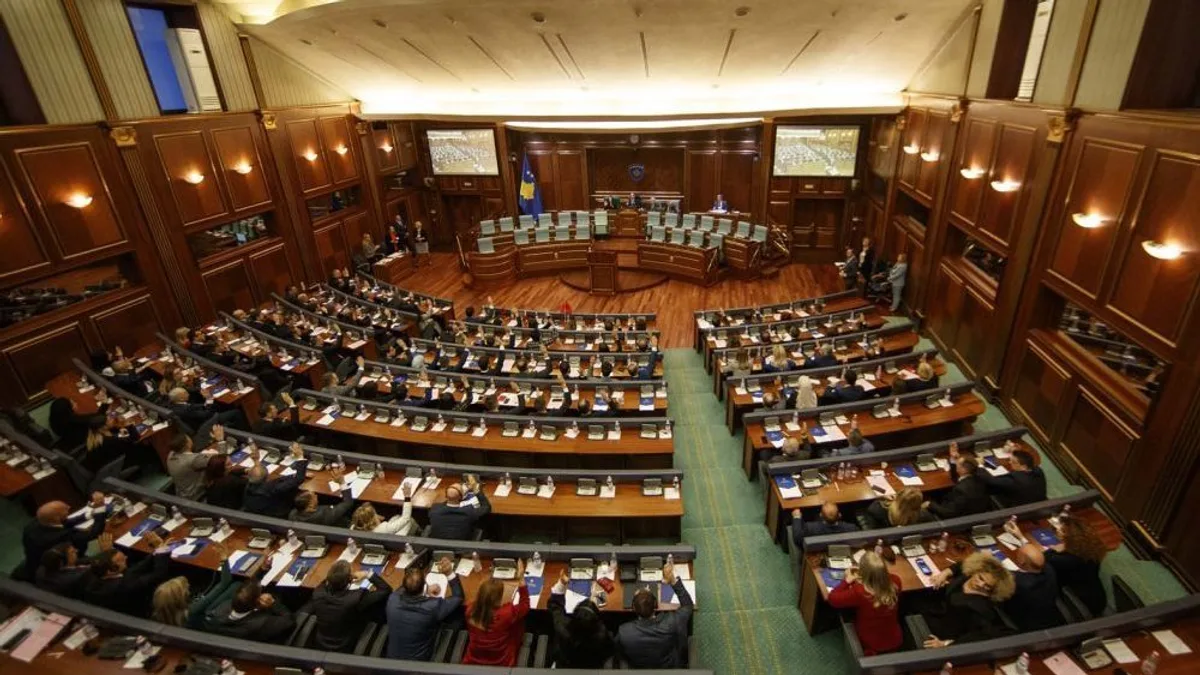
Kosovo’s Assembly in Pristina resumed its constitutive session yesterday and adjourned once again, after only one of five nominated deputy speakers was elected. Lawmakers backed Ardijan Golja, the candidate of the Self-Determination Movement, with 101 votes in favor, while Vljora Citaku of the Democratic Party of Kosovo (DPK) failed to secure the majority she needed. Her party’s lawmakers walked out of the chamber after the failed vote and announced they would turn to the Constitutional Court. Slavko Simic, the Serb List’s candidate, never came up for a vote yesterday, nor did the remaining two nominees. The session resumes Sunday, September 13, at ten in the morning.
The constitutive session of the eleventh convocation opened on August 6 and has been interrupted repeatedly since, most recently on Wednesday, September 9, when Assembly Speaker Aljbuljena Hadziju, who also holds that post in this convocation, asked Igor Simic, head of the Serb List’s parliamentary group, to withdraw the wording that his nomination for deputy speaker was being put forward on behalf of the Serb people (we wrote about this here: Pristina picks five deputy speakers, dispute over the Serb people). On Wednesday, five candidates were put forward for the deputy speaker posts: Golja from Self-Determination, Citaku from DPK, Kujtim Salja from the Democratic League of Kosovo (DSK), Emilija Redzepi on behalf of non-Serb minority communities, and Simic from the Serb List.
Golja Passes, Citaku Falls Short
The continued session opened at 11am and, according to Kosovo Online, lasted only about half an hour before it was adjourned again. Hadziju opened by confirming that quorum had been met. “There are 84 lawmakers present in the chamber,” the Assembly speaker said, noting that besides DPK’s lawmakers, several other members of parliament were also absent.
Since the heads of the parliamentary groups could not agree to vote on all five candidates as a single package, it was decided that the vote would be held individually, candidate by candidate. Golja received 101 votes in favor, one against and one abstention, becoming the first deputy speaker elected. Citaku received 44 votes in favor, with 56 abstentions and one against, falling short of the threshold.
Hadziju then invited DPK to put forward another candidate, noting that the same person could be nominated up to three times, but the party’s lawmakers were already leaving the chamber by that point. DPK leader Bedri Hamza said his party would no longer take part in any Assembly session and would turn to the Constitutional Court, arguing that Self-Determination was continuing to obstruct the parliament’s work. Hadziju, for her part, said she had tried to arrange a meeting with DPK representatives but this had not been possible, and that based on their absence and Hamza’s statements she concluded DPK was refusing to exercise its constitutional right to nominate a deputy speaker.
Simic Still Waiting for His Turn
A vote on the remaining three candidates, Salja from DSK, Redzepi, and Simic from the Serb List, did not take place yesterday at all. Before the session resumed, Serb List deputy leader Dalibor Jevtic said his party would nominate Simic for deputy speaker again and would not back down from the wording “the Serb people,” describing it as simply a fact. Ahead of the vote, parliamentary group leader Igor Simic said the Serb List would contribute to the session regardless of how the vote went:
At the same time, we expect our candidate to receive the support of all lawmakers, so that the parliament’s bodies can finally be constituted the way citizens voted in the last election. That is a responsibility toward the citizens, and a responsibility for all of us in this chamber.
Simic said.
Democratic League of Kosovo lawmaker Jehona Ljusaku asked that all procedures be exhausted before moving on to another parliamentary group. Hadziju replied that the Assembly’s rules of procedure do not bar moving to another nominating party if one party refuses to take part in the proceedings. Six DSK lawmakers had already signaled, during the earlier vote for Assembly speaker, that they would not support the agreed slate of candidates, leaving the question of quorum within that party open as well ahead of the session’s continuation, scheduled for Sunday at ten in the morning.