

Prosecutors: Sound Cannon Not Used at March 15 Protest
Belgrade prosecutors say the so-called sound cannon was not used at the March 15, 2025 protest, and will prosecute those who spread false claims. Vucic and Brnabic reacted the same day.
Belgrade’s Higher Public Prosecutor’s Office announced on Sunday, September 13, 2026, that the so-called sound cannon was not used against citizens at the unauthorized gathering held in Belgrade on March 15, 2025. Prosecutors say no such device, including the so-called LRAD, triggered the panicked chain reaction that swept through the crowd from Terazije, along Kralja Milana Street, to Slavija, meaning there are no grounds for criminal proceedings on that question. The Tanjug news agency carried the statement at 10:53 a.m.
A year and a half passed between the events on Belgrade’s streets and the published conclusion. Prosecutors say their analysis drew on statements from the Security Information Agency (BIA), the Ministry of Defense and the Ministry of Interior, a finding from the Military Technical Institute, and data from the Republic Seismological Survey.
How the panic began, according to prosecutors
According to the prosecutors’ findings, the chain reaction of people moving through the crowd began in front of the National Assembly building. Marshals then activated a withdrawal protocol, and at the intersection of Dragoslava Jovanovica and Kralja Milana streets they took off their vests and ran toward the facades of nearby buildings. The chain movement along Kralja Milana Street alone, according to the same findings, lasted a total of 32 seconds.
What the audio analysis shows
The core of the statement concerns the sound itself, as captured on the recordings. Prosecutors say the original footage, filmed by Stefan Radic of Radio Puls Grocka, contained only whistle blasts and the commotion of the crowd, with no roar of any kind. Recordings featuring the distinctive sound were, according to prosecutors, edited afterward and published only the next day. The comparison was carried out using the Sonic Visualiser program on 58 audio and video recordings submitted by human rights organizations, among them the Lawyers’ Committee for Human Rights (YUCOM), FemPlatz, the A11 Initiative, CRTA and Civic Initiatives, as well as four recordings from the Party of Freedom and Justice.
How many people actually reported symptoms
Sources disagree on how many people say they suffered health problems that night. Citing prosecutors, Sputnik Serbia reports that 151 people responded to the prosecutors’ public call, of whom 113 submitted medical documentation. Savo Manojlovic, leader of the Kreni-Promeni movement, had previously spoken of around 2,000 people, while the Analitika portal reports that human rights organizations collected around 4,000 accounts of symptoms from that night. The prosecutors’ statement does not address that discrepancy.
Prosecutors also announced they will identify and criminally prosecute everyone who deliberately caused or helped spread false information about the sound cannon. The statement singles out military analyst Aleksandar Radic, whom prosecutors accuse of conducting so-called psychological operations, known by the acronym PSY OPS.
The outlet 021 notes that the statement was published a day after President Aleksandar Vucic claimed the sound cannon story was a lie and that the sound on the recordings had been altered afterward.
Government reaction
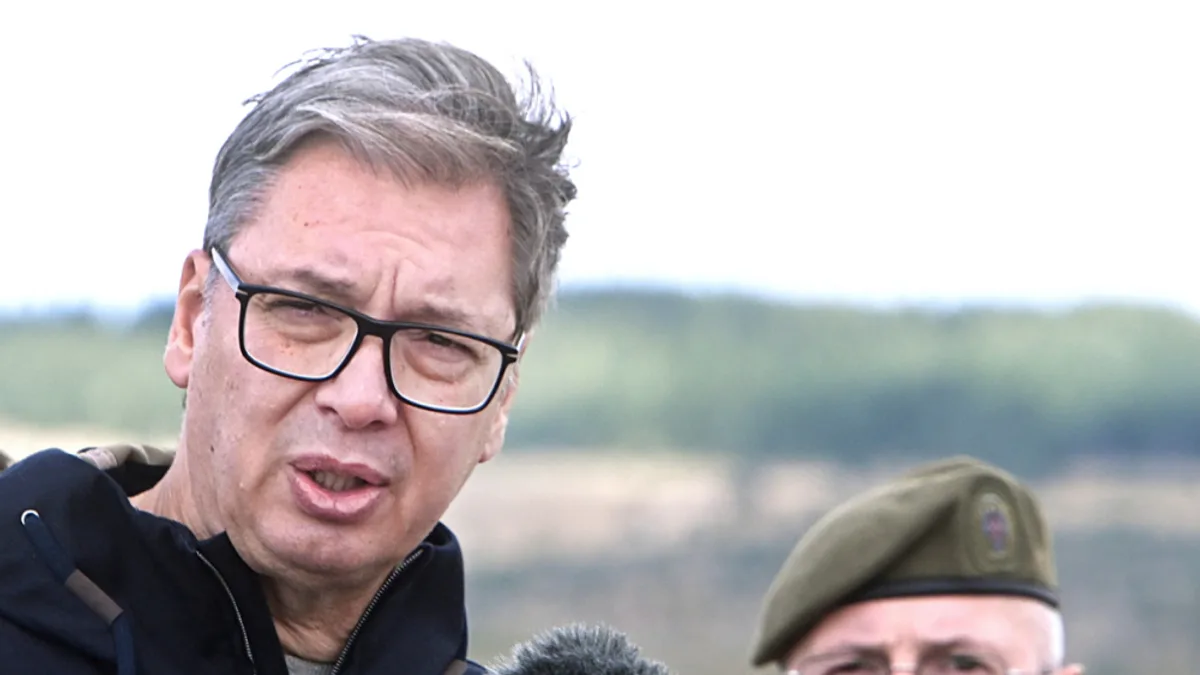
Vucic addressed the findings at the Pester training range, after the Pobednik 2026 military exercise.
We knew this from the very beginning. To help people understand, the biggest lie was this one, and now we have established that it was a doctored recording. That roar you hear does not exist on the original recordings, it does not exist in reality, it never happened. They lied and doctored everything to bring down Serbia.
The president added that, in his words, “this affair with the sound cannon will go down in the history of infamy.”
Ana Brnabic, deputy president of the Serbian Progressive Party’s main board, responded the same day in Stepojevac, calling the prosecutors’ statement proof of an attempted color revolution.
I think what the prosecutors announced today points to something far more serious than whether there was or wasn’t a sound cannon, because everyone knows there was no sound cannon.
Brnabic added:
They used the “sound cannon” narrative the same way they used the Pegasus software story, so it was all part of a narrative aimed at attacking Serbia.
Prosecutors have not yet specified a timeline for the identification process or any prosecutions, nor said whether representatives of the human rights organizations whose recordings were part of the analysis could also face charges.


