UN Experts Demand Spyware Ban Ahead of Serbia Vote
Five special rapporteurs of the UN Human Rights Council warned from Geneva that spyware threatens Serbia's October 25 election and demanded a ban on its use.

Five special rapporteurs of the UN Human Rights Council warned in a joint statement from Geneva, issued on September 15, that the use of spyware against the opposition and the student movement in Serbia is undermining the quality of the election scheduled for October 25. Domestic media reported the statement today.
The statement is signed by Gina Romero, Special Rapporteur on the rights to freedom of peaceful assembly and of association; Leopoldo Maldonado Gutierrez, Special Rapporteur on freedom of opinion and expression; Farida Shaheed, Special Rapporteur on the right to education; Andrea Bolanos Vargas, Special Rapporteur on human rights defenders; and Ana Brian Nougueres, Special Rapporteur on the right to privacy.
According to the statement, several members of the student movement and opposition politicians received phone alerts a few weeks ago warning them that they were the target of a spyware attack. Technical analysis, the statement adds, confirmed infections with a new version of NoviSpy, software that, according to the rapporteurs’ earlier findings, has been used against journalists and activists since 2013. The statement also references Cellebrite’s UFED forensic tool.
The rapporteurs are calling on the Serbian government to immediately stop criminalizing political dissent and to ensure that civil society, election observers, journalists, students and human rights defenders can operate without fear of surveillance, intimidation or reprisals. Alongside that demand, the statement takes a position that goes beyond Serbia’s individual case: the rapporteurs are calling for a ban on the use and transfer of spyware as such, regardless of who deploys it.
“Spyware technologies are inherently incompatible with human rights, and their use and transfer must be prohibited.”
The rapporteurs also offered a broader assessment of what such practices mean for the electoral process itself.
“Without full respect for freedom of assembly, association and expression before, during and after elections, the electoral process cannot be considered free and fair.”
Under that assessment, the effect of surveillance is felt across all three phases of the electoral cycle. Ahead of the vote, it discourages participation in rallies and in civil society’s campaign activities; during the vote, it can affect voter turnout; and after the vote, it opens the door to reprisals against dissenters.
The warning from Geneva is not an isolated case, and fits into a chronology that began two weeks earlier. The Business and Human Rights Resource Centre published findings on September 2 that at least fourteen devices had been compromised, belonging to students, activists, opposition lawmakers, one local council member and a government official. According to that report, at least one of the devices was infected with Pegasus and at least two with NoviSpy. The Interior Ministry (MUP) and the Security Information Agency (BIA) previously said, in response to earlier reports about the use of these tools, that they use them in accordance with the law. On this latest statement by the UN special rapporteurs, the authorities have not, as far as available sources show, commented to date.
UN rapporteurs have previously and repeatedly reported alleged human rights violations linked to the protests in Serbia, including pressure on media freedom, threats against journalists and media workers, and threats to academic autonomy. They have also noted that surveillance, according to information available to them, was in some cases installed covertly during police questioning or detention connected to peaceful protests, alongside cyberattacks and defamation campaigns.
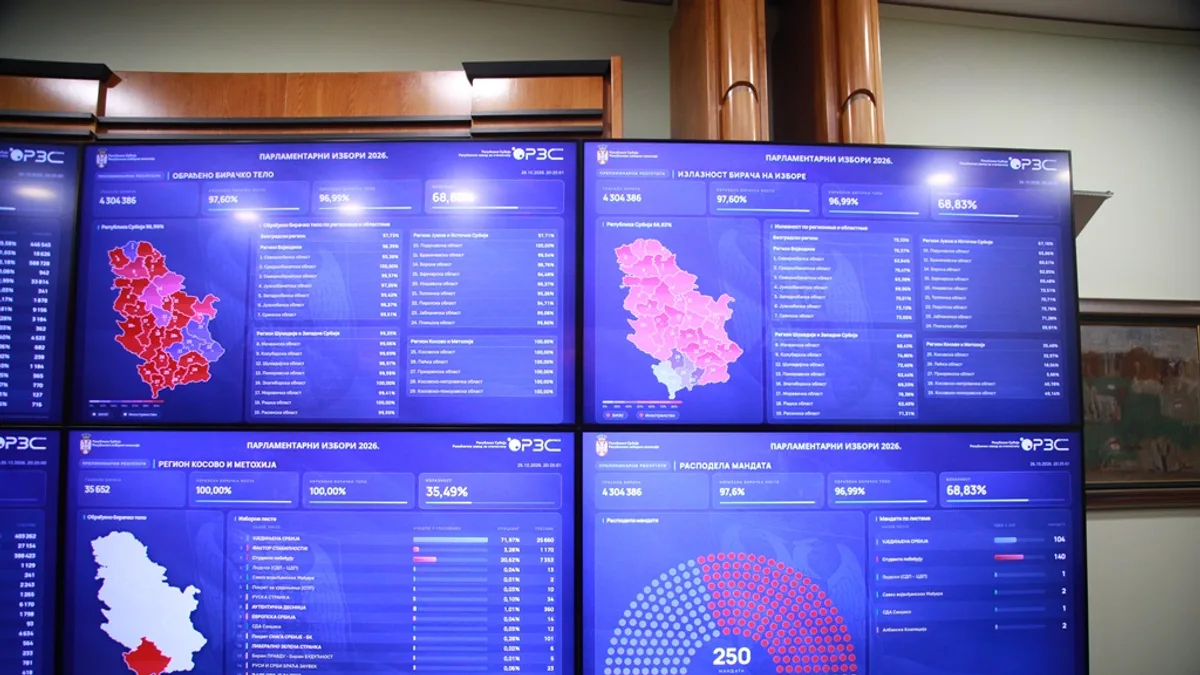
Serbia’s parliamentary election is scheduled for October 25. Whether the government will respond to the rapporteurs’ call for a ban on the use and transfer of spyware, and whether the Interior Ministry and BIA will this time comment on the claims from Geneva, remains an open question just ahead of the start of the campaign.