Damnjanovic: Agency Tracks 93 Officials in Campaign
Dejan Damnjanovic, director of the Anti-Corruption Agency, explains how a new law tracks 93 officials during the election campaign, from social media activity to media appearances.

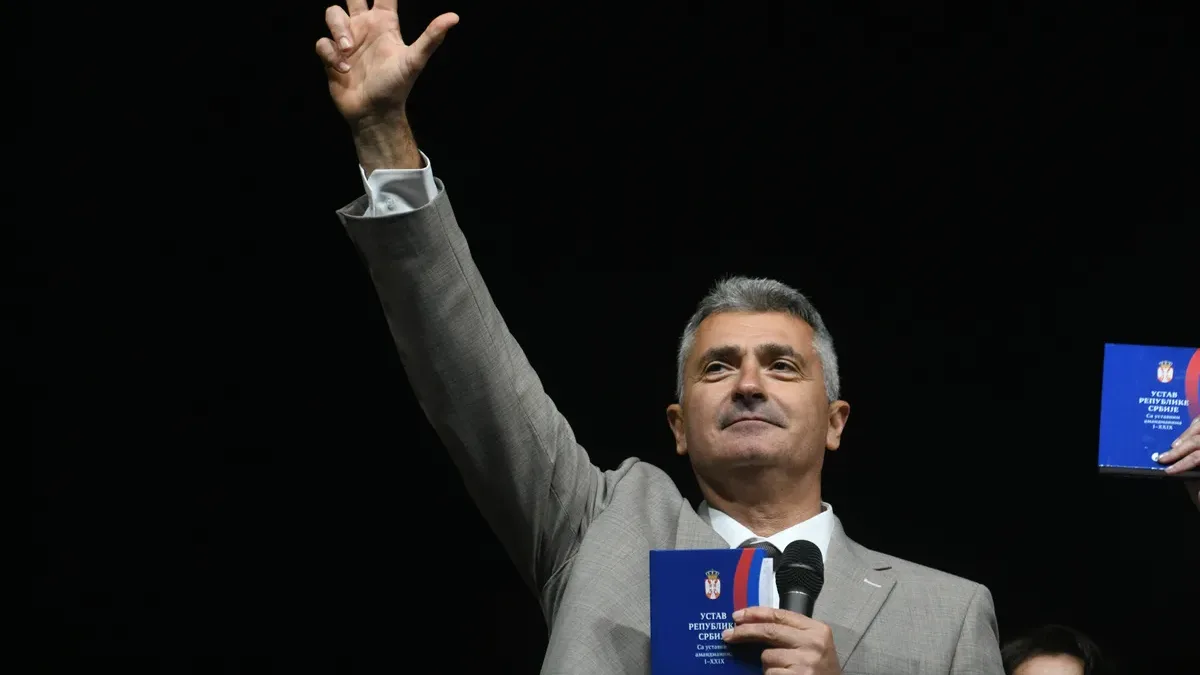
Serbia’s Anti-Corruption Agency has been tracking 93 public officials every day since the start of the election campaign, Agency director Dejan Damnjanovic said during an appearance on RTS on September 22. Under the new Law on the Prevention of Corruption, in force since September 1, the list cannot be shorter than 60 names. Alongside the President and every member of the Government, it now includes officials whose ranks the law has expanded.
Ahead of the campaign, the Law on the Financing of Political Activities was also amended, so the two statutes together now regulate how an official appears in the media, how they behave on social media, and who is required to file an asset declaration.
Who is now under scrutiny
The circle of public officials was expanded to include the chiefs of staff for the prime minister and the deputy prime ministers, their advisers, and special advisers within the Government and individual ministries. Damnjanovic says this fulfills one of the recommendations from the Group of States against Corruption (GRECO), adding that the Agency has also largely implemented the recommendations of the Office for Democratic Institutions and Human Rights (ODIHR).
“We have implemented GRECO’s recommendations, and one of the most important ones was to increase the number of public officials, that is, to expand the circle to include executive officeholders within the Government,” Damnjanovic says.
All newly covered officials must now file a report on their assets and income, and the Agency is required to review those reports.
“All of them are now public officials, they are under scrutiny, and they are required to submit a report on their assets and income, while we are obligated to review those reports,” Damnjanovic notes.
He adds that since the law took effect, the Agency has received a large number of questions and requests for opinions on who, under the new rules, actually qualifies as a public official.
A list of 93 names in three days
The new law required the Agency’s director to draw up the list of people who would be monitored within just three days of the rules taking effect.
“As director, I was obligated to put together, within three days, a list of the people we would monitor. That cannot be fewer than 60 people, on top of the President and every member of the Government. That comes to 93 people that our staff monitor every day,” Damnjanovic says.
Agency staff monitor these officials’ social media, media appearances, and public activities to determine whether there is any suspicion of a violation of the law. According to the director, the Agency is required to inform the public about the results of that monitoring once a week. He adds that a larger number of election campaign observers, who have already completed training and signed contracts, will also be deployed in the field. Their job is to track the number of buses, billboards, and promotional materials used, and to check whether they are properly labeled.
Private and official accounts, kept separate
The new rules specifically target how officials appear on social media. The law requires an official to clearly separate their private activities, their party activities, and the activities they carry out as part of their public office.
“A public official must separate their private account from their official account, meaning the one where they carry out their public function. There has to be a clear distinction,” Damnjanovic says.
An official is allowed to post about their work in the office they hold, but party activity is supposed to stay on the private account.
“We make sure there is no abuse, meaning that a public official does not use their public function for party purposes,” the Agency director notes.
The same principle applies to media appearances. An official must be introduced in the capacity in which they are appearing, and if the conversation shifts to party topics, that has to be clearly indicated.
“That distinction matters, because if it is missing, we sanction it and we monitor it,” Damnjanovic says.
A warning first, then misdemeanor proceedings
The new law also sets out a scale of sanctions for officials who break the rules:
- for minor violations, such as failing to publish a report or an annual statement on the website, the Agency issues a warning
- if the violation is not corrected or is repeated, the Agency can request that misdemeanor proceedings be opened
- a political entity also faces a reduction in funding
So called third party campaigns, meaning individuals or legal entities that independently run a campaign or counter campaign against a particular party, are also specifically regulated. They must open a separate account to finance that activity, designate a person responsible for it, and stay within the prescribed spending limits, all of which they are required to report to the Agency.
The amendments also introduced an incentive for greater participation by women on electoral lists: parties whose elected representatives include more than 40 percent women receive additional funding.
Damnjanovic says the Agency will apply the law equally to everyone.
“We want to apply the law and have it be the same for everyone. We are calling on everyone involved in the election process, especially public officials, to be mindful of their conduct, of what they use and how they use it. We will sanction every irregularity,” Damnjanovic says.
Under the rules Damnjanovic outlined, the Agency will publish its first weekly report on monitoring officials on its website, where, from that point on, it will show every week how many irregularities have been reported and which officials they involve.