

Hasani: Hague Could Strike Down Specialist Chambers Law
Former Kosovo Constitutional Court president Enver Hasani says the Hague Constitutional Panel could overturn the October 6 amendments, letting Pristina annul the 2014 ratification law.
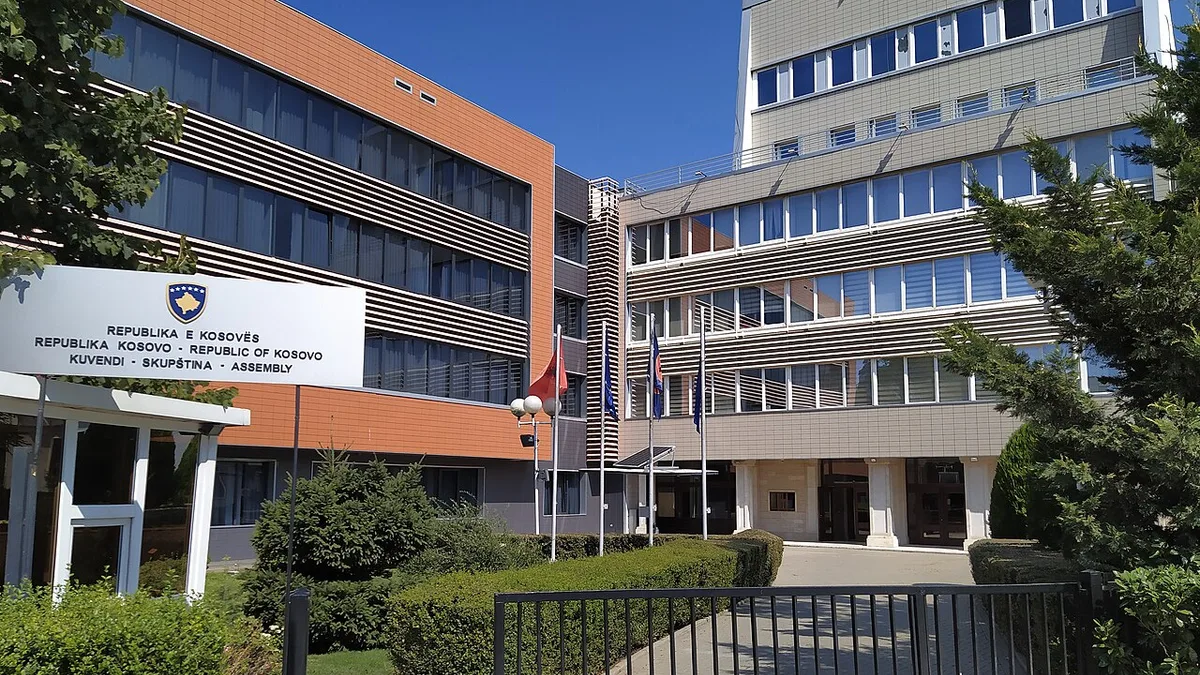
The law that the Kosovo Assembly adopted on October 6 could fall not in Pristina but in The Hague. That is the view of Enver Hasani, former president of the Constitutional Court of Kosovo, who says there is a real likelihood that the Constitutional Panel of the Specialist Court will annul the amendments to the law on the Specialist Chambers and the Specialist Prosecutor’s Office. Hasani told media in Albanian, and his statement was carried on October 11 by RTS, Radio Kosovska Mitrovica and the Podgorica daily Dan. The sources do not say which outlet he spoke to.
We previously reported on the opposition of the European Union and Germany to the amendments. Hasani’s assessment comes from a lawyer who once headed Kosovo’s Constitutional Court, and it concerns who would have the final word.
What is Hasani basing his view on?
He builds his assessment on a 2020 ruling of the Constitutional Court of Kosovo, which, in his words, reviewed provisions 13 and 14 of Article 162 of the Constitution. That article gives the Specialist Chambers a special constitutional status. Hasani also says that no state can transfer its sovereign will elsewhere in full.
“The Constitutional Court has no right to carry out constitutional review of international agreements,” he said. “We call this the doctrine of establishing jurisdiction over jurisdiction. International agreements are annulled according to the standards of the Vienna Convention and the procedure that followed.”
From this he draws a political conclusion as well. If the Constitutional Panel strikes down the law, Hasani argues, Pristina gains the right to annul the 2014 law ratifying the international agreement, without the votes of Serb deputies:
“If the Constitutional Panel of the Specialist Court annuls the law on the Specialist Court, Kosovo has the right to annul the 2014 law ratifying the international agreement, and the consent of two thirds of the Serb community is not required.”
This is his interpretation. The sources do not say that any Kosovo or international actor has confirmed the assessment.
What do the amendments change?
The Kosovo Assembly adopted the amendments under an urgent procedure, on the initiative of the opposition Democratic Party of Kosovo. They followed the first-instance verdict of September 16, in which four former KLA leaders were sentenced to a total of 81 years in prison for war crimes. According to KoSSev, Hasim Taci and Jakup Krasnici received 25 years each, Kadri Veselji 18, and Redzep Seljimi 13.
The new text narrows the jurisdiction of the Specialist Chambers to cases tied to the specific allegations in the report by Dick Marty on the illegal removal and trafficking of human organs. Cases outside that jurisdiction are transferred to the Kosovo judiciary. The maximum sentence is capped at 15 years in prison, and the amendments introduce serving sentences in Kosovo and the possibility of a presidential pardon.
What do legal experts say about applying the law?
The law has not yet been promulgated. President Justina Siroka-Pulja has eight days to sign and promulgate it, and if she does not, it is considered promulgated and is published in the Official Gazette. Within the same period, at least ten deputies or the ombudsman can ask the Constitutional Court of Kosovo to review its constitutionality.
Law professor Fljamur Hiseni told Radio Free Europe that the content of the amendments can be assessed precisely only after publication. “Adopting legal amendments does not mean their automatic application in court proceedings,” he said.
Gzim Salja of the Kosovo Institute for Justice (IKD) told the same outlet that the law does not bind the Specialist Court immediately and that Kosovo cannot unilaterally change its obligations toward the Netherlands and the European Union, because ratified international agreements take precedence over ordinary laws. In his reading of the adopted text, cases already pending before the pre-trial judge, the Trial Panel or the Court of Appeals Panel continue under the old law, until the Appeals Panel hands down its judgment.
Who else has sought a constitutional review?
Hasani is not new to this dispute. He heads the list of 24 signatories of a request, reported by KoSSev on September 25, which representatives of the academic community, civil society and other public figures are sending to ombudsman Naim Celjaju. They ask him to refer to the Constitutional Court the question of whether Articles 6, 12 and 16 of Law 05/L-053 comply with the Constitution. The request runs to seven pages.
For now, the request does not mean that proceedings have begun before the Constitutional Court. It is up to Celjaju to decide whether to refer the case.


