

Diplomats Question Foreign Ministry's Diaspora Voting Hours
A group of diplomats inside the Foreign Ministry asks what rule lets it propose 7 a.m. to 8 p.m. Serbian time for voting abroad, when the law gives that decision to the electoral commission.
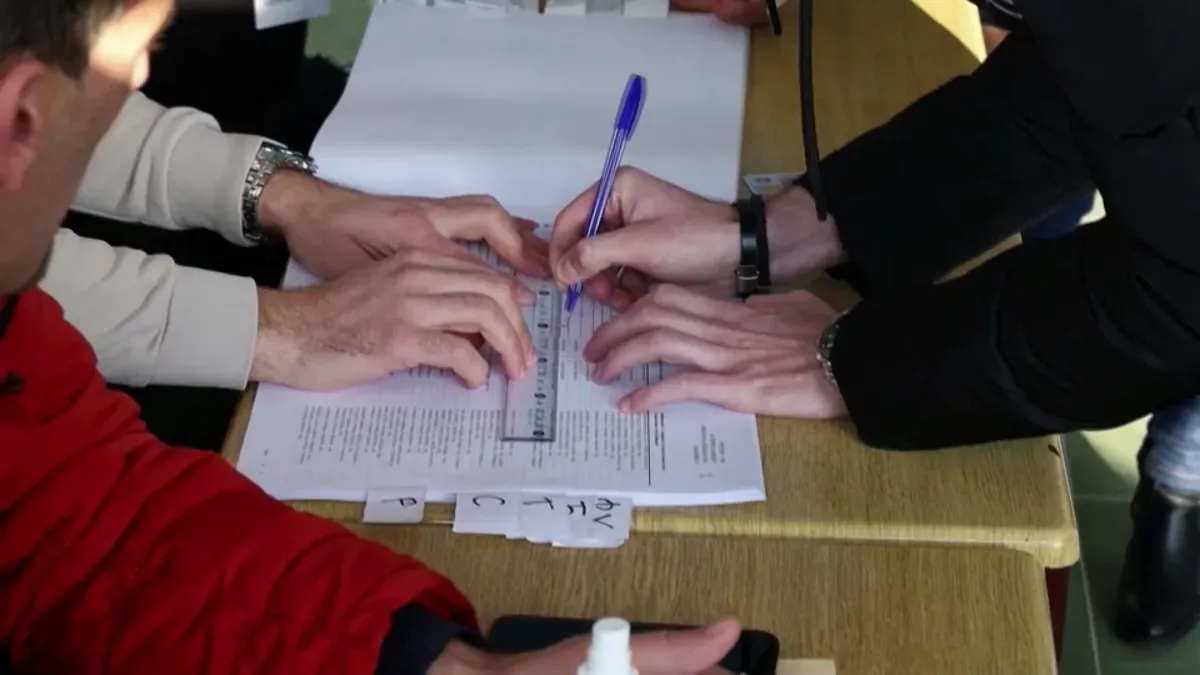
A group of diplomats at Serbia’s Foreign Ministry (MSP), writing under the handle “Diplomate ne cute” on X, wants the ministry to explain what rule allowed it to propose that every polling station abroad be open from 7 a.m. to 8 p.m. Serbian time, regardless of local time zones. The question was posted on October 13, 12 days before the parliamentary elections scheduled for October 25. The authors are not identified by name.
Which articles of the law do the diplomats cite?
The diplomats note that Article 56 of the Law on the Election of Members of Parliament gives the Foreign Ministry the right to propose polling stations abroad. Article 91 of the same law, they say, entrusts the setting of voting hours to the Republic Electoral Commission (RIK), with an obligation to account for time zone differences. They therefore ask:
“On the basis of which legal provision did certain individuals in the Foreign Ministry conclude that this institution is competent to propose voting hours? What has changed compared with previous elections? What are the specific, new or increased risks to the integrity of the electoral process that made the people in charge at the Foreign Ministry consider it necessary to propose such a schedule?”
They also cite Article 5 of the Law on Foreign Affairs, under which the ministry’s tasks include protecting the interests of citizens abroad and taking part in the conduct of voting. In their reading, those two duties do not pull against each other:
“These two legal responsibilities are not in conflict. On the contrary, when organizing voting the Foreign Ministry should take particular care of citizens’ interests. Did the individuals in the Foreign Ministry, when preparing the proposal, assess at all how much voting during the night would make it harder for our citizens to reach polling stations and exercise their right to vote?”
The diplomats add that the RIK setting the hours does not reduce the responsibility of ministry staff for the content and justification of a proposal the commission accepted. They ask the ministry to publish its specific risk assessments, explain what changed since earlier elections, and say whether the interests of citizens abroad were taken into account. In the post they call on the ministry:
“We call on the people in charge at the Foreign Ministry to present to the public their specific risk assessments, to explain why departing from past electoral practice was necessary, and why they did not take into account the interests of our citizens abroad when preparing the proposal.”
What did the RIK decide on October 5?
The decision on voting hours abroad was made on October 5, at a session that ended at 2:10 a.m. Twenty RIK members voted in favor and seven against. Polling stations abroad are open from 7 a.m. to 8 p.m. Central European Time, which means that in parts of the world people will vote during the night by local time. During the debate, New Zealand came up as an example, where voting would run from 7 p.m. to 8 a.m.
RIK member Zeljka Radeta said at the time that the decision complies with Article 91, paragraph 4 of the law, under which voting abroad lasts 13 hours and ends no later than 8 p.m. Serbian time. Tatjana Kitanovic backed the proposal on the grounds that it protects the integrity of the electoral process, because after voting abroad ended in earlier elections, results from individual polling stations spread on social media and some actors used them to “announce a final victory.”
Commission members who voted against were sharper. Ivan Sebek said the ministry had stepped outside its remit, and of the proposal he said:
“With this proposal you are further denying voters their rights, and in practice cutting the time they have to vote in half… This has surpassed everything seen so far.”
Jasmina Belic said the draft decision was only logged with the registry office the night before last, so it could have been discussed earlier, and then added:
“The Central Electoral Commission of a serious country proposes that people come to vote at three in the morning. That defies common sense. This is indefensible.”
David Krstic judged that the RIK, once again, had ended up being taught electoral law by the ministry, which, as he put it, has “no competence whatsoever” to do so. Marko Zivanovic pointed to Chicago, a city with one of the highest rates of serious crime in the United States, where official statistics show half of all crimes happen after 10 p.m. Zlata Jusufovic warned that if supporters of the decision invoke the law, then every earlier RIK decision on polling station hours abroad would turn out to be unlawful.
What did the diplomats say before this?
The new post follows a statement by more than 30 diplomats from the same ministry on October 7. They criticized the number of polling stations abroad, noting that almost three times as many voters registered for the October 25 election as in 2023. The ministry proposed 90 polling stations, the most of them, 28, in Bosnia and Herzegovina. On night voting, the diplomats wrote in that statement:
“It has been proposed that voting be organized by Serbian rather than local time, so our citizens in America, Asia and Australia will cast part of their votes during the night, which has never been done anywhere before.”
We found no response to today’s post from the Foreign Ministry or the RIK in the sources we reviewed.


