Vucic on RTS: 12 Ministers and a 600 Euro Pension
Vucic told RTS 2 his cabinet would have 12 ministers, outlined 1.3 billion euros for hospitals and a 600 euro average pension goal. His Sports Hall rally is Thursday.
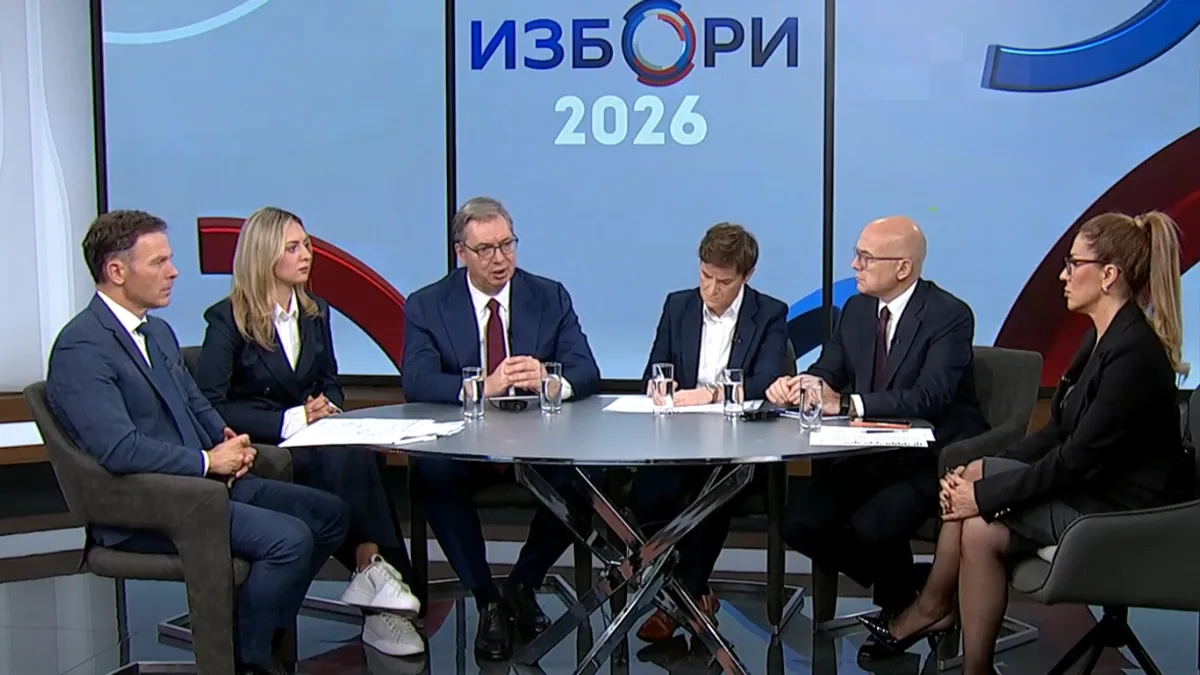
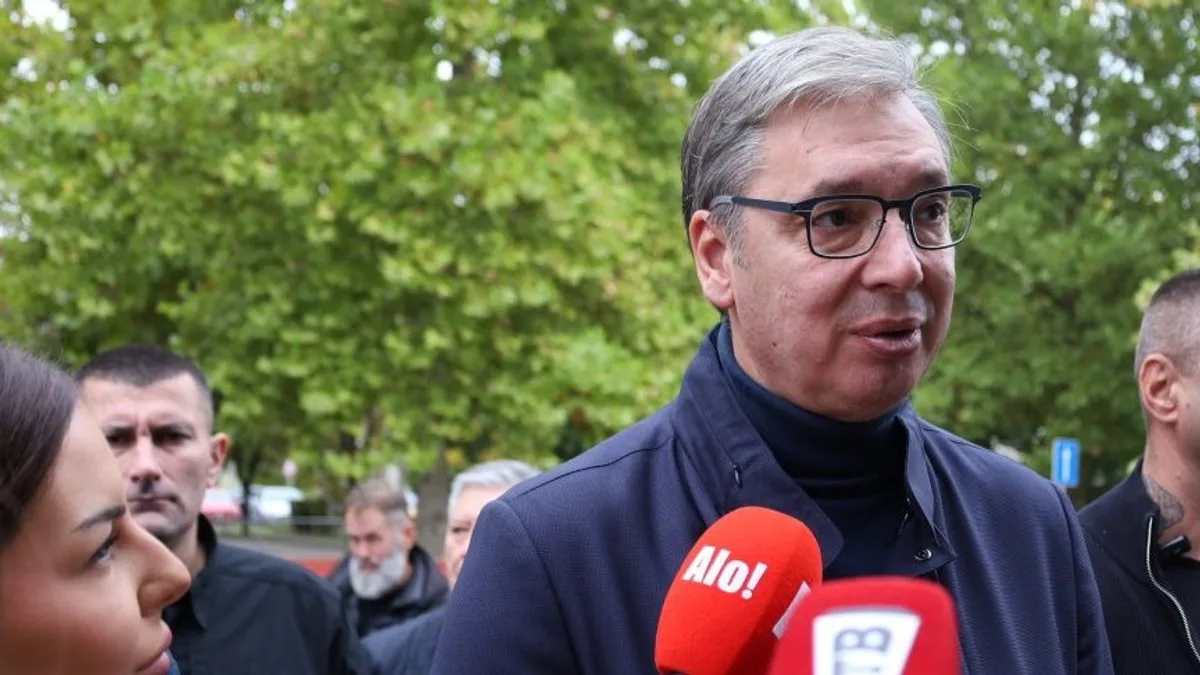
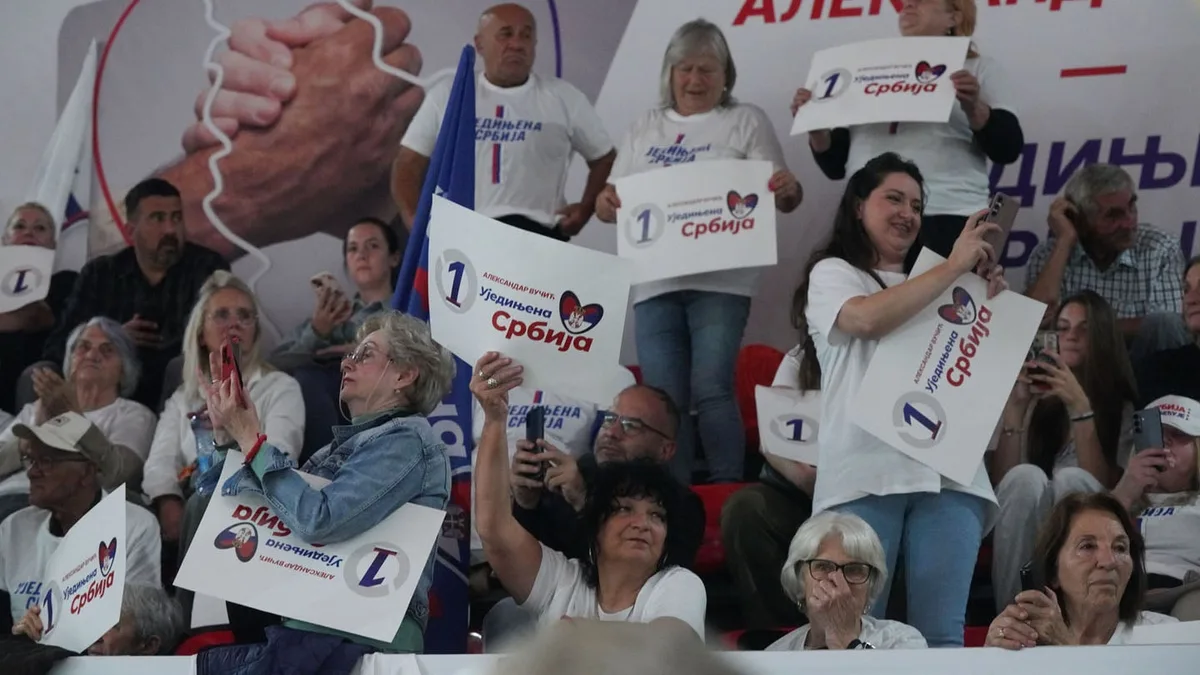
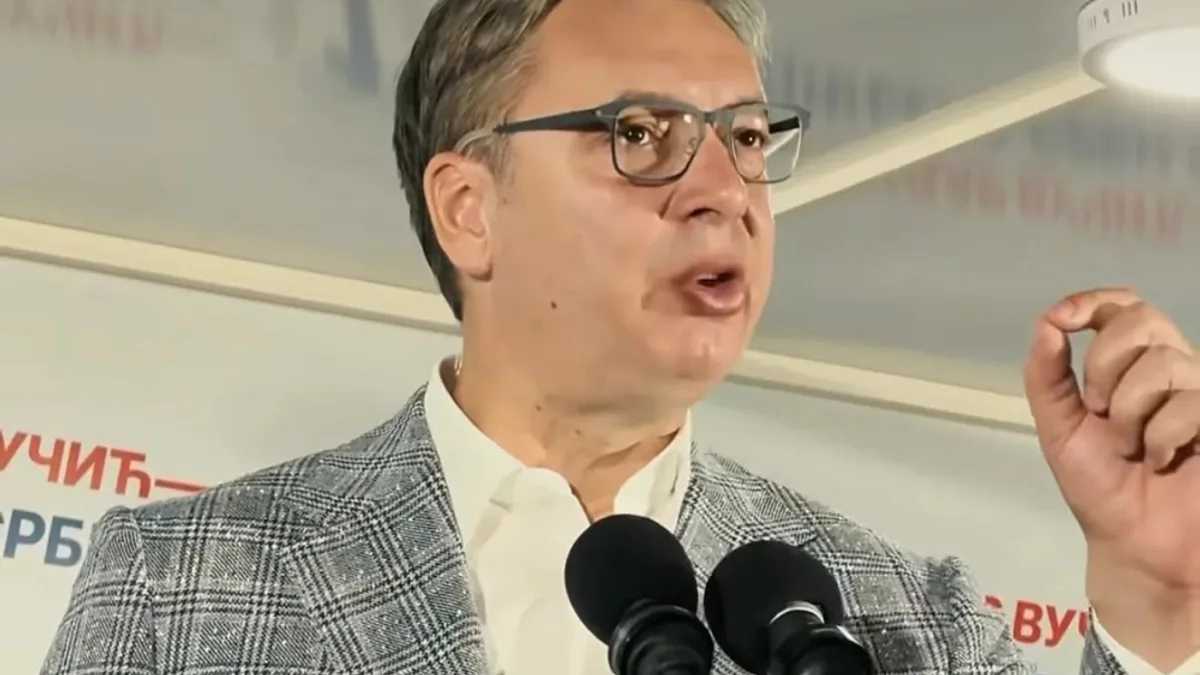
Aleksandar Vucic, the head of the “Aleksandar Vucic - United Serbia” list, said on Tuesday evening on RTS 2 that a government led by him would have 12 ministers. In the broadcast, where the list had 30 minutes to present its program, Vucic spoke last, after Milos Vucevic, Marija Stankovic, Sinisa Mali and Ana Brnabic. Besides the number of ministers, he set out a goal of a 600 euro average pension, a plan to invest in hospitals and an invitation to a rally at the Sports Hall on Thursday, October 22, at 4 p.m.
Vucevic is president of the Serbian Progressive Party, and Marija Stankovic is a medical student in Nis. The broadcast aired five days before the election, which is set for Sunday, October 25.
How many ministers would the government have, and how would it work?
Vucic said the cabinet would have “just 12 ministers.” He described the seat of government as a single building, with the exception of the defense and police ministries.
“All ministers, not counting the power ministries, defense and police, will be in the same building.”
He described the working hours of cabinet members in numbers:
“If you want to work in the Government, you must work at least 10 hours, and sometimes you will have to work 12, 13 and 14 hours.”
He extended the discipline to the local level. “We will have to, dear friends, bring order and give the local bullies a talking-to,” Vucic said, adding that this is a government meant to work in the field, not in an office. He set the condition himself: “if I become prime minister.”
What was said about wages and pensions?
Sinisa Mali was the first to present the living standard figures. According to him, the average wage in Serbia was 1,034 euros in July, against around 330 euros in 2012. The average pension will be 520 euros from December 1, compared with 204 euros in 2012. Gross domestic product is growing 3.6 percent this year, and for next year Mali named a goal of more than four percent. “The minimum wage will be 600 euros from January 1,” he said.
Mali also compared the period from 2008 to 2012, when, in his words, the dinar lost 50 percent of its value and unemployment stood at 25.9 percent, against 7.2 percent now. He tied that period to Dejan Soskic, then governor of the National Bank of Serbia. A response from Soskic or from the “Student List” to those claims had not reached the newsroom by the time this text was closed.
Vucic said pensioners can count on “significantly increased pensions as early as next year,” because the International Monetary Fund also expects Serbia to be the fastest growing economy next year. He then stated the goal:
“That means pensioners will soon reach the level, maybe as early as the end of next year, of 600, of 600 euros in average pension.”
The gap from the 520 euros Mali cited for December 1 is 80 euros.
How much money was announced for hospitals, medicines and water?
Vucic named health care as the first priority area. He listed the hospitals that would be rebuilt and equipped: in the east Smederevo, Pozarevac, Bor and Zajecar, in the west Valjevo, Cacak, Uzice and Novi Pazar, and in the north Pancevo, Zrenjanin, Kikinda, Subotica, Sombor and Sremska Mitrovica.
Vucic gave the figure of one billion 300 million euros while listing the north of the country: “In the north of Serbia, from Pancevo, Zrenjanin, Kikinda, Subotica, Sombor, Sremska Mitrovica, and we will invest one billion 300 million euros in that, and try to finish all the facilities in the next 3 and a half years.” Sinisa Mali described the same sum more broadly, as new investment in health care “just so we can rebuild all the facilities, the health facilities across the territory of our Serbia,” with additional funds for rare diseases. From what was said, it is not clear whether the amount covers only the six northern cities or health facilities across the whole country.
Before the end of the year, Vucic said, another six billion dinars, about 52 to 53 million euros, will be set aside for rare diseases, and seven billion for innovative medicines. He also announced the return of dental services which, he claims, were abolished in 2006.
For water supply, the estimate is “over 15 billion euros, even” of investment for all of Serbia, with a deadline of six to nine years. On sewage he gave an example: “One Kragujevac needs 680 km of pipes alone, not 680 m, you heard me right, 680 km.”
What was announced for poorer municipalities?
Vucic said special programs have been prepared for the south, east and west of the country, as well as for southern, central and northern Banat. The Moravica, Kolubara, Zlatibor and Raska districts have about 840,000 residents, and wages there are at 85 percent of the national average. The hiring subsidy in the poorest municipalities, among which he named Babusnica, Trgoviste, Bosilegrad, Nova Varos, Prijepolje, Priboj and Ivanjica, would rise from 50 to 70 percent, and in some places to 80 percent.
How did Vucic talk about his opponents?
In the second part of his address Vucic criticized the “Student List.” He said there will be no sanctions imposed on Russia and that the Russian president knows it too:
“That will not happen, it is just important that you know it. And Vladimir Putin knows it too. It is no accident that Vladimir Putin said he hopes I will be prime minister, and not someone else.”
On education he promised: “If I become prime minister, I guarantee you, there will be no politics in either universities or schools.” He also claimed that for two years he had offered a duel and a debate to political opponents, and that he agreed to face the top candidate of the “Student List” and the organization CRTA on RTS. “I agreed to go against the two of them. They refused,” he said. The newsroom had no response from the other side to those claims by the time this text was closed.
On his record in health care he said: “We are not satisfied because we did not reach every person, we did not help every person, and we did not show enough care.” Hospitals have been at the center of his promises in recent days, and we also reported on how he promised 4.8 billion dinars for a hospital in Krusevac.
Where are the list’s closing rallies?
Vucic invited citizens to “come tomorrow” to the closing rally in Nis at 6 p.m., that is, on Wednesday, October 21. The Belgrade rally is on Thursday:
“We are gathering at the Sports Hall on Thursday at 4 p.m., and then in all towns across Serbia.”
After that, he said, rallies will be held in towns across the country on Thursday evening, ahead of the pre-election silence. He ended by saying: “On Sunday we will celebrate, and then from Monday hard work, hard labor ahead of us.”