

Kurti Pledges 1 Billion Euros as 515 KSF Soldiers Sworn In
The largest class in the force's history took the oath at the Adem Jasari barracks, where the prime minister cited procurement figures and promised ammunition production by year end.
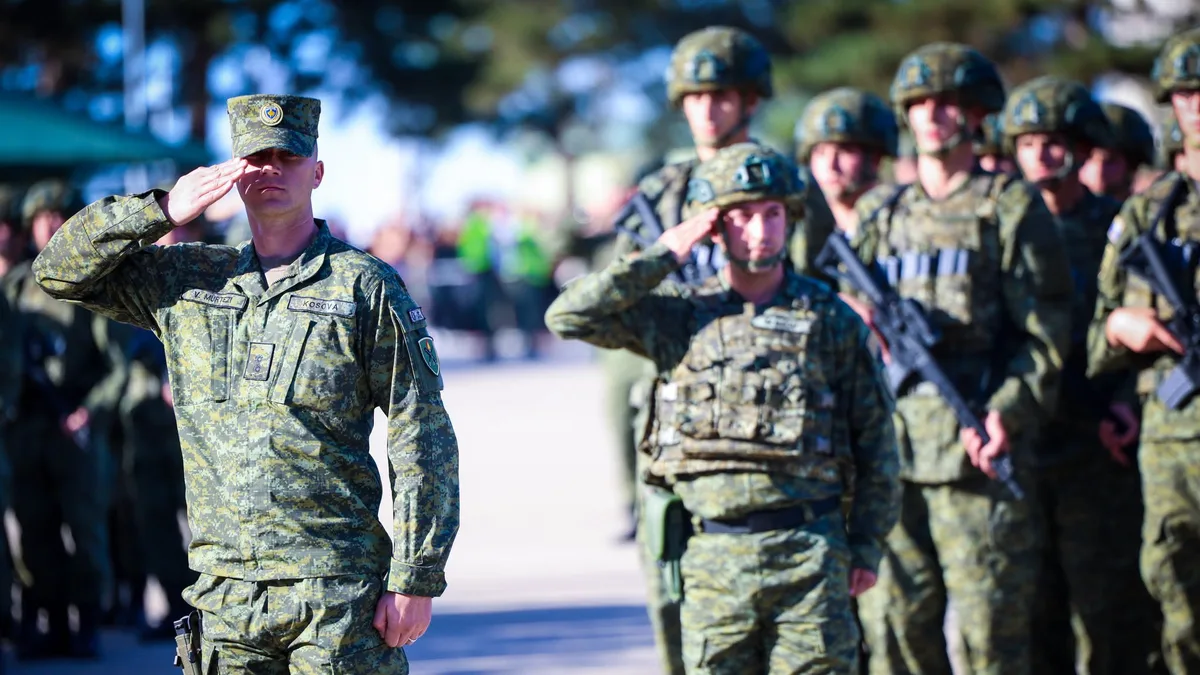
The Kosovo Security Force (KSF) has 515 new soldiers. Generation 02/2026 took the oath at the Adem Jasari barracks in Pristina, and Prime Minister Albin Kurti used the ceremony to present figures on military spending and to announce that ammunition production in Djakovica will begin by the end of the year.
Who took the oath at the Adem Jasari barracks?
The ceremony was held at barracks that were previously named “Marshal Tito” and “Kosovo Heroes.” 515 KSF members took the oath, and Kurti described the class as the largest in the force’s history.
“Today 515 new soldiers of the Kosovo Security Force are taking the oath, which makes this the largest generation we have ever had. These are 515 citizens who decided to serve the homeland, 515 more rifles for the security of the country, 515 new guarantors of freedom and peace,” Kurti said.
The recruits were also addressed by Besnik Taci, commander of the Basic Training Center within the Doctrine and Training Command. In translation from Albanian, his message was that from that day on they carry on their shoulders not only the KSF uniform but the trust of the entire nation, which expects selfless service, professionalism, ethics, discipline and unwavering dedication from them.
What did Kurti say about money and weapons?
Most of the speech was an accounting of the army. The prime minister claims the military budget tripled during the previous term, and for the current one he announced investment of more than a billion euros.
“During the previous term the military budget was tripled. In this term our commitment is to invest more than a billion euros in the army,” Kurti said, adding that 3,220 new soldiers have been recruited, more than doubling the size of the force.
According to him, procurement of weapons and equipment exceeds 430 million euros. For air support the KSF has the Bayraktar and the Skyguard, and on the ground more than 40 types of light and heavy weapons. Another class of recruits starts training before the end of the year, so, Kurti claims, the capacity planned for 2028 will be reached two years early.
He closed by saying:
“Our goal is clear: to protect our homeland and to make our army part of NATO.”
Kurti also recalled the KSF’s participation in the Defender 21, Defender 23 and Defender 25 exercises.
The billion-euro figure is not new. Kurti cited it on July 3, at the promotion of 12 new KSF officers, when he also announced raising the number of women in the KSF to a thousand.
Where is the ammunition factory and what is known about it?
Kurti repeated that Kosovo will start its own ammunition production by the end of the year.
“By the end of this year we will begin producing ammunition at the factory we are setting up in Djakovica, which will be 100 percent domestic. We also support the private sector that wants to produce military products,” he said.
Construction began in May, in the village of Jahoc near Djakovica. Kurti and Defense Minister Ejup Macedonci toured the site at the time and announced that production would start with 5.56 and 7.62 millimeter ammunition. The government set aside 140 hectares for the arms industry zone, 19 of them for the factory itself. Later phases are planned to include development of “Made in Kosova” drones.
What do Belgrade and the regional partners say?
The strengthening of the KSF goes hand in hand with military cooperation with Albania and Croatia. The defense ministers of the three sides signed a Declaration on Defense Cooperation on March 18, 2025, which provides for joint training and exercises, cooperation between defense industries and coordination in responding to hybrid threats. The document is not a formal military alliance with a mutual defense clause.
Serbia’s Defense Ministry assessed in February 2026 that strengthening the KSF through the trilateral alliance endangers peace and violates United Nations Security Council Resolution 1244. Officials in Croatia, Albania and Kosovo say their cooperation is not directed against other countries and that its aim is to strengthen regional security and align with NATO standards.
What limits the KSF?
Kosovo is not a NATO member. Under a 2013 agreement, the KSF cannot be deployed in northern Kosovo without prior approval from the Kfor commander. In May, Kurti said a day will come when the KSF is deployed in the north too, but in cooperation with NATO.
A new structure, a Kosovo gendarmerie, is also under discussion. Interior Minister Dzeljalj Sveclja signed a decision on May 19 to set up a working group, and the formation is not yet operational.


