Kosovo Serbs Wait Up to Three Hours at Merdare and Jarinje
Serbia set up 60 polling stations in central Serbia for 100,413 voters from Kosovo, and reaching them takes hours: border queues, crowds in Raska and Ribarici.
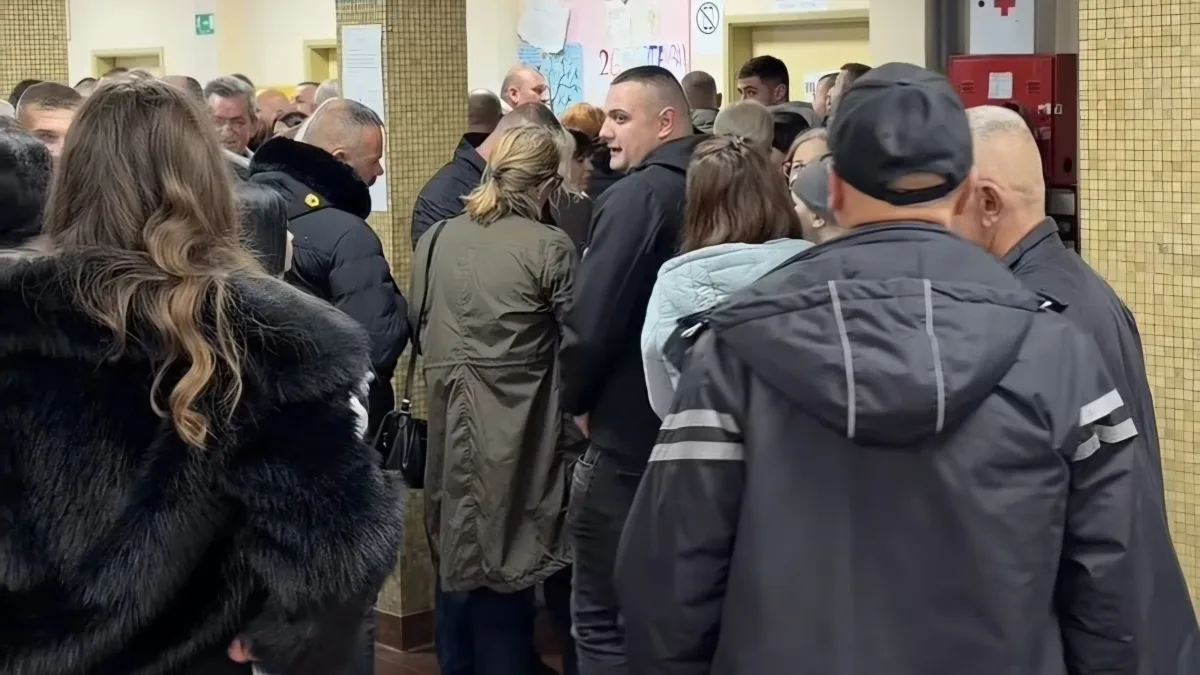
Kosovo Serbs are voting today in Serbia’s snap parliamentary elections, and it is taking them hours to reach the polls: queues have formed at the Merdare and Jarinje crossings, and large crowds have been reported in Raska and Ribarici. Voters from Kosovo have been assigned 60 polling stations in four municipalities of central Serbia, because no voting is organized in the places where they live.
How long is the wait at Merdare and Jarinje?
According to Radio Kim, citing a report from the scene and figures from the Interior Ministry in Pristina, the line of vehicles at Merdare stretched at least three kilometers this morning, with waits of 90 to 120 minutes. Kosovo Online put the wait at the same crossing at more than two hours in the headline of its report.
At Jarinje there was a three-kilometer queue, and the wait lasted about three hours, according to Kosovo Police estimates relayed by KoSSev. Kosovo Online also published a report of a queue about five kilometers long at Jarinje, with police directing traffic. The two figures differ, and neither report says whether they refer to the same moment of the day.
At Bela Zemlja the queue was about a kilometer long, with a wait of more than an hour. Delays were shorter at Brnjak: a queue of about 200 meters and a wait of roughly 30 minutes in both directions.
Alongside the queues at the crossings, Eulex said on X that it had stepped up patrols by its formed police units near the main shared crossings between Kosovo and Serbia:
“From the early morning hours on election day in the Republic of Serbia, Eulex has increased the presence of patrols of its formed police units near the main shared crossings between Kosovo and Serbia in order to monitor the situation on the ground, in coordination with the Kosovo Police and KFOR, within a security mechanism that operates on three levels”
Where do Kosovo voters cast their ballots?
According to CRTA, which relied on the closed voter register, 100,413 voters from 22 Kosovo administrative units are spread across 60 polling stations in Raska, Tutin, Kursumlija and Vranje. That is nine more stations than at the 2023 parliamentary elections, when 51 were set aside for Kosovo voters.
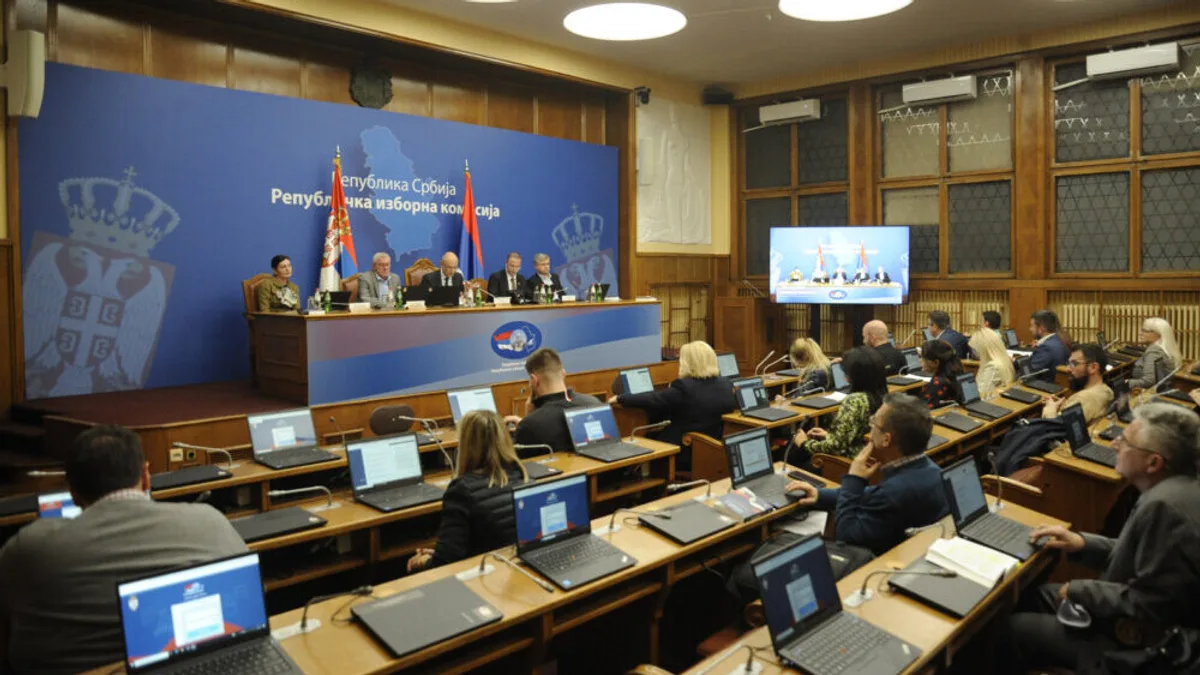
The Republic Electoral Commission set the allocation as follows:
- voters from the Kosovska Mitrovica district, except those from Zubin Potok and Vucitrn, vote in Raska
- voters from Zubin Potok vote in Tutin (Ribarici), together with voters from the Pec and Prizren districts
- voters from the Kosovo district and from Vucitrn vote in Kursumlija (Raca)
- voters from the Kosovo-Pomoravlje district vote in Vranje
Voters from the municipality of Leposavic vote in Rudnica, and Kosovo Online reports large crowds outside the polling station there. Voters from Pristina cast their ballots at the “Drinka Pavlovic” primary school in Raca near Kursumlija.
What happened in Raska and Ribarici?
In Raska, all polling stations opened on time, at seven o’clock, according to KoSSev. Observers confirmed to KoSSev that there were large crowds and that two women collapsed at a polling station. According to the portal’s unofficial information, the crowds also formed because the polling stations technically cannot accommodate that many voters, and there was pushing.
In Ribarici, where voters from Zubin Potok cast their ballots, Kosovo Online reported a wait of more than an hour outside the polling station. Radio Gorazdevac, citing unofficial sources, reported that voting there was briefly interrupted after shouting and commotion. Ivana Milutinovic of the Zubin Potok Municipal Election Commission denied to KoSSev that voting had been interrupted and said it was a matter of crowding. Other sources at the scene told the same portal there was pushing but no fight, and that any pause lasted only a few minutes. There is no official confirmation so far that voting was formally halted in Ribarici.
Why do Kosovo voters travel to central Serbia?
The last Serbian parliamentary elections with voting organized in Kosovo were held in 2020, with the mediation of the OSCE Mission. In 2022 and 2023 voters had to travel to central Serbia, and the same model applies today. Petar Petkovic, director of the Office for Kosovo and Metohija, asked the OSCE before this election to make voting in Kosovo possible again. The OSCE Mission had earlier said it was ready to collect ballots, but only with the consent of the relevant parties and under suitable security conditions. No agreement was reached.
Transport, according to KoSSev, is organized through local carriers and structures that operate within the Serbian system, with one bus operator that others can also contact. Many voters travel on their own, and some have moved their residence to central Serbia because of administrative difficulties.
The number of Kosovo voters remains an open question because the records differ. KoSSev reports that the status of more than 248,000 entries from six Kosovo municipalities (Djakovica, Suva Reka, Glogovac, Kacanik, Decani and Stimlje) is unclear: they exist in the central database of the Unified Voter Register but are not covered by the public overview of polling stations for this election. These are records of different scope that cannot be directly equated.
According to the final figures of the Republic Electoral Commission, 6,451,292 people are eligible to vote, and 18 electoral lists are competing for 250 seats. Polling stations are open until 8 p.m., when the election silence also ends. The first official turnout figures are expected during the day.