Orlic sought Radar surveillance, NUNS demands his removal
Radar says Belgrade Higher Court approved and extended surveillance of three newsroom members from June 12. BIA calls the claims false, NUNS wants Orlic removed.
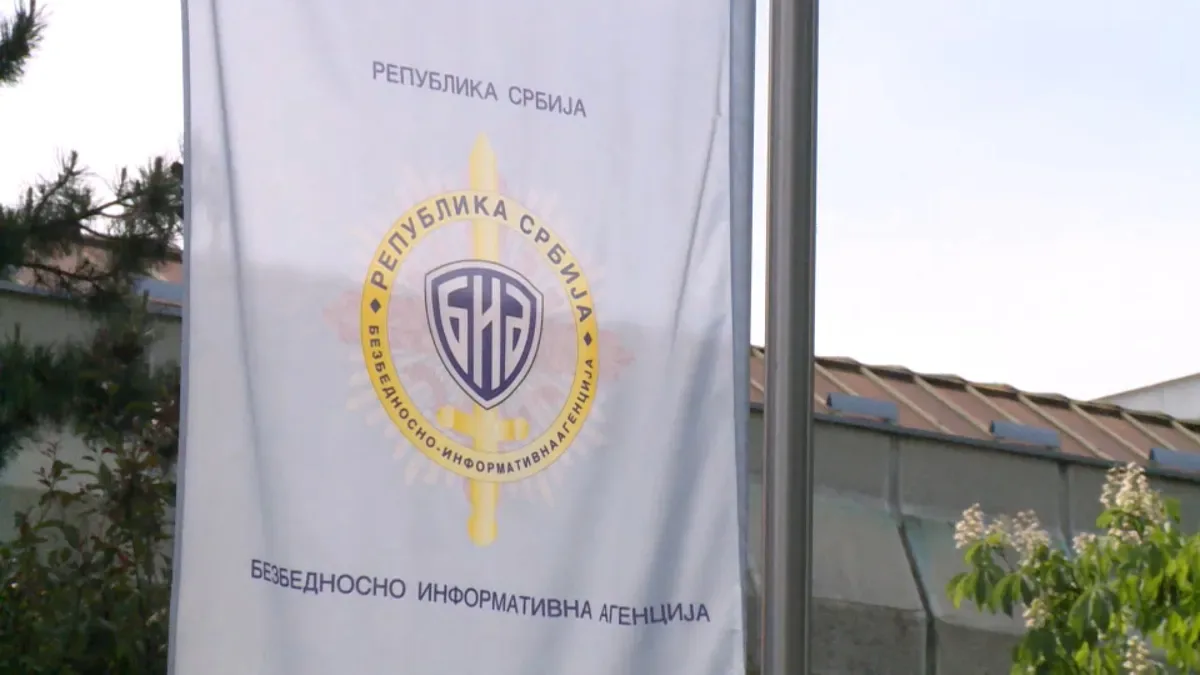
The weekly Radar published a document on November 4, 2026, according to which the director of the Security Information Agency (BIA), Vladimir Orlic, asked the Belgrade Higher Court for secret surveillance of editor-in-chief Vesna Malisic and journalists Sandra Petrusic and Milan Radonjic. Radar says the court first approved the measures on June 12, 2026. BIA rejects every claim, and the Independent Journalists’ Association of Serbia (NUNS) is demanding Orlic’s removal.
What does the document published by Radar say?
According to Radar, the measures included recording conversations in a “business premises on the first floor of the office building at Terazije 5 in Belgrade,” which is the weekly’s newsroom address. The surveillance did not stop at the three named people: Radar says the communications of all its editors and journalists were monitored this way. The measures were also entered for four Belgrade hospitality venues that the editor and the journalists do not visit, the paper writes.
The request cites suspicion that the journalists committed the criminal offense of espionage under Article 315 of the Criminal Code. The measures were extended on July 15 and September 9, 2026. Radar also reports that Orlic, by discretionary decision, ordered ten days of physical surveillance of some members of the newsroom.
The last part of the document, as Radar relays it, points the other way. On October 22, the day the final issue of Radar before the election came out, Orlic proposed to the president of the Belgrade Higher Court, Dragan Milosevic, that all measures be ended. In the proposal he wrote that the data gathered under the earlier measures did not indicate that the named person was involved in espionage, so there was no need to continue.
When did the surveillance start, and when did it end?
Here the accounts diverge. Radar points to an inconsistency within the document itself: the header says special measures are being abandoned on October 22, while the date entered as the date of ordering is November 3, 2026.
Malisic told Danas that the surveillance lasted from June until November 3 and that the newsroom, cars and apartments were bugged. She gives a different date for the order than the one Radar cites. “The order was issued on June 26 or 27,” she said, while the paper writes that the court first approved the measures on June 12. The published document does not resolve the difference, and neither side has explained it.
Malisic ties the start of the surveillance to Radar’s June stories. On June 11, the day before the first approval, Radar ran a piece by Milan Radonjic on criminals being flown to Tivat for the Western Balkans summit, and in the same issue a story on the killing at the restaurant “27” in Senjak.
What does Malisic say?
She says the newsroom learned of the surveillance from the document and the order obtained by Radar journalist Vuk Cvijic. According to her, the newsroom knew it was in the spotlight because of its investigative work.
“The most important thing for us was to protect our sources, and I think we managed it, because we are not naive.”
The newsroom, she explained, had a rule of not discussing sensitive topics on the premises or with phones present. She sees the reason she was bugged in her daily cooperation with a colleague: “I am in contact with Vuk Cvijic literally every day, either in the newsroom or by phone.” On publishing material like this, she says: “We only publish such things when we have proof.” In her words, Radar also holds documents on the wiretapping of students and of another prosecutor.
On November 1, Radar reported that BIA had also monitored prosecutors of the Organized Crime Prosecutor’s Office in the “Canopy” case, among them chief prosecutor Mladen Nenadic. According to the paper, that surveillance lasted until October 29.
How did BIA respond, and what does NUNS demand?
BIA issued a statement the same day, carried by N1. In the part N1 reproduces, Radar is not mentioned by name.
“BIA expressly rejects all false, tendentious and malicious claims about its allegedly unlawful conduct as maliciously devised with the sole aim of further destabilizing the already damaged security situation in Serbia and of undermining the constitutional order,” the agency stated.
NUNS is demanding Orlic’s immediate removal and an independent investigation into the responsibility of everyone who proposed, approved and carried out the measures. It also wants prosecutors to examine which specific facts the measures were requested and approved on, and it reminds the public that a court’s approval “does not in itself rule out the possibility of abuse.”
The vice president of the Journalists’ Association of Serbia, Slobodan Ciric, told Danas:
“I am convinced that the decision to wiretap had a heavy political background, whose main aim was to prevent freedom of public speech, to stifle any criticism of the authorities, and to fabricate affairs about alleged espionage.”
NUNS legal adviser Marija Babic also called on other bodies to react: “Using BIA for these purposes is completely unacceptable, and it is necessary to establish whether there was an abuse of official position.” She added that, within their competences, the Protector of Citizens and the Commissioner for Information of Public Importance and Personal Data Protection should act.
What else does Radar announce?
Cvijic told N1 that, to his knowledge, the surveillance was not limited to the newsroom.
“We see that they wiretapped even prosecutors, and we are bringing a document on that tomorrow.”
He claims BIA wiretapped activists, professors, the university community, trade unions and opposition party leaders, and that military intelligence took part as well. “If someone follows you 24 hours a day when you go to the shop, when you go to pick up your child, that is already not normal,” he said. The documents on this, he announced, come out in the November 5 issue of Radar, and only then will it be possible to check how much support the claims about the breadth of the surveillance have.