RTV skips live broadcast of Vojvodina Assembly session
Vojvodina's public broadcaster did not air the November 5 session of the provincial parliament, ten days after a change in program management. Gojkovic says the Assembly was not informed.
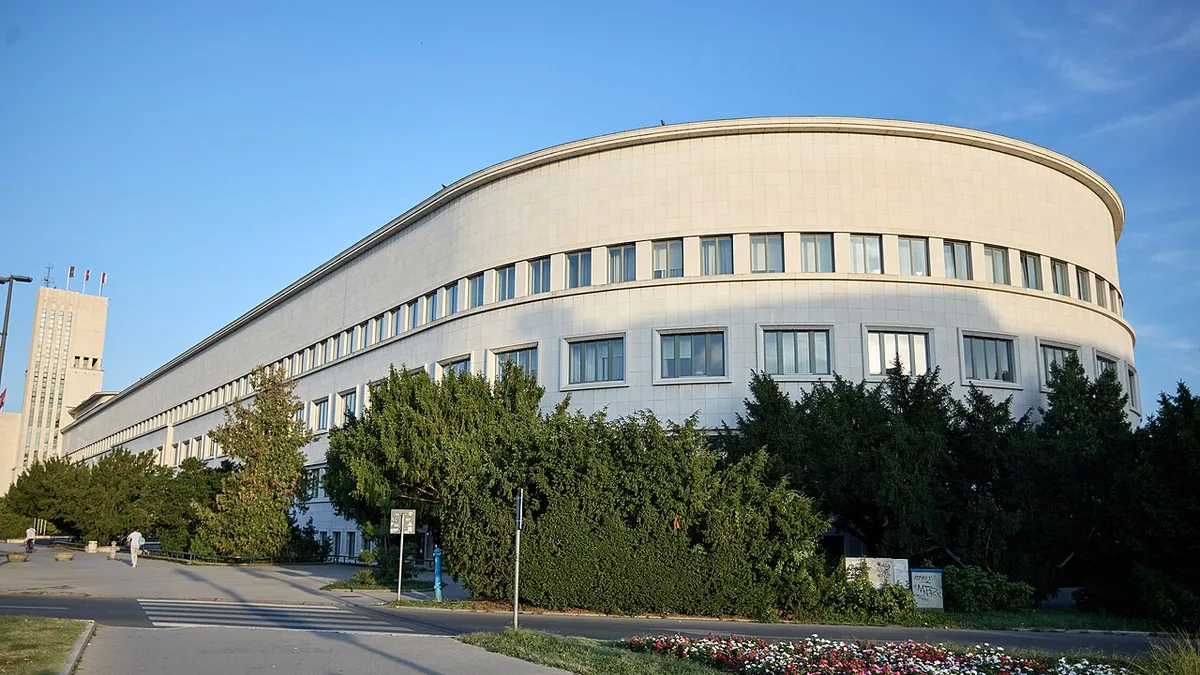
Radio-Television of Vojvodina (RTV) did not broadcast the session of the Assembly of the Autonomous Province of Vojvodina live on television on Thursday, November 5, and the leadership of the provincial parliament was not told about such a decision, according to Provincial Government president Maja Gojkovic. The missing broadcast came ten days after a change in the public broadcaster’s program management, and Aleksandar Vucic responded the very next day.
What did RTV say about the missing broadcast?
The statement explaining the decision was signed by program director Predrag Novkovic and Blazo Popovic, acting editor-in-chief of the First Program. It reads:
“The legal obligation of the public media service is to inform citizens in a timely, truthful and complete manner about events of public interest, not to broadcast every parliamentary session live. RTV has met that obligation by reporting on the work and content of the session, and RTV’s technical crews provided the signal for recording and for a direct broadcast via streaming, through the website of the Assembly of the Autonomous Province of Vojvodina.”
RTV’s leadership also pointed to European practice. In their words, public broadcasters are not required to carry every parliamentary session, and Radio-Television of Serbia signs a separate contract each year for broadcasts of National Assembly sessions, covering the costs of the broadcast and the program space it takes up.
Who runs the program, and since when?
The portal sd.rs reports that the program leadership changed on October 26, after the resignation of Nenad Cacic. Novosti confirms that Popovic is acting editor-in-chief of the First Program and Novkovic is program director, but only sd.rs gives the date and the resignation. The decision on the broadcast was therefore made at the first major session of the provincial parliament after that change.
What do the Assembly and the opposition say?
According to sd.rs, Gojkovic said the Assembly leadership had not even been told that there would be no live television broadcast, and judged that nothing like it had happened since October 5, 2000. In her account, sessions of the provincial parliament have been carried on television since that date, which is more than 26 years.
The same portal cites documents that partly support the claim. Minutes of Assembly sessions held on May 28 and June 24, 2009 record that the then parliament speaker, Sandor Egeresi, told deputies that a television broadcast had been arranged. RTV’s annual work report for 2024 states that session broadcasts ran from 10 a.m. to 5 p.m., while longer sessions were aired on a delayed basis in the evening. None of those documents confirms the date of October 5, 2000 itself.
Danijel Kovacic, a Democratic Party deputy in the Vojvodina Assembly, expressed dissatisfaction that citizens could not follow the session on television and said the public broadcaster needs serious changes.
What did Vucic say?
Vucic, a former president of Serbia and the head of the United Serbia list, posted a video message on Instagram on Friday, November 6. The description of the post reads:
“Revolutionaries yesterday abolished the broadcast of the Vojvodina Assembly session on the public service. In the last 35 years, that has occurred to no one. With all peaceful and democratic means we will fight so that people in Serbia can hear a different opinion.”
In the video itself, as reported by Novosti, Vucic said that “the people do not have to hear those who think differently” and asked those who had spoken about democratizing society whether this was what they had fought for. He added that National Assembly sessions will be broadcast and that he and his side will win that through peaceful and democratic means, without smoke bombs and firecrackers. Part of that statement is grammatically garbled in the Novosti transcript, so it is paraphrased here.
The figures do not match: Vucic speaks of 35 years, while Gojkovic describes a practice that began in October 2000. Neither claim has been verified against available documents.
What questions remain unanswered?
According to sd.rs, RTV’s new program leadership has not answered questions about the criteria it will use to choose which sessions to broadcast, or about the representation of parliamentary groups. It is also unclear whether the missing broadcast on November 5 was a one-off programming move or a new editorial policy toward the work of the provincial parliament.
The story follows on from what we reported earlier: Vucic’s announcement that the Serbian Progressive Party will demonstrate against Radio-Television of Serbia, and the decision of the Regulatory Authority for Electronic Media against the Informer and Prva television channels.