Minority Council Elections: Voting Opens at 949 Sites
Polling stations opened at 7 a.m. and close at 8 p.m. A total of 481,785 voters are registered, and the Republic Electoral Commission will publish direct-election results within 96 hours.
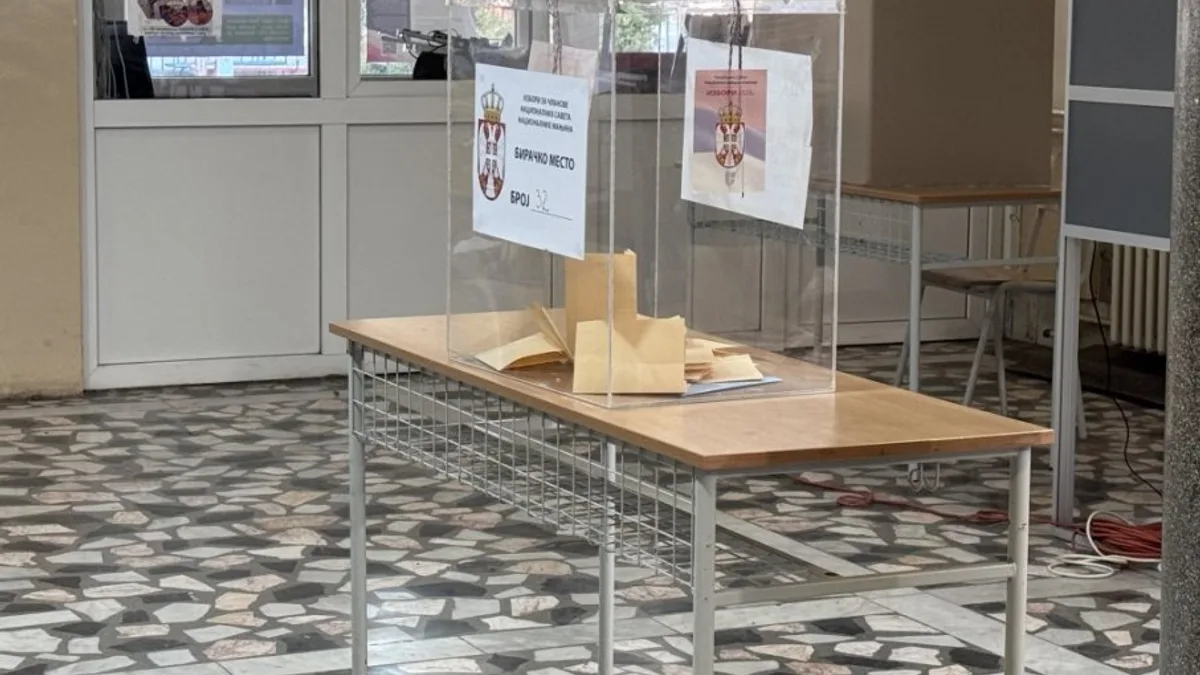
Voting in the elections for national minority councils began on Sunday, November 8, 2026, when all polling stations opened at 7 a.m. They stay open until 8 p.m. Voters can cast ballots at 949 polling stations. The Special Voter Register lists 481,785 voters, and 482,849 ballots have been printed. Fifty-two electoral lists have been certified, and members will be elected to the councils of 23 national minorities.
As of publication, the Republic Electoral Commission (RIK) had not released a turnout figure, so none appears here.
What do we know about Novi Pazar, Subotica and Novi Sad?
In Novi Pazar, all 67 polling stations opened on time, at 7 a.m. The Special Voter Register includes 63,529 citizens there, of whom 62,937 are registered to vote for the Bosniak National Council. Four lists have been certified for that council. Across Serbia, 114,777 citizens are eligible to vote in the election for the National Council of the Bosniak National Minority.
In Subotica, 63 polling stations opened, and the register holds 40,907 voters who belong to 23 national minorities. According to the Tanjug news agency, the largest registered groups are Hungarians (23,910), followed by Croats (9,054), Bunjevci (5,258) and Roma (1,079). Three lists were certified for the 19-member Bunjevci council, two for the 35-member Hungarian council, and three for the 23-member Croatian National Council.
In Novi Sad, voters cast ballots at 22 polling stations. At polling station 15, in the Jugovicevo local community, voting began at 7 a.m.
Who is elected directly, and who through electors?
Members of the councils of 21 minorities are elected directly. On September 16, the Ministry for Human and Minority Rights and Social Dialogue provisionally closed the special voter registers and found that those 21 minorities met the conditions for direct elections. The number of members differs from council to council:
- 35 members: Bosniak, Hungarian and Roma councils
- 29 members: Albanian council
- 23 members: Vlach, Romanian, Slovak, Croatian and Montenegrin councils
- 19 members: Bulgarian, Bunjevci, Macedonian and Rusyn councils
- 15 members: Ashkali, Greek, Egyptian, German, Polish, Slovenian, Ukrainian and Czech councils
Members of the Goran and Russian minorities choose their representatives through electoral assemblies, held in the National Assembly building. They elect 15 members of the National Council of the Goran minority and 19 members of the National Council of the Russian national minority. Those elections are run by a three-member board appointed by the RIK. The board determines the results immediately after voting ends and, within three days, issues a decision allocating the seats.
When will the RIK publish results?
The RIK publishes the results of direct elections within 96 hours of the end of voting. Counted from the polls closing at 8 p.m., that means no later than 8 p.m. on November 12. Within three days of determining the final results, the RIK issues a decision allocating seats to candidates in the order they appear on the list, starting with the first name.
Who is monitoring the vote?
Two hundred and four domestic and foreign observers are monitoring the elections. The domestic observers come from the groups OKO, Bravo NS, Kreni-promeni, Budni, Kraj and Liberta NS. Among the 24 foreign observers are four each from the British and Slovak embassies, two each from the United States Embassy and the European Union Delegation in Serbia, and twelve from the OSCE mission. The vote is also being watched by 1,194 representatives of list submitters.
Regular elections for national councils are held every four years, the length of one council’s term. The previous ones took place on November 13, 2022.