Belgrade Prosecutors Reject Commission Findings in 7 Cases
Prosecutors in all seven supervised cases have individually disputed the Commission's claims, and the Belgrade office says the report undermines prosecutorial independence.
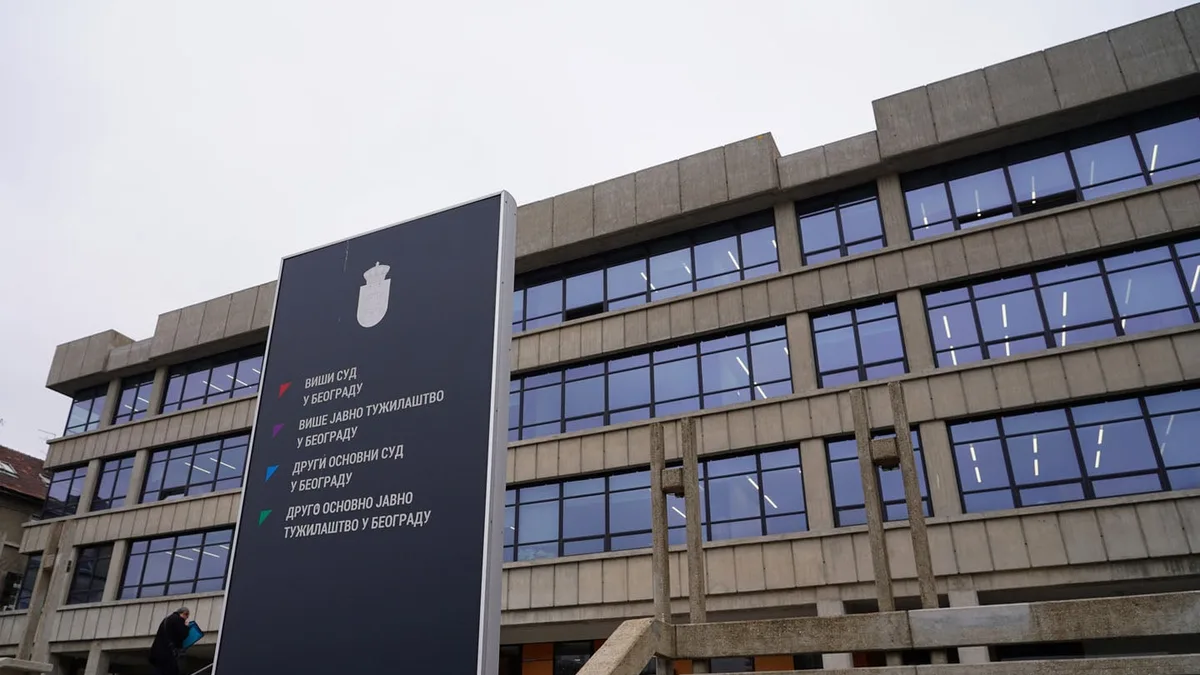
The Higher Public Prosecutor’s Office in Belgrade (VJT) today, November 16, 2026, published its full analysis of the first report by the Supreme Public Prosecutor’s Office Commission. In it, prosecutors from all seven supervised cases individually dispute every claim the Commission made. Until now, VJT had answered the November 10 report only with a short statement on November 11.
The Supreme Public Prosecutor formed the Commission by decision No. 513/26 of October 27, 2026. Its 23-page supervision report covers seven cases and criticizes the work of Chief Public Prosecutor Nenad Stefanovic and several VJT Belgrade prosecutors. The Commission proposes criminal prosecution for abuse of office under Article 359, paragraph 1 of the Criminal Code, disciplinary proceedings that include dismissal of prosecutors, and forwarding the report to the Prosecutor’s Office for Organized Crime.
What does VJT claim in its analysis?
The Higher Public Prosecutor’s Office says the report has “abolished the basic postulates and guarantees of the independence of public prosecutors, guaranteed by the Constitution and the Law on the Public Prosecutor’s Office.” It also complains that the Commission gave it no chance to respond before the report was published, which is why the prosecutors’ statements are now included in the analysis.
The core of the defense concerns how the report was written. VJT argues that the Commission proposes severe measures without established facts:
The Commission does not even say it has established anything, only that it “believes”
That sentence in the analysis refers to the proposal for criminal prosecution and the harshest disciplinary sanction. The same text adds that “such a report might be excusable if it came from the lay public,” but not when it is signed by the highest representatives of the prosecutorial profession. VJT calls the proposal to forward the report to the Prosecutor’s Office for Organized Crime a “legal nonsense.”
The office also cites Article 57 of the Law on the Public Prosecutor’s Office, under which a holder of a prosecutorial office cannot be held liable for an opinion or decision, unless he commits the criminal offense of violating the law by a judge or public prosecutor under Article 360 of the Criminal Code. VJT describes that provision as a special law (lex specialis) for all holders of judicial office.
The sound cannon case: what is in the files
One part of the analysis addresses the “sound cannon” case, which concerns the rally of March 15, 2025. According to VJT, the case files contain 151 statements from rally participants, 133 medical reports, more than 70 audio and video recordings, city camera footage, 33 letters from the Interior Ministry, the BIA security agency and the Defense Ministry, and an analysis by the Military Technical Institute.
VJT also says that Genasys, the company that makes the LRAD device, stated that the system was not used at the rally, and that the Commission did not mention that statement. The office adds that checks will continue if evidence of a criminal offense emerges.
How heavy is the workload?
The analysis also includes figures on the office’s work. VJT Belgrade has 75 holders of prosecutorial office out of 103 positions in its staffing plan, and that number was considerably lower in 2023 and 2024. In 2025, 19,151 cases were opened, of which 4,333 remained unresolved at year’s end, and since the start of 2026 another 16,202 cases have been opened. VJT therefore questions how the Commission could identify “systemic patterns” in the conduct of the chief prosecutor and individual prosecutors from a sample of seven cases.
VJT also notes that Stefanovic took office on January 1, 2022. From that, the office argues, it follows that the Supreme Public Prosecutor’s Office for almost five years did not exercise powers it is legally bound to exercise, even though it has access to the SAPO application that holds all VJT Belgrade cases. During Stefanovic’s term, the analysis states, one binding instruction was issued (the EPS case) along with two decisions on substitution: in the Canopy case and in the case against Commission member and prosecutor Branko Stamenkovic. VJT says those three decisions could also be the subject of a separate analysis.
In its conclusion, VJT says that “such conduct is unacceptable, and at the very least dangerous,” because all constitutional and legal norms that apply to other holders of prosecutorial office also apply to VJT Belgrade.
From November 10 to today
The Commission’s report was published on November 10. The next day, in a statement dated November 11, VJT called its content and conclusion “malicious” and “unfounded,” said they violate the presumption of innocence, and said Commission members exceeded their authority. VJT concluded then that the report would go down in the history of the prosecutorial organization as the “most brutal form of intimidation” of every holder of prosecutorial office.
On November 12, Stefanovic said the Commission’s only goal is to target VJT Belgrade and him personally, as chief public prosecutor. The Commission’s response to today’s analysis was not available at the time of writing.