Jovanov: No RTS Broadcast, No Certainty on Session
SNS Presidency member told TV Pink he expects a dedicated parliamentary channel, and called the Student List's decision on vice presidents a precedent.
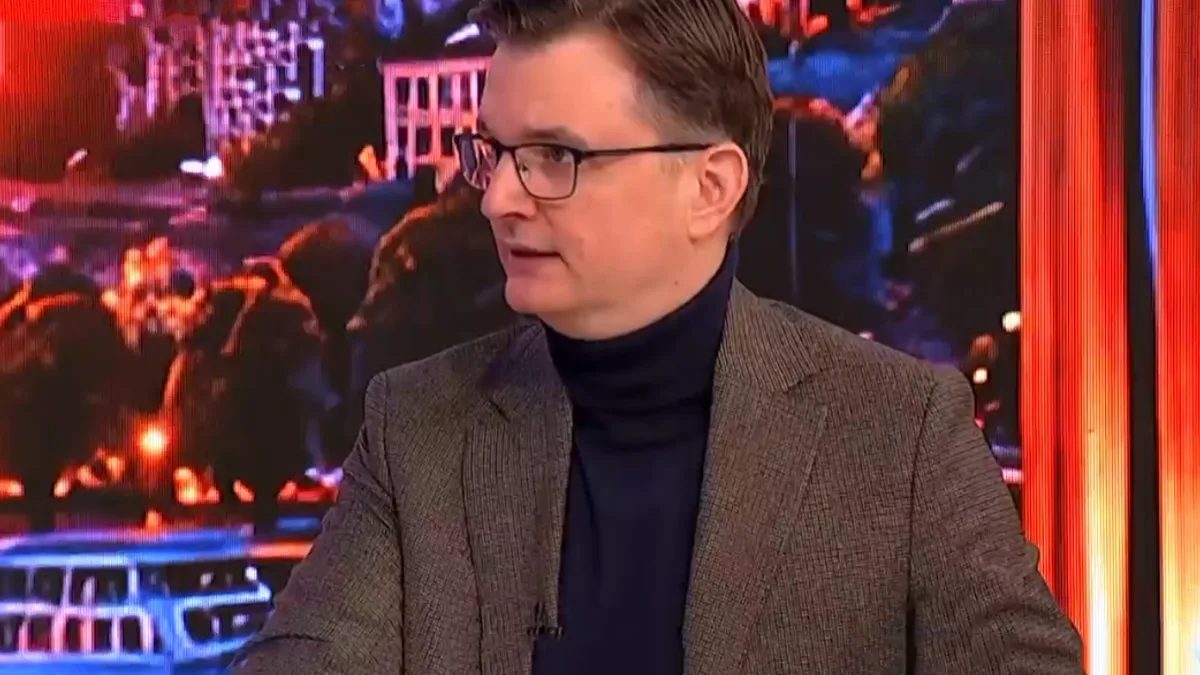
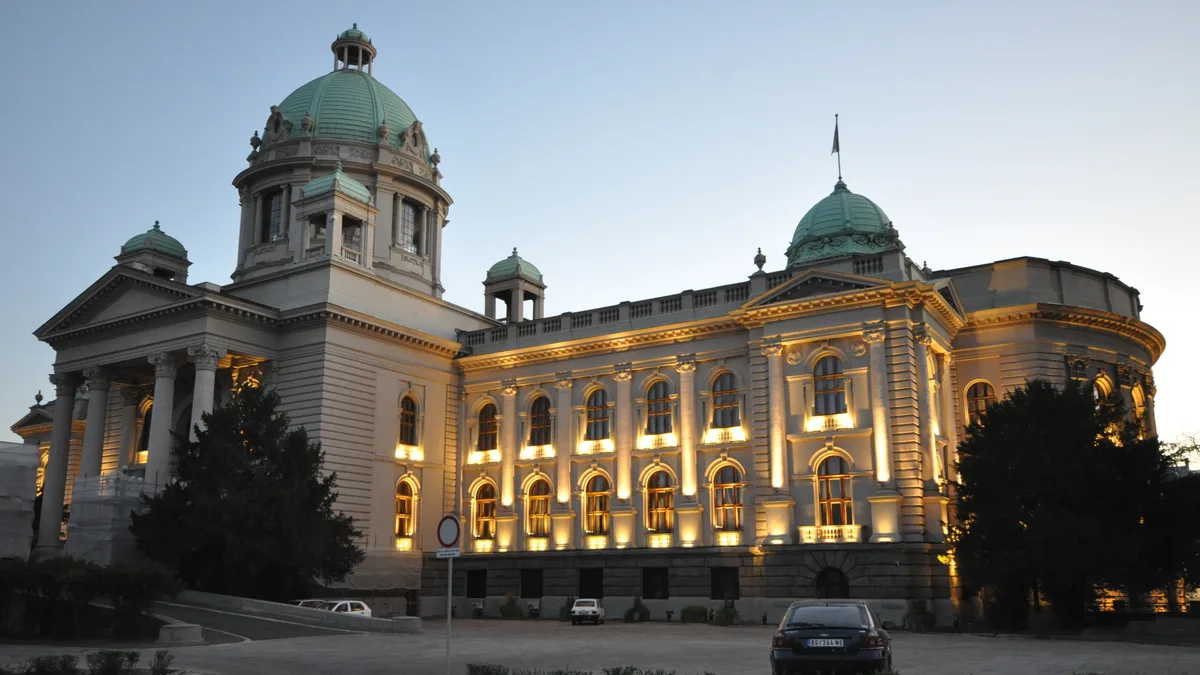
Milenko Jovanov, a member of the SNS Presidency and until now head of the Progressive Party’s parliamentary group, said on TV Pink on Monday, November 16, that he does not know whether the Assembly session will be held if Radio Television of Serbia (RTS) does not broadcast it. He spoke a day before the constitutive session of the new parliament, in which the Student List holds 140 seats and the “Aleksandar Vucic - United Serbia” list holds 103.
He does not expect RTS to cause a problem, though. “I wouldn’t play games with that if I were in their place,” Jovanov said, then added: “I don’t think they will make trouble there, they will do something else.”
What happens with the broadcast of the session?
According to Jovanov, the Assembly will get a channel of its own. He described it this way:
“They will make a parliamentary channel at position 786, and it will carry committees and press conferences too, so that no other RTS channel is tied up. It is the same thing, just presented in a different way.”
Jovanov also said that broadcasting sessions is a tradition going back many years. The sources available to us contain no response from RTS to his statement.
The question of the broadcasting obligation was raised recently in Vojvodina as well. RTV did not broadcast the November 5 session of the provincial assembly live, and in a statement on November 6 it said that the public broadcaster’s legal duty is not to air every sitting live but to inform citizens in a timely and truthful manner. In the same statement RTV claimed that RTS concludes a separate contract every year for broadcasts of National Assembly sessions, under which the costs of the broadcast are covered.
What does Jovanov expect from the session?
Asked what he expects, Jovanov remarked with a laugh that consultations were held on Friday the 13th, so nothing can surprise him. Under the rules of procedure, as he put it, credentials are verified first, then the Assembly speaker is elected, “and after that we will see.” The agenda has six items, and until a speaker is elected the session is chaired by the oldest deputy, Professor Stojan Radenovic, whom the United Serbia list also proposes for speaker of parliament.
On the Student List, Jovanov said it approaches politics as a performance:
“The moment they take over running the Assembly, they will have every opportunity and mechanism to turn the Assembly into a circus. Who will be sitting in the gallery and why, we can’t even guess. We’ll see, I find it very interesting how they will explain that they will not vote for the best scientist but for somebody else. They held to that principle of meritocracy.”
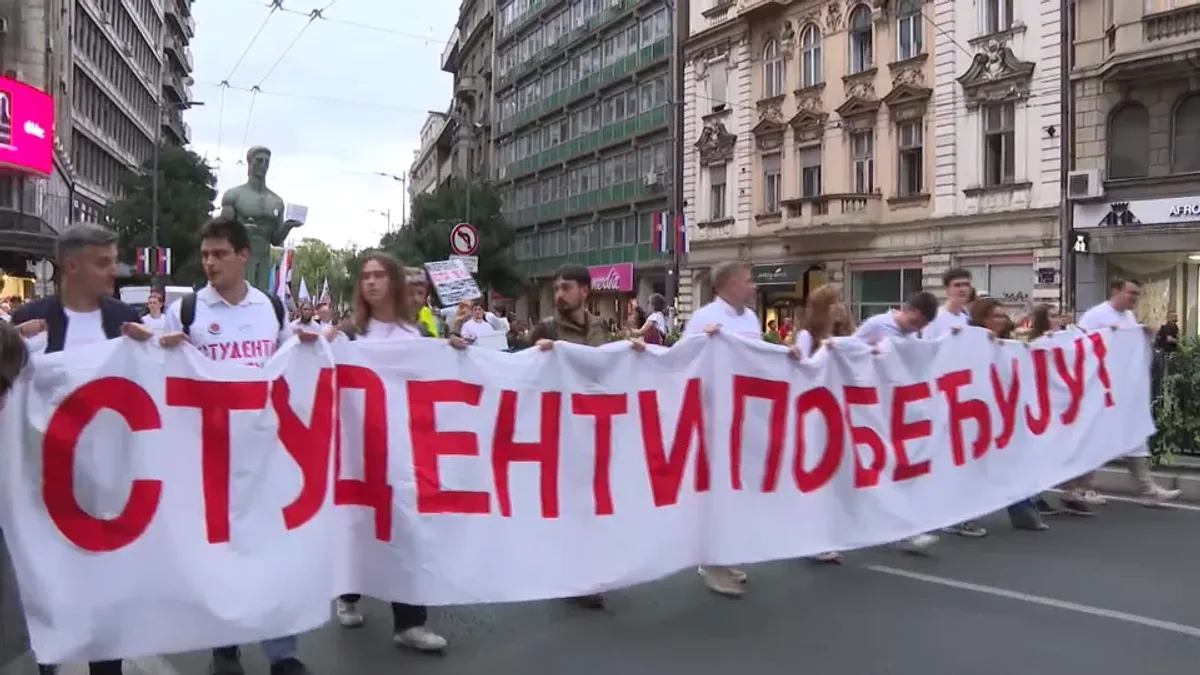
After the consultations, the Student List announced that it will vote through the Assembly speaker, the number of vice presidents and their names by majority at the session. It also asked that a delegation of students attend the session from the gallery, since International Students’ Day is marked on November 17.
Vice presidents and committees
Jovanov claims that for 36 years parliament has followed a practice in which the ruling side agrees with the opposition on vice presidents, and that departing from it is “a precedent being set.” He said:
“The point is not that we insist, or that it matters to us whether this or that person is vice president, but that you are violating the principle of democracy as such, the principle of parliamentary practice that existed for 36 years, and you are showing disrespect not toward the SNS, not toward our parliamentary group, but toward a million and 700,000 people who voted for that list. You are sending them a message: There is no place for you in this country.”
He also responded to a statement by Aleksandar Baucal that including the opposition means the opposition must respect democratic rules too, and that the SNS cannot be considered a democratic opposition. “I couldn’t care less what Baucal says, obviously what the plenum says matters more,” Jovanov said, and continued:
“What any of them says is not relevant to anything. Each of them has a right to think. I learned from Ratibor Trivunac, who was a guest on Ljilja Smajlovic’s show, that the plenums decide everything, and that if they dare to do anything the plenum has not said, there will be student protests and faculty blockades again, and they will have to resign.”
In his words, the point of the session is for the ruling side and the opposition to agree on how the Assembly will function in the coming term. At the consultations, as he related, he asked for it to be shown what interests the SNS:
“Who takes responsibility for what, in which committees and so on. I said what we are interested in and how we think it could look, and the answer was that we can forget about it, and that it will no longer work that way. More precisely, everyone will propose candidates for the committees, and then the committee itself will choose the candidates who are best qualified to lead it.”
That is the other side’s answer, not an agreement: the consultations produced no deal on the number of vice presidential posts or on who chairs the working bodies. On Friday, after the consultations, Jovanov said there would be a commission assessing who can lead a committee, and that when he asked who its members would be, he was told this would be decided in the working bodies themselves, where it will become clear who has the majority.
What comes next
The session opens with confirmation of mandates. Constituting the Assembly starts a 90-day clock for forming a new government. No reaction from Aleksandar Baucal to Jovanov’s words has been recorded so far.