Gazivode: two structures demolished, four more at stake
Kosovo police confirm heavy machinery is at Lake Gazivode near Zubin Potok at the ministry's request, while sources differ on what was demolished.
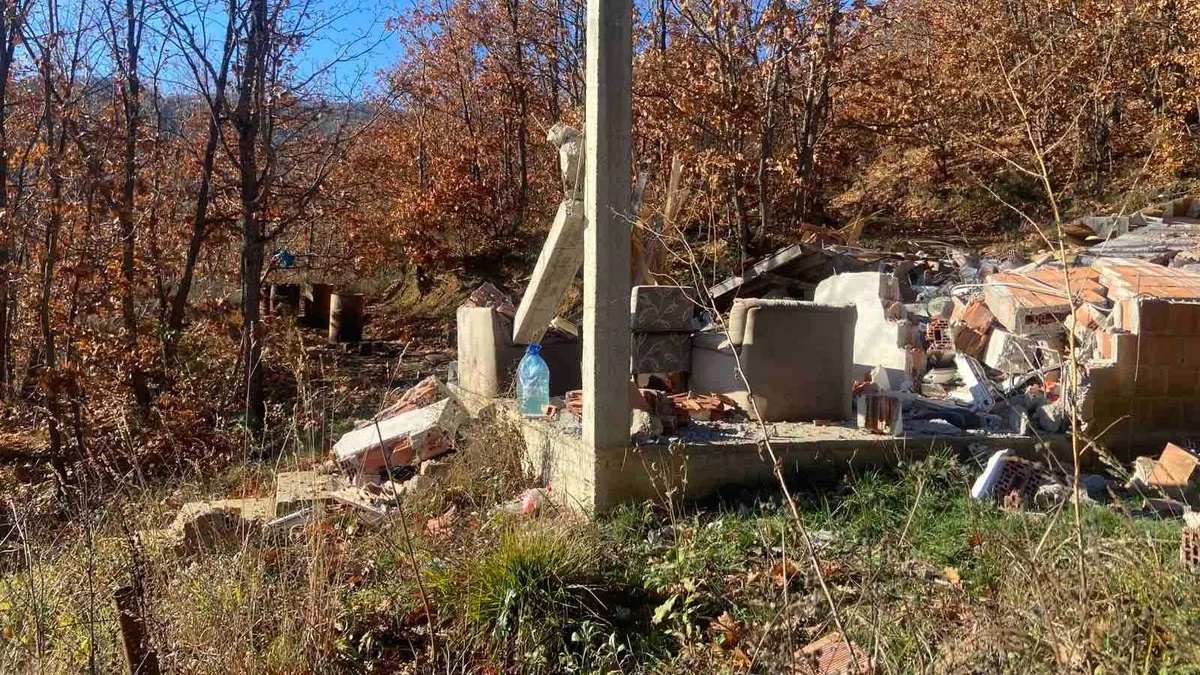
Demolitions at Gazivode continued on November 20. Two structures were torn down on the shore of the lake in the municipality of Zubin Potok, and Kosovo police confirmed that the heavy machinery is there at the request of Kosovo’s Ministry of Environment and Spatial Planning. Sources give differing accounts of how many structures are targeted and what exactly they are.
What exactly was demolished at Gazivode?
Kosovo’s Minister of Environment and Spatial Planning, Fitore Pacoli, said six structures are involved: four summer houses and two houses, built without permits on the lake shore. According to Radio Free Europe, the ministry’s Inspectorate began demolishing all six.
A police source tells a different story. Erduan Baljici, head of operational planning at the Kosovo Police for the North region, told Radio Free Europe that two houses were demolished, while the owners of four summer houses agreed to tear them down themselves. Beta, cited by Radio KIM, reports Baljici as saying that the structures are terraces and floating platforms, and that the owners were given eight days to remove them. Beta does not specify how many structures are involved.
The Office for Kosovo and Metohija of the Serbian Government, for its part, says two weekend houses owned by Serbs were demolished.
The accounts of the location differ as well. Radio KIM, citing the Zubin Potok Info portal, writes that the structures are between the third and fourth tunnels on the lake. The first information Zubin Potok Info received from the owners, relayed by Radio Goradzevac, pointed to the stretch between the seventh and eighth tunnels. Radio Goradzevac also wrote at the time that it was not known how many structures would be removed.
What did Minister Pacoli say?
Pacoli announced on Facebook that the operation at Gazivode would continue, and the Zubin Potok Info portal reported that she also posted footage of the demolition:
“After demolishing all illegal structures and clearing the area around Lake Radonjic, we are returning to Gazivode”
She also announced that similar actions will be carried out near lakes Batlava and Badovac.
Whose land is it, and what do the owners say?
Demolitions at Gazivode began in the middle of the year. In the summer wave, more than 30 weekend houses were torn down. The Kosovo authorities claim that the land on which the structures were built belongs to the public water management company “Ibar-Lepenac”. The owners have previously argued that they hold permits, issued by the Serbian system, and have started court proceedings before Kosovo judicial bodies.
Radio Free Europe says it could not reach the owners of the newly demolished structures and that it is not known whether they have started court proceedings. The European Union, in earlier reactions, criticized the demolitions and called for them to be halted until court proceedings on property issues are concluded. Lake Gazivode serves water supply, electricity generation and irrigation, which is why Pristina treats it as strategic infrastructure.
Reactions from Belgrade and northern Kosovo
Serb List, the leading party of Kosovo Serbs, recalled in a statement that the demolitions are being repeated despite warnings from the European Union and the European Commission about respecting property rights and legal procedures. It added:
“It is especially scandalous that the demolition continues while court proceedings over the disputed property are still under way and there is no appropriate decision by the competent authorities that would constitute a lawful basis for such conduct”
The Office for Kosovo and Metohija described the action as “violent and unlawful demolition” and announced that it will inform all relevant international representatives, with a demand for a concrete response. The statement reads:
“It is clear that the regime of Albin Kurti is resorting to actions aimed directly at harming the Serbian people, with the goal of their persecution and the flagrant disenfranchisement of Serbs in Kosovo and Metohija, which is why concrete and clear engagement is needed from representatives of EU and OSCE missions, as well as other relevant institutions that have a mandate to protect the rights and security of the Serbian people”
In the same statement, the Office said that 814 ethnically motivated incidents have been recorded since Albin Kurti came to power. That figure is the Office’s own, and no independent verification was cited. It also quoted the line: “In his anti-Serbian hysteria, Albin Kurti is ready to trample even his own regulations.”
The Kosovo government’s response to these claims had not appeared in the sources we reviewed by the time of publication. Two questions remain open: whether the owners of the remaining four structures will remove them themselves within the deadline Beta mentions, and when Pacoli will move on to Batlava and Badovac.