Kosovo Assembly Postpones Specialist Chambers Vote
The resumed session with three agenda items was put off with no new date, while Vljora Citaku and Albin Kurti say they differ only over procedure.
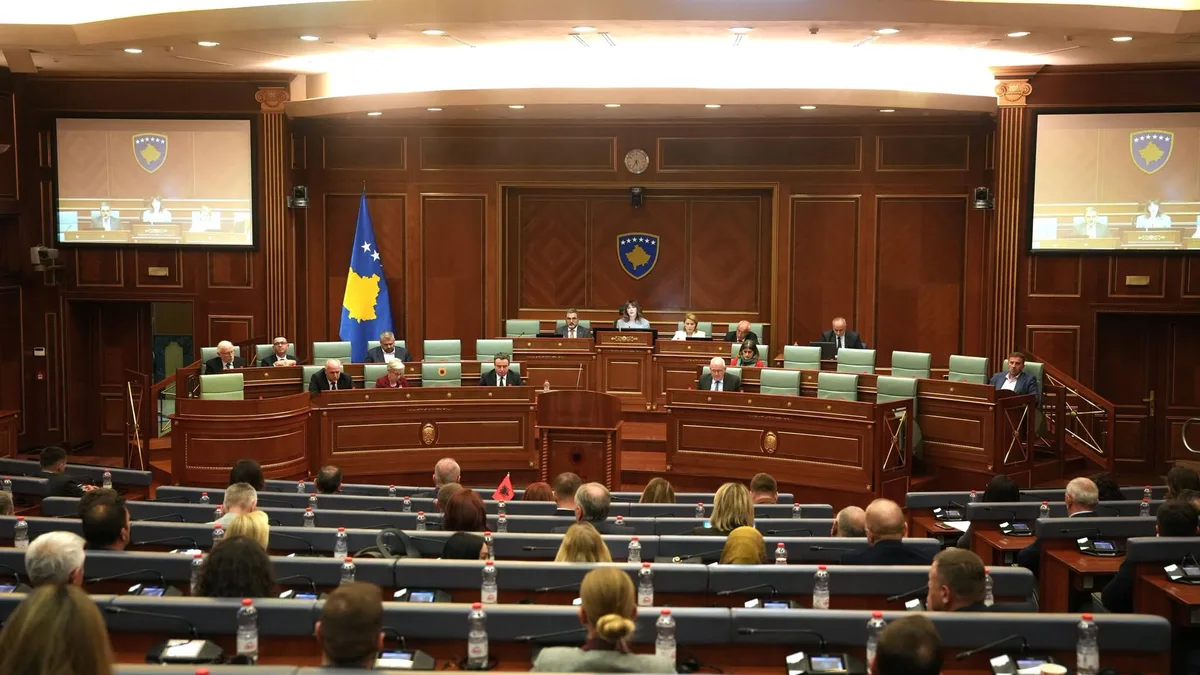
The Kosovo Assembly postponed on November 19 the resumed session at which it was due to vote again on amendments to the Law on the Specialist Chambers and Specialist Prosecutor’s Office. No new date has been set. The delay is not limited to the law: the entire resumed session, with three agenda items, was put off, so the two resolutions scheduled alongside it were not taken up either.
Assembly Deputy Speaker Ardijan Golja announced the decision after talks with the heads of parliamentary groups. The session had been called for 10 a.m., and he said it was being postponed as follows:
“After talks with the parliamentary groups, we concluded that the session, which was convened with three agenda items for continuation today at 10 a.m., should be postponed until further notice.”
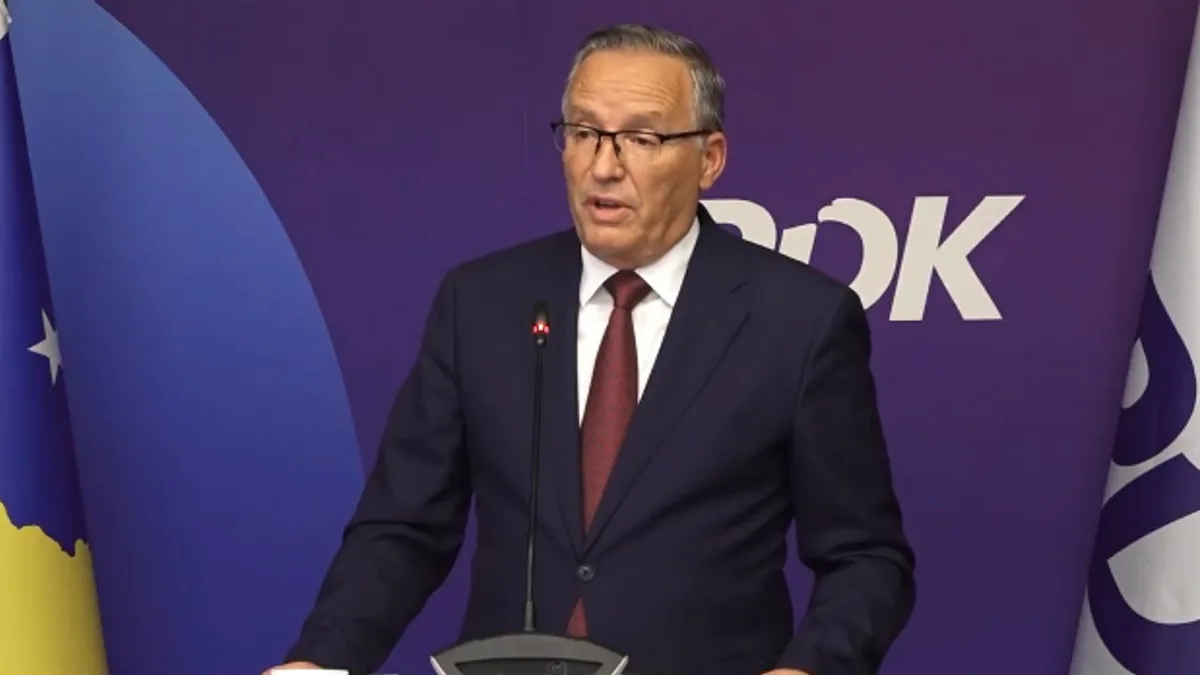
The session had already been running about two hours late because consultations were continuing. Before the scheduled start, acting Democratic Party of Kosovo (PDK) leader Vljora Citaku and the party’s former leader Bedri Hamza met Prime Minister Albin Kurti at the government building. After the meeting Citaku told reporters that the content of the law was agreed and that only the question of procedure remained open.
“Together with President Hamza, with the leader of the Self-Determination Movement, we have no differences over the content, we still differ only over the procedure. The talks continue, I will let you know later.”
So the talks have not ended, but no outcome has been announced.
What are the PDK and Self-Determination disputing?
The PDK wants the Assembly to confirm the text it has already adopted again, in effect rejecting President Justina Siroka-Pula’s decision to return the law for reconsideration. That takes at least 61 votes. Self-Determination had earlier argued that the president’s return of the law should not be overturned and that a new text of amendments should be prepared instead.
The difference is practical. Confirming the existing text would allow it to enter into force, while drafting a new one would mean a fresh legislative procedure. According to the portal KoSSev, neither side has said whether it will opt for the first solution or the second.
How many times has the vote already been delayed?
The Assembly adopted the amendments, proposed by the PDK, on October 6. They narrow the jurisdiction of the court in The Hague, cap the maximum sentence at 15 years, allow sentences to be served in Kosovo and provide for presidential pardons. The proposal followed the first-instance verdict of September 16, in which Hashim Thaci and Jakup Krasniqi were sentenced to 25 years in prison each, Kadri Veseli to 18 years and Rexhep Selimi to 13 years.
President Siroka-Pula returned the law to the Assembly on October 22, at the request of the PDK itself, which said at the time that the provisions on the chambers’ jurisdiction and mandate needed to be clarified further. A day later Citaku promised that the law would be reconsidered within four weeks. That deadline expires today.
The stalemate has dragged on since the middle of the month:
- on November 12 the Assembly voted 79 in favor to put the amendments on the agenda, but the resumed session was postponed because lawmakers did not return from a break on time;
- on November 13 the session lasted almost 12 hours, and the law was never debated because there was no quorum;
- on November 17 even a meeting of the Assembly Presidency failed to agree on how to continue, again over the quorum.
We reported on the two-day quorum standoff on November 15.
What are Kurti and the international representatives saying?
Speaking in the Assembly the same day, Kurti addressed the law and outlined what comes in the next few days. In his words, the hurried drafting of the law came out of dissatisfaction with the verdict, and he and his colleagues had reservations about it from the start:
“The quick drafting of that law, toward which we expressed reservations, also came out of dissatisfaction with the verdict. I do not doubt the good intentions, but good intentions alone are not enough, we also need success. For that we need a law that will not be returned and that can be applied in practice. We expect the working group to deliver the first draft next week.”
Kurti also said he expects the expert team to hand over a first draft of the new law next week. He added: “This intention came out of disappointment with the decision of September 16.” He said he believes that decision will be corrected on appeal during 2027.
International representatives are warning against a repeat vote. The European Union Office in Pristina said it would cause serious concern over Pristina’s international obligations, the independence of the judiciary, the protection of victims and witnesses and procedural rights, along with doubts about the amendments’ constitutionality. The German embassy agreed with that position, and the British embassy warned that a repeat vote could damage Pristina’s relations with international partners. The European Commission’s latest 2026 report on Kosovo highlighted the same problems.
Daut Haradinaj of the Alliance leadership also reacted. On social media he criticized both those who proposed the law and those who demanded it be withdrawn, saying they know neither what they have done nor what they are doing.
The Assembly then continued a second session with 12 agenda items, including the proposed budget for 2027. The Specialist Chambers law remains in the reconsideration procedure, and for now there is no date for a new attempt at a vote.