

Serbia, Italy Meet Tonight in Pesaro: Plan to Stop Jokic
Serbia plays Italy tonight in Pesaro in Group J qualifying for the 2027 World Cup. Coach Luca Banchi and captain Nicolo Melli explained how Italy plans to contain Nikola Jokic.
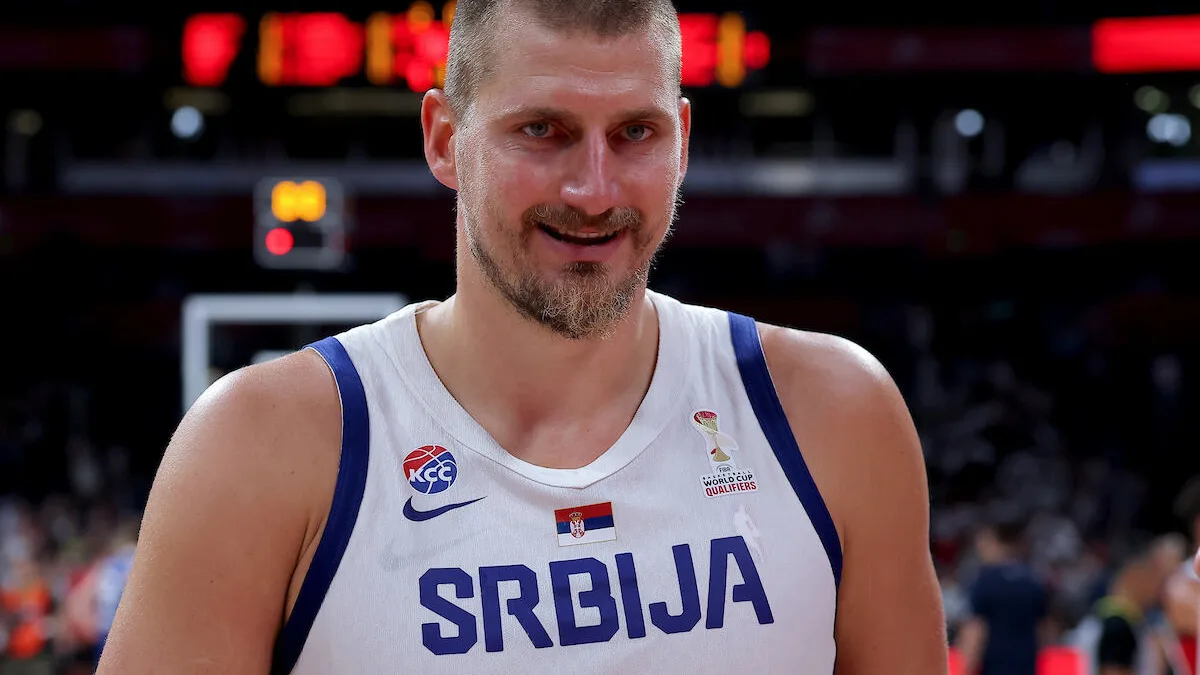
Pesaro has been talking about one man since this morning, and he is not Italian. The city that, in the words of Italian forward Simone Fontecchio, “lives and breathes basketball,” hosts Serbia tonight at 7:30 p.m. in a qualifier for the 2027 World Cup. Instead of discussing their own offense, the Italian coaching staff spent the morning talking almost exclusively about the man in the other jersey, Nikola Jokic.
This is the second phase of qualifying, Group J, and the math going into the game is almost perfectly even. Serbia and Italy both arrive with identical 5-2 records; Italy holds a point differential of plus 61, Serbia plus 60. In the last round, Serbia routed Iceland 102-73 at Belgrade Arena, while Italy suffered an unexpected road loss to Bosnia and Herzegovina, 76-78. As we reported after that win over Iceland, this trip to Italy was always the next stop for Dusan Alimpijevic’s team, and that day has now arrived. The hosts welcome the reigning world runner-up in nearly full strength, in an arena where they have won ten of their last thirteen games.
Italy coach Luca Banchi delivered a clear message ahead of the game:
“The road to the World Cup is still long. The teams go into this game with identical records, and the stakes are high. Jokic is a big part of why interest in this game is so enormous. We can count on Simone, and we have everything we need to play at their level. We’ll focus on the turnovers, we had too many of them, so that we’re as ready as possible for an opponent that won’t leave us any room for mistakes. Against Bosnia we burned a lot of energy in physical battles, but we need to find again the continuity we lost yesterday, that’s our main focus,” Banchi said.
A more concrete answer to the question of how to guard the best basketball player in the world came from Italy captain Nicolo Melli, who spoke to Sky Sports ahead of the game:
“We have to try to be as physically tough as possible, to make it as hard as we can for him to receive the ball, and once he gets it, to make him work hard for it. Then on offense we need to try to keep running, to keep him engaged from one end of the floor to the other and involve him in our sets. That’s what every team tries to do. Tomorrow we’ll give everything we have,” Melli said.
Speaking specifically about how to defend Jokic, Banchi added:
“We have certain solutions that, in my opinion, give us a chance to be competitive and credible, no matter who ends up being responsible for guarding him. We have to try to make this a team effort, because besides his ability to finish plays, it’s well known just how incredible he is as a player who makes things easier for his teammates. Serbia is a team that shares the ball exceptionally well, especially when their great leader is the one inspiring it,” Banchi said.
He did not rule out the possibility that Serbia could start Jokic and Nikola Milutinov together, and said the defense would not be tied to one player but to the work of the whole team.
The statistics from this qualifying cycle favor Serbia on offense. The Eagles average 88.7 points per game to Italy’s 85.7. The gap is even more striking in assists, 23.6 to 19.1, and in field-goal shooting, 45.3 percent to Italy’s 44.7 percent. Italy answers back on defense and on the boards: they allow 77 points per game compared to Serbia’s 80.1, and they lead on the glass, 35.1 rebounds to 34.7. Serbia also turns the ball over less, 8.9 to 9.9, which fits the picture of a team built on collective organization and ball movement.
Why Hasn’t Serbia Beaten Italy in Seven Years?
This cycle’s numbers favor Serbia, but history tells a different story. Serbia leads the all-time series 7-3, but its last win over Italy came back in 2019 at the World Cup, 92-77. Three losses have followed since then, each one painful for the national team: in 2021, in Olympic qualifying in Belgrade, 95-102; in 2022, at EuroBasket in Berlin, 86-94; and in 2023, in the group stage of the World Cup in Manila, 76-78. All three games were lost by a narrow margin, and each one cost Serbia something important: an Olympic berth, advancement at EuroBasket, and momentum on the road to the final in Manila.
Coach Dusan Alimpijevic, who has been at the helm for only about ten months, knows what that streak means, and he does not hide his respect for the opponent:
“They definitely have three or four players who are extremely dangerous on offense and can score in different ways. Fontecchio, given the role he has here, is turning into an excellent scorer. He can pull up and shoot at any moment, so we have to stay alert. Mannion is no less of a threat, he’s extremely aggressive and sharp. They have their weaknesses too, and we need to exploit them. Melli stands out as the engine and the brain of the team, the player who connects everything, and that’s the most positive possible example of how one player can lift the rest of the team,” Alimpijevic said.
The coach spoke at greater length about the atmosphere within the national team, built up over the last ten months or so:
“All of us together put in hard work, the federation, the entire leadership, the coaching staff that changed from window to window. We did a fantastic job making sure that atmosphere is felt both on the court and off it. The response we’re getting from the players is different from before. At the start everyone was a bit skeptical, but now it’s a different story, and that makes me happy. We know what basketball means in Serbia, and we have to carry extra responsibility for this sport and everything it has left behind in its history. I’m satisfied, but this is still just the beginning; on Monday we have an important game, and then equally important windows follow in November and February. We landed in by far the toughest group, the other groups have one or two favorites, while ours has an extremely strong Turkey, plus Italy, Lithuania, us, and a Bosnia that is playing fantastic basketball, and you’ve seen that the teams under the radar shouldn’t be underestimated either. We need to be serious, and stay serious, in November and February too,” Alimpijevic said.
Aleksa Avramovic, one of the most experienced players on the roster, believes this is the chance to snap the losing streak against Italy.
“A lot of time has passed since those consecutive losses to Italy, and since then we’ve won medals, toughened up, and gotten stronger. They will certainly be carried by the energy from the stands, but we’re going to try to win. The key will be an aggressive approach to the game from the first minute,” Avramovic said.
On the Italian side, Simone Fontecchio is counting on exactly that energy from the stands.
“We know this is a tough game, different from the ones against Serbia in previous years that we enjoyed. I hope it will also be different from the one against Bosnia, we need to approach it with even more determination. We’ll have a huge wind at our backs from Pesaro, a city that lives and breathes basketball. We’ve already seen the fans’ enthusiasm, and we can’t wait to get on the court and give them something to be excited about,” Fontecchio said.
Whatever the result, the road through Group J does not end tonight. In November and February, Serbia still has to face Turkey, Lithuania and Bosnia again, in what Alimpijevic openly calls the toughest group of all.
Going by the numbers, Serbia has what it takes to finally end the streak: a better offense, better organization, and Jokic, as Banchi himself admits, is a factor Italy has no way of neutralizing with individual defense. But the arena in Pesaro has been almost always an Italian fortress, and that number, ten wins in thirteen games, carries as much weight as all the other statistics combined. The next test in Group J comes in November, against an equally uncomfortable opponent.


