Srebrenica Memorial Demands Serbia Football Suspension
The Srebrenica Memorial Center wants FARE to recommend a UEFA suspension for Serbia's Football Association, after the FSS ignored a complaint over a Ratko Mladic photo at the Red Star-Partizan derby.

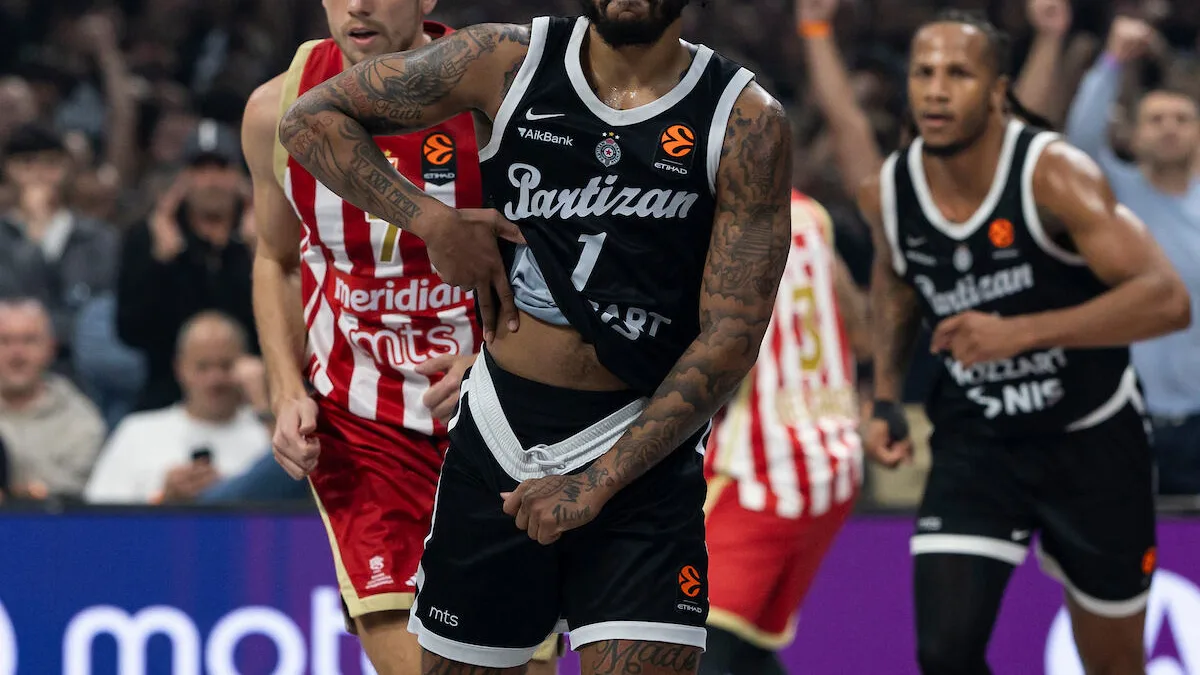
Before the eternal derby kicked off at Marakana, chanting of Ratko Mladic’s name broke out from the North Stand. The players had barely walked onto the pitch when the match organizer called for a minute of silence, officially to mark Mladic’s death. Then a sentence came over the stadium speakers that turned the whole event from a fan incident into an international case.
“May he have eternal glory, and our thanks”
The words referred to Ratko Mladic, convicted with a final verdict of genocide, crimes against humanity and war crimes before the International Criminal Tribunal for the former Yugoslavia. During the match between Red Star and Partizan, a large photo of him hung from the North Stand under the banner “DIRECTION POTOCARI,” and according to the complaint, the display drew a response from a significant portion of the roughly 25,000 fans inside Rajko Mitic Stadium.
On September 7, the Srebrenica Memorial Center filed a formal complaint against Red Star with the Football Association of Serbia (FSS). srpske.rs reported on that complaint a week earlier. Now, with no response from the FSS, the story has moved a step further: the Memorial Center says the FARE network (Football Against Racism in Europe) will recommend that UEFA suspend the entire Football Association of Serbia, not just punish the club.
“We have received assurances that FARE will recommend the suspension of the Football Association of Serbia,” the Memorial Center said. FARE is a non-governmental network that has worked with UEFA since 2001 to monitor and report racism and discrimination at matches, including running its own observer system that gathers evidence for European football’s disciplinary proceedings. According to the Memorial Center, FARE had already flagged a pattern of Mladic glorification at stadiums in Serbia and Bosnia and Herzegovina in earlier monthly incident reports.
Along with the Football Association of Serbia, the complaint was also sent to UEFA president Aleksandar Ceferin, general secretary Teodor Teodoridis, managing director Martin Kalen, and FARE executive director Pjara Pauar.
Why the Memorial Center Is Seeking Suspension, Not a Fine
The Memorial Center’s complaint argues that previous action by the FSS and UEFA against Red Star failed to stop the pattern from repeating. It points to the banner “General, eternal glory and thanks,” displayed after a match against Viktoria Plzen, which the club itself shared on its official accounts at the time. That social media habit, the complaint says, is a specific problem again in this case: the “Direction Potocari” display reportedly also appeared on Red Star’s official account, accompanied by a saluting emoji.
The demand is specific. The Memorial Center wants the FSS to confirm receipt of the complaint within seven days, open a disciplinary proceeding on its own initiative, and investigate Red Star’s responsibility, including who approved the minute of silence and who approved the message read over the stadium speakers. It also wants all evidence collected: security camera footage, television recordings and match delegate reports.
The legal basis is the FSS Disciplinary Rulebook, adopted on July 21 this year, specifically Article 82, which holds a club responsible when its fans violate human dignity through gestures or banners. Article 126 is also cited, requiring first-instance disciplinary proceedings to conclude within 15 days of a complaint being filed.
If the FSS fails to open an effective proceeding, the next step is Article 29, paragraph 4 of the UEFA Disciplinary Regulations, which lets UEFA take over a case itself when a national association does not seriously prosecute a breach of its statutory objectives, or handles it improperly.
The range of possible sanctions is broad: fines, matches played without spectators, partial or full stadium closures, bans on away fans traveling, point deductions, disqualification from competition, or license revocation. The Memorial Center says that if responsibility is established, another symbolic penalty would not be enough this time.
The case, meanwhile, is spreading beyond a single club. Diaspora associations have separately asked UEFA to review the sanctions handed down against both Borac Banja Luka and Red Star, meaning the Marakana derby is no longer an isolated incident but part of a pattern the Memorial Center wants UEFA to examine as a whole.
For the Football Association of Serbia, the next steps, or the lack of them, now raise a question that goes beyond any single club: whether the association, as a UEFA member, is enforcing its own anti-discrimination rules at all. Based on everything said so far, the response to the Memorial Center’s complaint will next come from an address in Nyon.