Obradovic: I Don't Want Unhappy Players on the Team
Panathinaikos coach discusses his relationship with players and communication with the bench in a podcast, ahead of the October 13 Euroleague trip to Partizan.

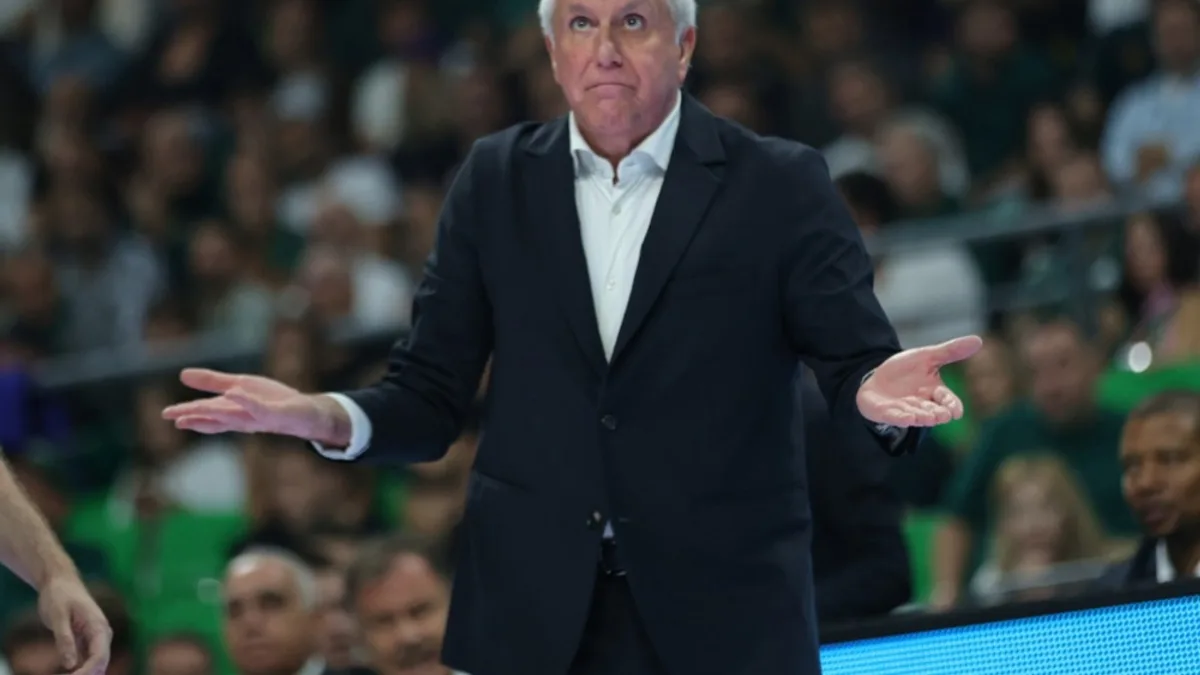
Mid game, the clock on the timeout has just run out, and the Panathinaikos coach turns toward his bench. He’s not looking for encouragement, he’s looking for an answer. He asks the player he trusts to calmly reflect the tactical picture back to him: “What did we say, how are we defending this?” The player whose attention has clearly drifted gets the same question, but it carries a different message. That, as Zeljko Obradovic describes it, is how he communicates with the bench during every single game.
He spoke about that ritual, and about why he left Partizan at the end of 2025 and returned to Panathinaikos over the summer, on the podcast “Euroleague and Friends: Made in Serbia.” The conversation centered on his relationship with players, trust inside the locker room, and how he keeps the team focused during the game itself.
Why does the coach keep turning to the bench?
Obradovic explains that the gesture has nothing to do with nerves. It’s a repetition of what was agreed on in preparation for the match.
“I turn to the players and talk, because the ones coming off the bench need to come in… I don’t want to make the same mistake, or, going back to how we set up the game, what did we say? The question is, what did we say, how are we defending this? Okay, did you see where the mistake was? That’s the mistake. Okay. That’s communication, that’s concentration during the game.”
He added that the questions always circle back to the same things: the first two possessions, defending the pick and roll, and defending the low post.
He is careful about which player he approaches for which kind of answer.
“They aren’t fans watching the game the way fans watch it. They’re players who need to come in and bring the team something new, something better.”
He gives the calmest, most tactically minded player on the bench a question when he wants a real tactical answer, and he gives the same kind of question to a player who has lost concentration when he wants that player to know he needs to refocus.
The coach stressed that he applies the same standard to every player, young or experienced, regardless of the name on the jersey. “I treat them the same way, and it matters that they see I treat them the same way,” he said, adding that there’s no difference by age or reputation either.
“There are good players and bad players. There are those who are ready to work at the highest possible level, to keep improving, and those who aren’t.”
Asked how he builds trust with players who have just joined the team, Obradovic said it isn’t given right away. It’s earned through video analysis and concrete examples from the court.
“Trust exists, and that’s something every coach knows. A player trusts the coach, but he trusts him in a way, up to a point.”
He described showing a player footage of his own move while explaining the mistake in it.
On conversation as a tool, the coach left no doubt about what he expects from his locker room.
“Talking is the best option there is. I don’t want unhappy players on the team.”
He added that the door is open to anyone with a complaint, no matter their status on the team, and that the same honesty applies even when the message he has to deliver is an uncomfortable one. “I always say what I think, and I’ve worked that way my whole life,” Obradovic concluded.
Panathinaikos, with Obradovic on the bench, visit Partizan in Round 5 of the Euroleague on October 13 at 8:30 PM. It will be the first chance to see whether his formula, the same standard for everyone and conversation instead of silence, works against the very club he recently left.