

Kyiv strikes Vtorovo pipeline: supply to Moscow and its airports cut off
Ukraine's Security Service on Monday struck the Vtorovo oil pumping station in Vladimir Oblast, a strategic node supplying fuel to the Moscow region and serving all three of the Russian capital's main airports, according to an SBU statement.
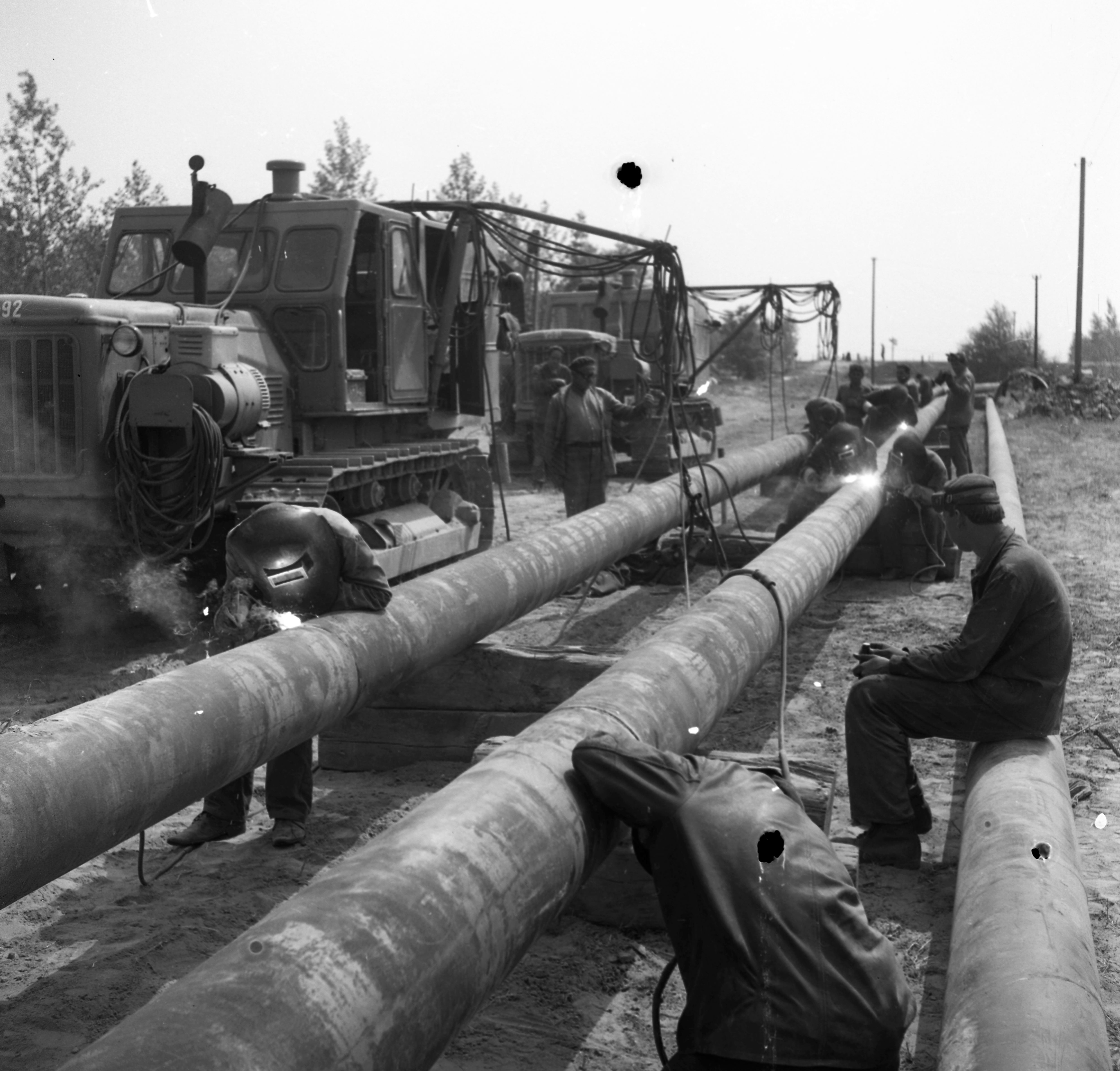
Ukraine’s Security Service on Monday struck the Vtorovo oil pumping and dispatching station in Vladimir Oblast, a strategic node in the Russian Federation’s domestic oil supply system that fuels the Moscow region and serves all three of the Russian capital’s main airports. The operation, confirmed in an official statement by SBU chief General Vasyl Maliuk, was carried out with long-range drones produced by Ukraine’s domestic industry over the past twelve months.
For Serbia, where the Petroleum Industry of Serbia is held under the Russian majority ownership of Gazprom Neft and where the Pancevo refinery processes feedstock partly drawn from Russian sources, every strike on Russian oil infrastructure indirectly affects the distribution and insurance risk of energy contracts. According to Serbia’s Ministry of Mining and Energy, daily fuel consumption in Serbia is roughly 16,000 tonnes, with 90-day reserves required under the EU directive. Escalation on the Russian oil channel could, in the coming weeks, bring an additional wave of contract restructuring with international insurers, a risk NIS is following closely.
Vtorovo pumping station is part of the Transneft system and lies in the central part of the Russian Federation, on the route connecting the refineries of the Volga-Urals basin with the Moscow region. According to the British Centre for Research on Energy and Clean Air, which tracks Russian oil exports, a prolonged shutdown of the Vtorovo station could affect supply to central Russia in the order of roughly 800,000 barrels a day. Local Russian authorities confirmed an eight-hour fire and the evacuation of technical staff, but reported no casualties.
The deep-strike doctrine Kyiv is systematising
The Vtorovo operation is part of a wider Ukrainian doctrine systematically developed over the past eight months, focused on Russian oil and electricity infrastructure deep inside the country. During May, the SBU also struck refineries in Ryazan, Tula and Lipetsk oblasts, with a cumulative effect that has brought Russia’s export capacity to its lowest level in four years. According to the think tank Re-Russia, which tracks the impact of Western sanctions on the Russian economy, Russia’s oil and gas exports could fall by more than 25 percent in 2026, with a potential loss in budget revenue of more than one trillion roubles.
Mark Galeotti, director of consultancy Mayak Intelligence in London and honorary professor at University College London’s School of Slavonic and East European Studies, in a short analysis for Le Monde said that Kyiv “is carrying out systematic destabilisation of Russian oil distribution as an alternative to a classic ground offensive.” On Galeotti’s assessment, if the pace of Ukrainian deep strikes continues to grow in the second quarter, the Kremlin will be forced to redirect a significant share of air defence from the fronts to the interior, which would open space for a Ukrainian offensive in Donbas.
Brussels welcomes, Washington no comment, Beijing reserved
Brussels, through the European External Action Service, offered a neutral comment, with the formulation that “Ukraine has the right to defend itself against Russia’s military aggression, including by hitting the military logistics that supports that aggression.” EU High Representative Kaja Kallas, speaking to AFP in Limassol where she opened the informal Gymnich meeting on Wednesday, added that “every Ukrainian strike must be considered in the context of Russia’s general invasion and unconditional attack on Ukraine’s civilian infrastructure.”
Washington has not issued an official comment on the Vtorovo operation, a line the White House has held since February, when Trump declined to comment publicly on a series of Ukrainian strikes on Russian oil infrastructure. Beijing, through the Chinese Foreign Ministry spokesperson, voiced concern about the “escalation of risks to international energy market stability,” language that in Chinese diplomatic vocabulary signals a mildly critical position towards Ukrainian moves but without concrete condemnation. The Brent price fell three percent on Tuesday after the news, as markets tied expectations mainly to progress in the US-Iran talks.
The next concrete date is June 12
The next concrete date is the NATO Council session at foreign-minister level in Brussels on June 12, where the topic of long-term support for Ukraine and preparation for the Alliance summit on June 24 and 25 in The Hague will be opened. There, the main point will be the extension of structural obligations to Kyiv. Belgrade, through a statement from the Ministry of Foreign Affairs, repeated its neutral position, calling for a return to the diplomatic channel as the only solution.
What do you think would shift the oil price more in the coming months, Ukrainian strikes on Russian oil infrastructure or a possible Iran deal with the US?


