Albania: thousands in Tirana demand Edi Rama resignation
A protest against the Zvernec and Sazan project has grown into a broader anti-government movement, with a June 14 march blocking the Tirana to Durres motorway before police halted it near the airport.

- Thousands of demonstrators marched on June 14 from Skanderbeg Square toward the prime minister's office, blocking the Tirana to Durres motorway for several hours.
- Around 2 a.m. on June 15, police units stopped the column as it headed toward Rinas airport.
- Protesters are demanding the resignation of Prime Minister Edi Rama, the cancellation of the Zvernec and Sazan resort contract, and investigations by the SPAK special prosecutor.
- A protest that began as resistance to a single project has grown into a wider anti-government movement spreading to other cities.
For a region that watches every shift in the balance of power across the Western Balkans, the events unfolding in Tirana are not a local episode. Albania is a NATO member and an EU candidate that often stands ahead of Serbia in the accession process, so pressure from the street on Edi Rama’s government changes the picture Brussels holds of the stability of one of its most prominent partners in the neighborhood.
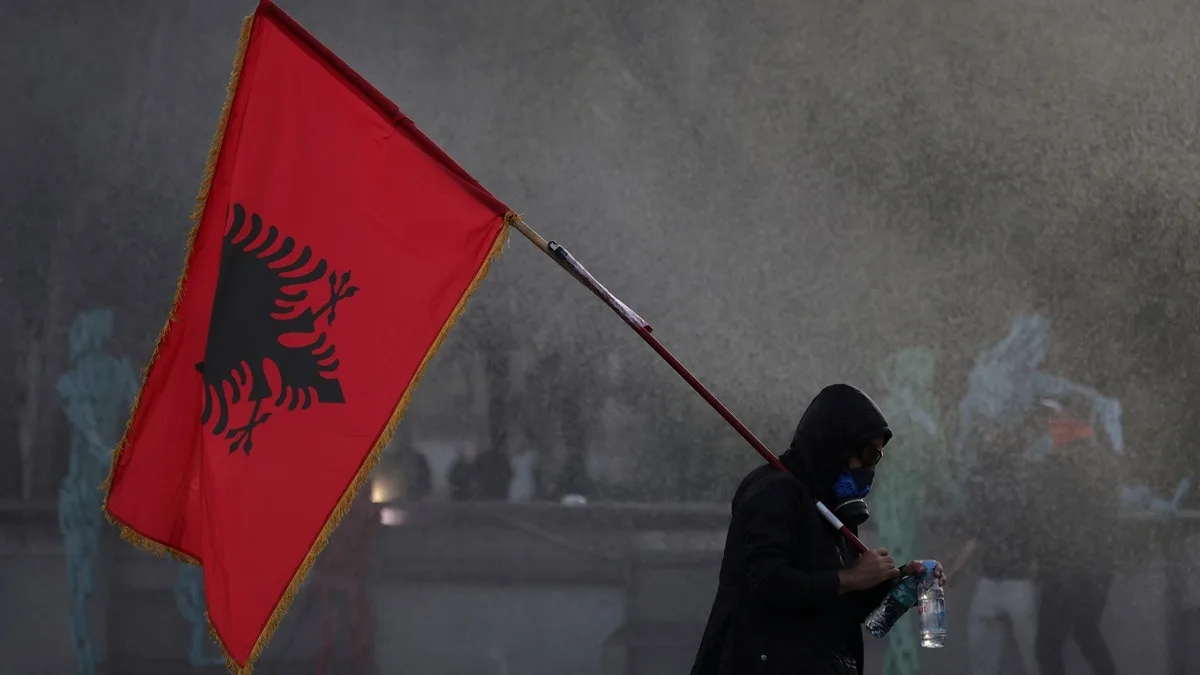
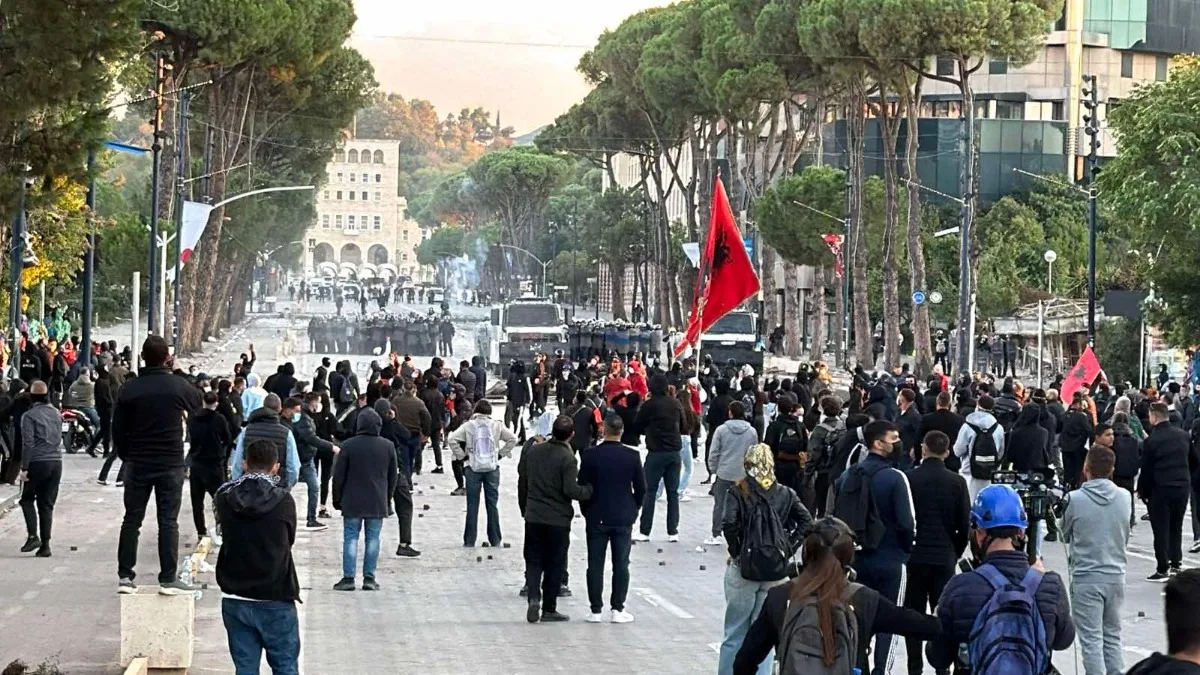
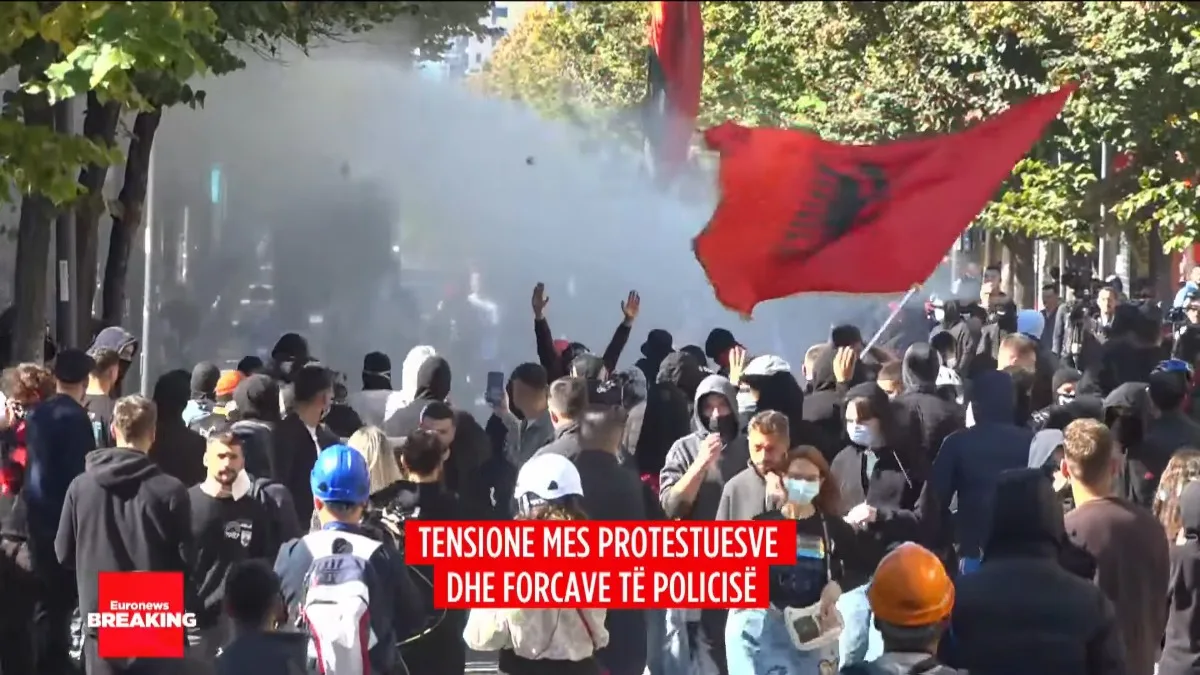
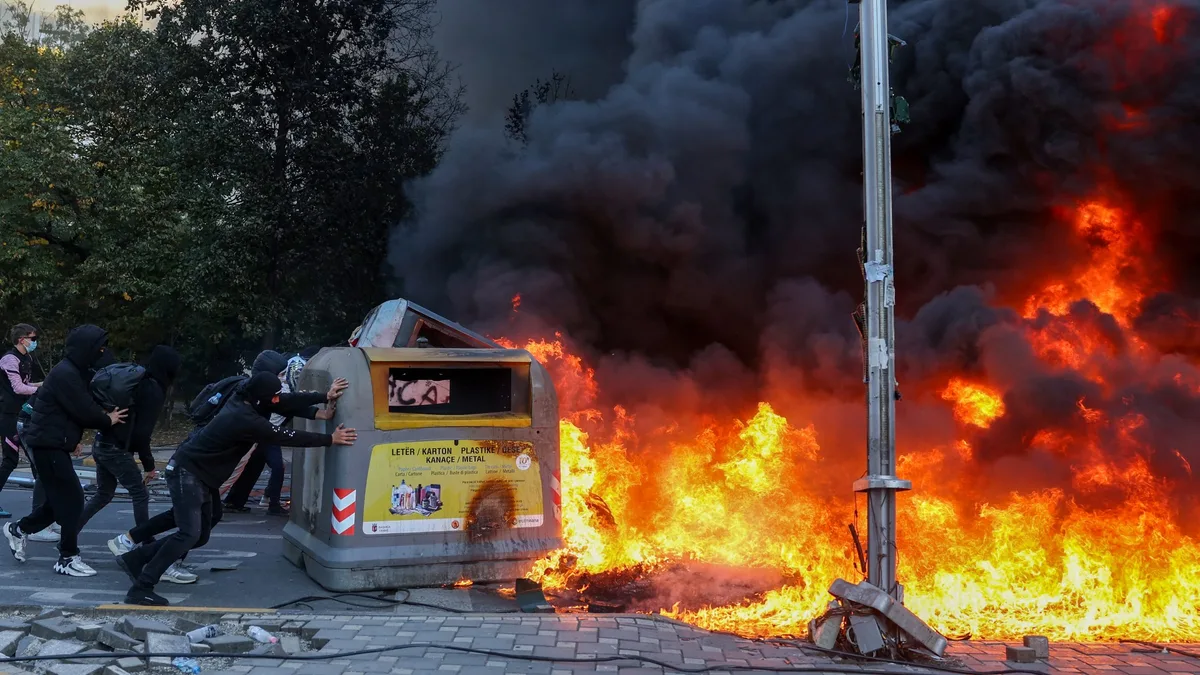
Thousands of demonstrators took to the streets of the Albanian capital on June 14. The column set out from Skanderbeg Square, the symbolic heart of Tirana, and headed toward the prime minister’s office. At one point the crowd blocked the Tirana to Durres motorway, one of the country’s most important routes, keeping it closed for several hours. As the evening wore on, part of the crowd moved further, toward Rinas international airport.
Around two o’clock after midnight, in the early hours of June 15, police units stopped the march before it reached the airport. Demonstrators chanted slogans against the authorities, but according to available information there were no fatalities. The protest, which has lasted several days now, shows no sign of fading and has spilled over into other cities, setting it apart from the usual one-day opposition gatherings.
Why did one project mobilize an entire country?
The spark was a contract for a tourist resort on the Zvernec peninsula and the island of Sazan, a coastal development project that part of the public received as the sale of a protected shoreline. What began as resistance to a single investment deal quickly took on a political charge. Demonstrators today are not only seeking the cancellation of that contract, but also the resignation of Prime Minister Edi Rama, who has governed Albania since 2013, and investigations by the Special Anti-Corruption and Organized Crime Structure, known by the acronym SPAK.
That shift, from a concrete project to general distrust of those in power, is a pattern that repeats across the Balkans. A single issue, a coastline, a mine, an electoral process, becomes the trigger for accumulated frustration with a long-serving government. In Albania’s case there is the added sensitivity of foreign investment in the coast, which leads part of the public to suspect that the most valuable stretches of shoreline are being handed over without sufficient public debate.
Rama, leader of the Socialist Party, has so far emerged the winner from several electoral and street challenges, and his government has held a firm majority. The question is whether this wave is different in duration and geographic reach, since the gatherings are not confined to the capital.
What does Tirana mean for Brussels and the region?
The European Commission cites Albania as an example of progress in accession talks, and the opening of negotiating clusters has been presented as confirmation of the European perspective for the whole region. Mass protests demanding the prime minister’s resignation complicate that message. Brussels values stable partners, yet it also insists on the rule of law, so calls for an independent prosecutor like SPAK to act draw on the very vocabulary the Union itself promotes.
For Serbia and the rest of the Western Balkans, the events in Tirana are a reminder that no government in the region is immune to pressure from the street, and that democratic legitimacy is measured partly by the ability of institutions to answer citizens’ demands without violence. How the relationship between demonstrators, police and government develops in the days ahead will be watched closely both by offices in Brussels and by neighbors who see in Albania’s path toward the Union a mirror of their own.
Will pressure from the street force the government in Tirana into concessions, or will the movement wear itself out like earlier waves of discontent?