Nawrocki Strips Zelensky of White Eagle Order Over UPA
Polish President Karol Nawrocki revoked Volodymyr Zelensky's highest Polish decoration after a Ukrainian army unit took the name of the insurgent army blamed for the Volhynia massacre.

- Polish President Karol Nawrocki revoked Volodymyr Zelensky's Order of the White Eagle, the oldest Polish state decoration.
- The trigger was a Ukrainian military unit named after the UPA, the faction blamed for the Volhynia massacre of 1943, in which roughly 100,000 Poles were killed.
- Ukrainian Foreign Minister Andrii Sybiha called the move a strategic mistake and pointedly returned his own Polish decoration.
- Nawrocki tied the decision to his opposition to Ukraine joining the European Union.
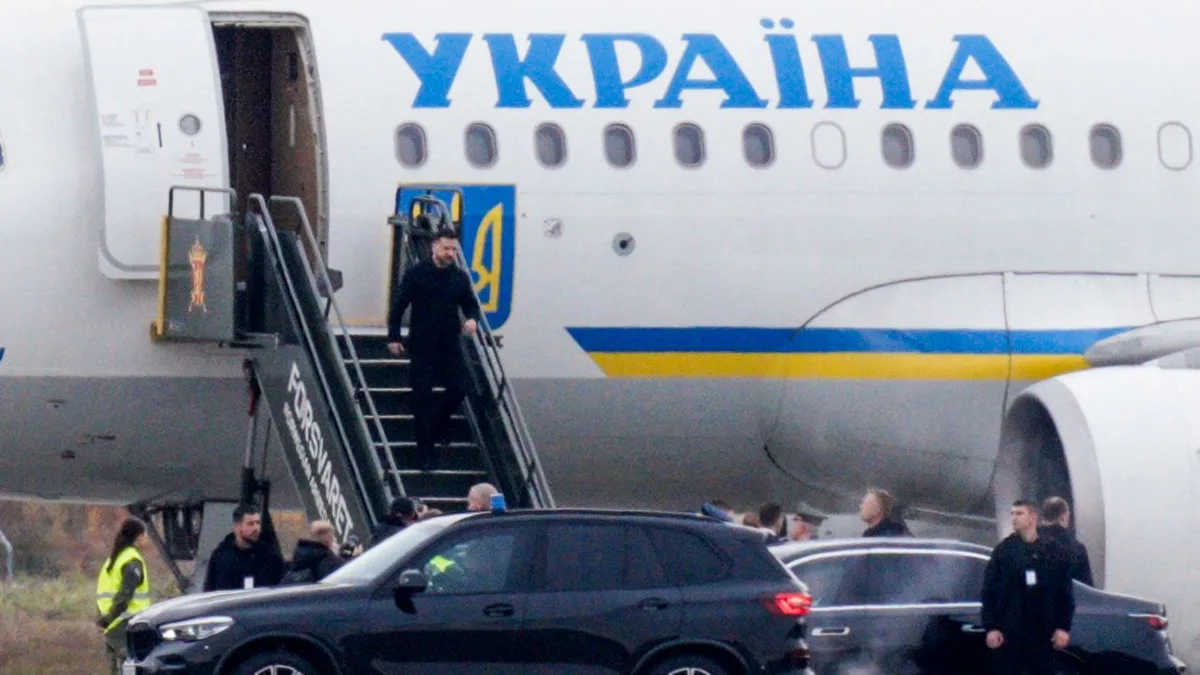
The quarrel between Warsaw and Kyiv that flared up just before the start of summer may look distant from Belgrade, yet it raises a question Serbia knows well: how much wartime alliance can endure once open wounds of historical memory are forced into the open. Polish President Karol Nawrocki decided to strip Ukrainian President Volodymyr Zelensky of the Order of the White Eagle, the highest and oldest Polish state decoration, pushing the relationship between two countries that share both a border and a resistance to Moscow into its most serious crisis since the war began.
The immediate cause was Ukraine’s decision to let one of its army units carry the name of the Ukrainian Insurgent Army, better known as the UPA. This was an armed faction of Ukrainian nationalists gathered around Stepan Bandera which, according to Polish historians, was responsible during the Second World War for the massacre of Polish civilians in Volhynia in 1943, when roughly 100,000 members of the Polish minority were killed. For Polish society, Volhynia is not a marginal historical footnote but one of the deepest national traumas, so any symbolic elevation of the UPA within the modern Ukrainian army was read in Warsaw as a direct insult.
Why a Decoration Became a Political Weapon
The Order of the White Eagle is no ordinary protocol gesture. Its roots reach back to the eighteenth century, and it is awarded to foreign heads of state as the highest expression of respect from the Polish state. By revoking it, Nawrocki sends a message not only to Kyiv but also to the Polish public, telling them that the question of Volhynia will not be sacrificed for the sake of wartime solidarity. The president explicitly linked the decision to his opposition to Ukraine joining the European Union, turning a historical dispute into an argument against Kyiv’s European prospects, a theme that reaches far beyond a bilateral incident.
The response from Kyiv was not long in coming. Ukrainian Foreign Minister Andrii Sybiha called the Polish move a strategic mistake from which only Moscow benefits, repeating an argument often heard when two countries in the same camp collide: that the Kremlin reads every rift among allies as its own gain. Sybiha went a step further and pointedly returned a Polish decoration he himself had earlier received, effectively reducing the diplomatic channel between the two capitals to an exchange of symbolic insults rather than negotiation.
What This Rift Means for the Region and Europe
For the countries of the Western Balkans, which measure their own European prospects by every move of the large member states, this episode carries several lessons. The first is that historical disputes do not vanish under the pressure of geopolitical reality but return precisely when shared interests appear strongest. The second is that European Union enlargement is not a technical process but a political question, in which individual members such as Poland can condition accession on their own national accounts, much as Serbia has experienced for years in its dealings with certain neighbors.
The third lesson concerns the very nature of alliance in wartime. From the first day of the war, Warsaw was among the loudest advocates of the Ukrainian cause; it took in millions of refugees and became the logistical backbone of Western aid to Kyiv. That even such a relationship can crack over a question from 1943 shows how memory proves more durable than any momentary coalition. Brussels has not yet taken a formal position, but it is clear that a dispute between two members of strategic importance, one of them still waiting at the Union’s door, will not be able to remain without a reaction from European institutions for long.
That leaves a question worth asking from a Belgrade vantage point: if not even a shared war against the same power is enough to set historical wounds aside, how sincere are the messages of reconciliation that the Balkans regularly receive from those same capitals?