Record drone swarm: Russia claims it downed 660 craft
Moscow says it intercepted 660 Ukrainian drones in one of the largest attacks since the invasion, hours after Zelensky approved a 40-day operation to force the Kremlin to end the war.
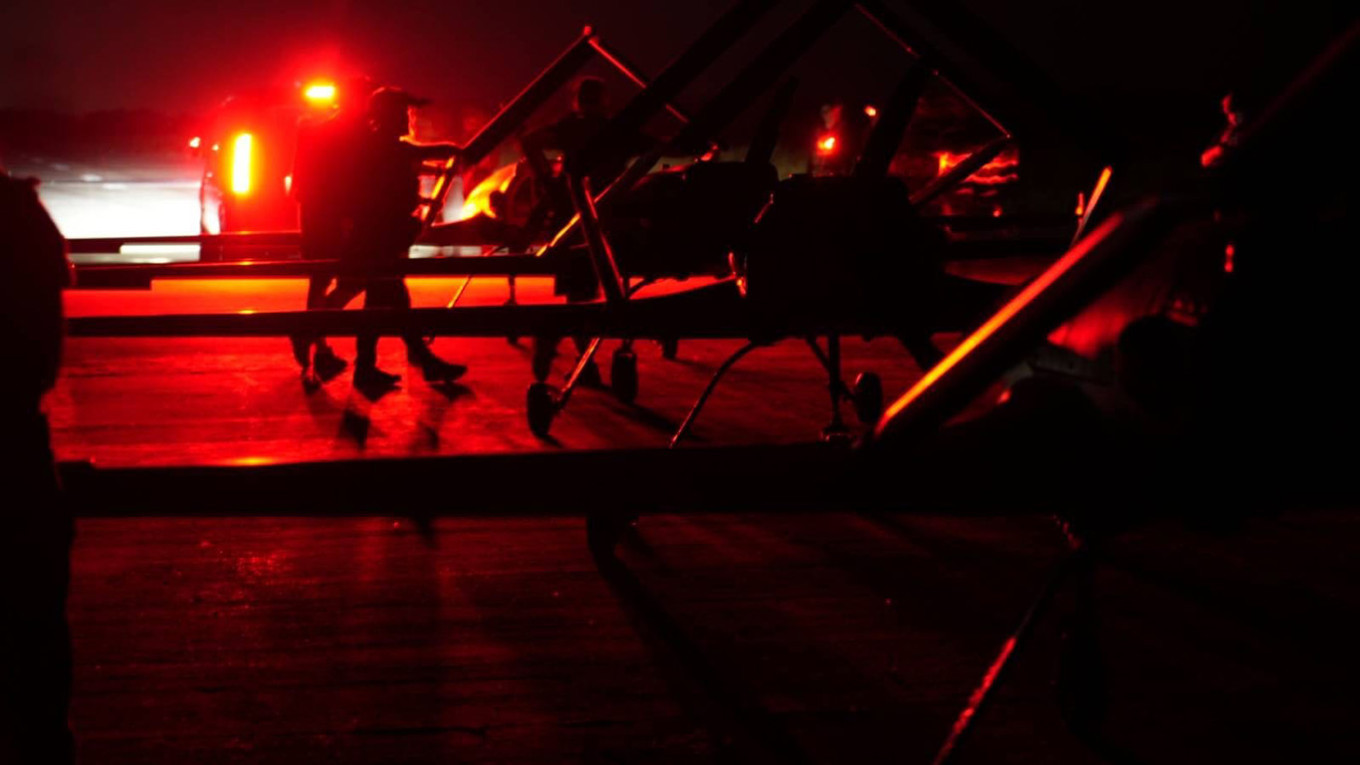
- Russia says it shot down 660 Ukrainian drones overnight into Friday, one of the largest attacks since the invasion began.
- Moscow Mayor Sobyanin reports at least 47 drones intercepted on a trajectory toward the capital.
- The strike came hours after Zelensky approved a 40-day security-service operation to ramp up pressure on the Kremlin.
- Ukrainian strikes on Russian energy infrastructure are causing fuel shortages in more than 50 regions.
A war fought just over a thousand kilometres from Belgrade is once again entering a phase in which the consequences are felt far from the front line, and Serbian diplomacy, tied to both an eastern and a western channel, is watching every signal of whether the conflict is moving toward the negotiating table or toward fresh escalation. Overnight into Friday, June 26, the Russian General Staff said its air defences had downed 660 Ukrainian drones over Russian territory and occupied Crimea, which, if confirmed, would be one of the most massive drone attacks since the start of the invasion.
Moscow Mayor Sergei Sobyanin said at least 47 drones heading toward the capital and the surrounding region had been intercepted, while emergency crews worked at sites where debris had fallen. Explosions were also reported near the Azot chemical plant in Novomoskovsk, in the Tula region south of Moscow, where the governor said one woman was wounded. Detonations were heard on occupied Crimea as well, near the Kerch ferry crossing, a key logistics point for the Russian military.
Why is this wave of drones different from earlier ones?
The difference lies not only in the number of craft but in the timing. The attack was carried out just hours after Ukrainian President Volodymyr Zelensky approved a 40-day operation by the Security Service of Ukraine, whose declared aim is to force Moscow to accept an end to the war through concentrated pressure on the Russian rear. This marks a doctrinal shift: instead of reacting to Russian strikes, Kyiv is now openly announcing an offensive rhythm with a deadline, carrying the war onto Russian territory in a way that previously lacked such a clear time frame.
The effects of that campaign are already measurable. Systematic Ukrainian strikes on refineries and energy infrastructure have produced fuel shortages in more than fifty Russian regions, a form of pressure measured not in downed drones but in the length of queues at petrol stations. The geopolitical reality is that the Kremlin must now defend the depth of its own territory, not just the front line, which alters the entire calculus of how long the conflict can last.
Are the talks a backdrop or a genuine opportunity?
In parallel with the escalation on the ground, Moscow continues to project readiness for dialogue. On June 23, President Vladimir Putin said Russia was prepared for peace talks on the basis of the 2022 Istanbul agreements, documents that were never signed and whose revival, in Kyiv’s reading, would mean accepting Russia’s conditions from the start of the war. That opens room for a double interpretation: whether this is a sincere opening of a diplomatic channel or positioning ahead of possible mediation by the great powers.
For Brussels and Washington, this moment carries a tectonic shift in assessing who dictates the war’s tempo. If Zelensky’s 40-day operation produces a tangible result, European capitals will have to reconsider the assumption that time is exclusively on Russia’s side. For Serbia, which balances between the European Union sanctions regime it has not joined and its dependence on Russian gas, any change in the dynamics of the war also shifts the ground beneath its own foreign-policy position.
What remains open is the question of endurance. Russia can announce figures of downed drones every morning, but it cannot as easily resolve queues at petrol stations across fifty regions. Will the next four weeks of the offensive bring Kyiv closer to the negotiating table, or simply deepen a war that for a third year now keeps redrawing the map of European security?