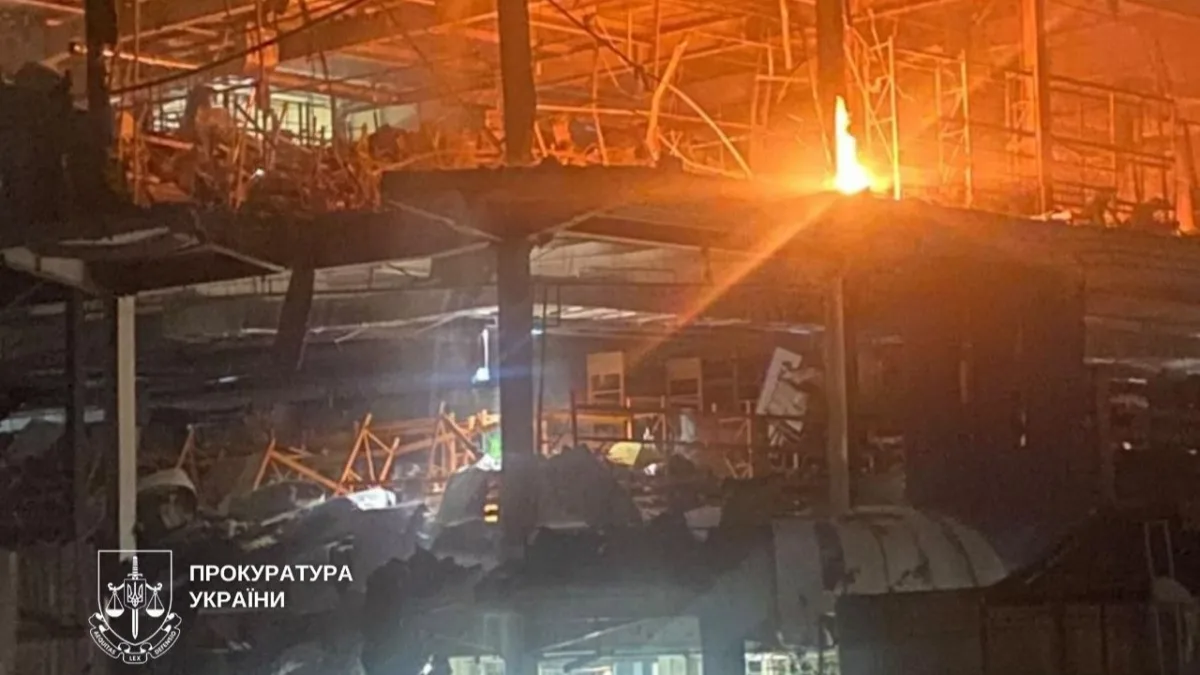
Ukrainian Drones Strike Moscow Region, Killing at Least Four
A mass drone assault hit the Moscow region overnight, with deaths near Istra and in the Belgorod region, while Russian strikes claimed lives inside Ukraine the same day.

- A drone assault on the Moscow region killed at least four people and wounded seven.
- Russian air defenses said they shot down 81 Ukrainian drones over the region.
- Russian strikes on Ukraine the same day killed at least six, including three aboard a civilian cargo ship.
- Kyiv is shifting the war deep into Russia's rear, toward energy sites and regions far from the front.
For Belgrade, which has for years steered its foreign policy along a thin line between its European perspective and its traditional ties with Moscow, every shift of the front deep into Russia’s interior alters the geopolitical reality that Serbian diplomacy must reckon with. On Monday, July 13, Ukrainian drones struck the Moscow region, an area long seen as the symbol of the untouchable Russian rear, and a toll of at least four dead and seven wounded shows how far the balance of risk has moved compared with earlier reports of strikes on Odesa and Zaporizhzhia.
The worst-hit spot was the settlement of Pionersky near Istra, northwest of the Russian capital, where three people were killed and three more injured after a drone came down. In Solnechnogorsk, two people were hurt when a drone struck a residential building, while in the Belgorod region, along the border with Ukraine, one woman was killed. Moscow region Governor Andrei Vorobyov said air defenses had downed 81 Ukrainian drones over the region, and Moscow Mayor Sergei Sobyanin said that more than 350 drones flew toward the broader area that night.
Why is Kyiv pushing the war deep into Russia’s rear?
Ukraine’s leadership frames these strikes as a response to more than four years of Russian attacks on its own territory, and as part of a strategy to move the war away from the grinding front line to places where Moscow has not felt an immediate threat. The systematic targeting of Russian energy infrastructure, refineries and logistics hubs far inside the country serves a double purpose: to disrupt the supply chain of the Russian war machine, and to signal to audiences at home and abroad that the Russian rear is no longer beyond reach.
The political backdrop of this escalation matters as much as the military one. Ukraine’s allies met the same day in Paris to weigh further pressure on Moscow, at a moment when the Washington-led diplomatic channels are effectively frozen and the U.S. administration has redirected its attention toward the Middle East and Iran. In that vacuum, deep strikes become a lever with which Kyiv tries to compensate for the stalled talks and waning Western focus.
A war measured in losses on both sides
While drones hit the Moscow region, Russian forces continued their attacks on Ukrainian cities and infrastructure the same day, killing at least six people. Three lost their lives aboard a stricken civilian cargo ship and two more in Zaporizhzhia, confirming that neither side is breaking through the wall of attrition that has defined the war for more than four years.
For southeastern Europe, and Serbia in particular, this trajectory carries concrete consequences: uncertainty over energy flows, pressure on the sanctions regime that Brussels expects members and candidates to apply consistently, and shrinking room for states trying to stay outside the bloc divide. The multilateral frameworks that once served to de-escalate now barely function, and each new strike deep inside the territory raises the threshold at which any ceasefire could even be negotiated.
Does moving the war deep into Russian territory bring the conflict closer to an end or only deepen it, and how might its outcome reshape Serbia’s position between Brussels and Moscow?