Zelensky Fires Defense Minister, Protests Erupt in Kyiv
As Ukraine escalates its naval offensive against Russia's fleet, Volodymyr Zelensky has dismissed his popular defense minister Mykhailo Fedorov, sending thousands into the streets of Kyiv.

- President Volodymyr Zelensky dismissed Defense Minister Mykhailo Fedorov on July 15 and offered the post to Interior Minister Ihor Klymenko.
- By July 16, thousands of citizens took to the streets of Kyiv and other cities demanding Fedorov's return.
- Ukrainian naval forces and the SBU used drones to sink the tankers Louise 1 and Banda, plus six more tankers and two tugboats in the Black and Azov seas.
- The Engels-2 airbase was struck by new Shahed-like Ukrainian drones, triggering explosions and a fire.
For Belgrade, which still measures its energy and diplomatic position between the European perspective and its ties with Moscow, the turmoil unfolding in Kyiv is not a distant chapter of the war but a reminder of how fragile domestic stability can be even for the side winning on the battlefield. On July 15, President Volodymyr Zelensky dismissed Defense Minister Mykhailo Fedorov, one of the most popular figures in the cabinet and the architect of Ukraine’s drone program, and offered the post to Interior Minister Ihor Klymenko. The decision drove thousands into the streets of the Ukrainian capital the very next day.
Fedorov, 35, had held the defense portfolio for barely six months, but in that time he became a symbol of the technological turn of the Ukrainian military. He redirected funds toward fiber-optic drones, reconnaissance systems and mid-range strike weapons, insisted on a deep overhaul of procurement and, by his own account, worked on shutting down Starlink systems for Russian forces and on isolating occupied Crimea. That is precisely why his dismissal, justified by friction with Gen. Oleksandr Syrskyi, the commander of the armed forces, was read as a political cut at the wrong moment.
A Reshuffle Amid the Naval Offensive
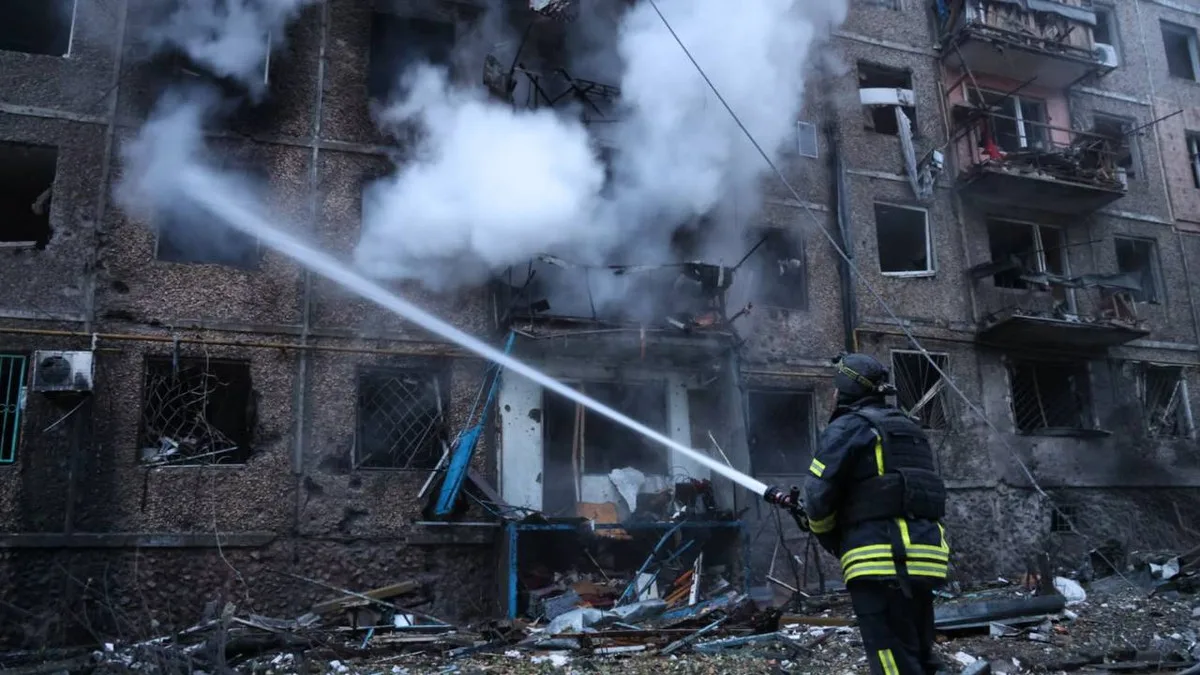
The political shock came in the middle of one of the most aggressive Ukrainian naval operations since the start of the war. Ukrainian naval forces and the Security Service of Ukraine used drones to sink the tankers Louise 1 and Banda, along with six more tankers and two tugboats in the Black and Azov seas. Just a day earlier, Ukrainian forces struck 20 Russian vessels in the Black Sea, including a tug and two gas tankers, expanding the assault on Russia’s so-called shadow fleet.
At the same time, the Engels-2 base, one of the strongholds of Russia’s strategic aviation, was hit by new Ukrainian drones resembling the Iranian Shahed, after which explosions and a fire broke out. For observers in European chancelleries, the contrast was striking: while the Ukrainian military shifts the war’s center of gravity to the sea and deep into the enemy’s rear, its political leadership is entering an open internal crisis. A deputy commander of the Ukrainian Air Force resigned in protest, declaring that removing Fedorov was a great evil for the country’s defense capability.
What Does the Dismissal Mean for Kyiv’s European Path?
The scene on the streets of Kyiv was rare for a country at war. More than a thousand people gathered in the center of the capital, waving Ukrainian and European Union flags, chanting “shame” and holding banners reading “the army is the priority” and “hands off Fedorov.” Similar rallies were held in Lviv, Kharkiv, Dnipro and Odesa, the first since last year’s protests in defense of anti-corruption bodies.
For Kyiv, which builds its legitimacy before Brussels on the image of a unified society, the sight of a divided public and military resignations arrives at a delicate moment in its accession talks with the European Union. Ukraine’s parliament, meanwhile, confirmed Serhii Koretskyi, the outgoing head of Naftogaz, as the new prime minister, making Fedorov’s removal part of a broader reshuffle of power. For southeastern Europe, and for Serbia, the message is clear: the stability of Brussels’ partners is measured not only by the front line but by the ability to resolve internal disputes off the streets.
Can an internal crisis in Kyiv, arriving alongside the Ukrainian military’s greatest naval successes, slow the European momentum that Serbia too is watching closely?