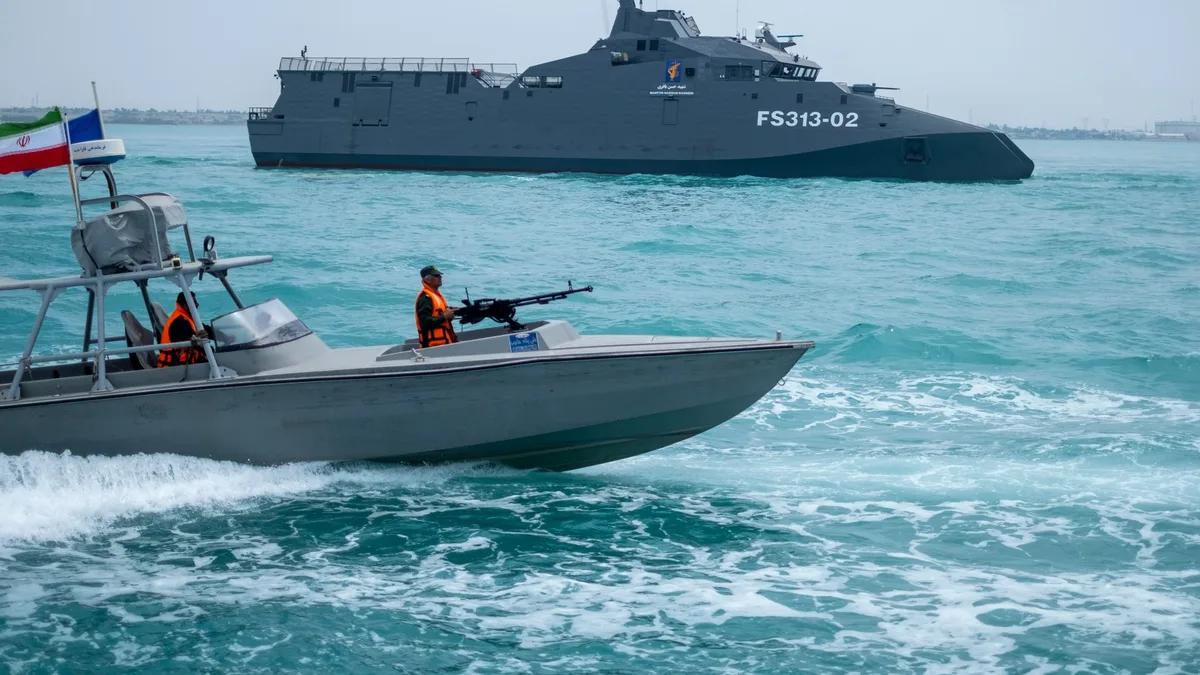
Iran Shifts Strikes to the Gulf: Kuwait, Bahrain, Oman
Instead of confronting the US Navy and Israel head on, Tehran now pressures Washington by hitting airports, power plants and desalination sites across the Gulf states.

- Iran is deliberately hitting water and power stations, airports and desalination plants in Kuwait and Bahrain, while avoiding direct strikes on US forces.
- Oman was struck too, just one day after Iran's foreign minister visited Muscat.
- The carriers George W. Bush and Abraham Lincoln sit about 150 kilometers off the Iranian coast, yet Tehran steers around them.
- The US wrapped up its ninth straight night of strikes on Iran, with 17 American soldiers killed and at least 420 wounded.
For Serbia, which buys its oil through intermediaries and tracks every jump in energy prices on world markets, what is unfolding in the Persian Gulf is not a distant story but a question of the bills that reach households and industry. The Persian Gulf and the tankers that cross it remain the main artery of the global energy trade, so every new front in the war between the United States and Iran carries a price felt as far away as Belgrade. Today’s development changes the logic of the conflict: Tehran has stopped seeking a direct showdown with the US Navy and Israel, and is instead choosing softer targets among its neighbors.
Analysts say Iran is knowingly directing its fire at the Gulf states, striking airports, power plants and water desalination facilities in Kuwait and Bahrain in order to pressure Washington without risking a devastating American response. Iranian officials argue that these states lend their territory to US military bases used for operations against Iran, which in their reading makes the bases legitimate targets under international law. The message is blunt: if Washington cannot be hit without consequences, its hosts in the region can be.
Why is Tehran hitting its neighbors instead of US carriers?
The answer lies in the balance of power. The carriers George W. Bush and Abraham Lincoln are positioned barely 150 kilometers off the Iranian coast, but they are wrapped in layered air defenses that are almost impossible to breach without heavy losses. Military sources warn that any hit on an American ship would trigger a wildly disproportionate reply, while a strike on the civilian and energy infrastructure of the Gulf monarchies carries a far smaller risk of full escalation. Tehran is betting that it can inflict real damage and raise the cost of the war for Washington while staying below the threshold that would draw direct retaliation on Iranian soil.
The cost of that calculation falls on ordinary Gulf residents. Kuwait and Bahrain are among the states that depend critically on seawater desalination, so strikes on those plants during the summer heat hit the water and power supply of millions. The attack on Oman is especially telling, because it came just a day after Iranian Foreign Minister Abbas Araghchi visited Muscat, a sign that Tehran is running its diplomatic channel and its military pressure in parallel. The Gulf capitals, which spent years trying to stay out of the open conflict, now find themselves held hostage to someone else’s war.
How bloody is the toll so far?
According to the latest figures, the United States has completed its ninth consecutive night of strikes on Iranian targets. Those operations have killed a total of seventeen American soldiers, wounded at least 420 and left one listed as missing. The most recent American soldier died in northern Iraq during the controlled detonation of an unexploded Iranian drone. Among the dead are the named Tyler Feehan (25) and Isabella Gonzales (19), young people whose names now stand alongside the statistics of a steadily deepening war. On the Iranian side the toll is heavier still: in July alone at least fifty people have been killed and more than 500 wounded.
For European capitals, including those tracking Serbia’s energy interests, the key question is not only who is hitting whom, but how far Tehran intends to push its strategy of pressure through third-party targets. The diplomatic channels through Muscat stay open even as missiles fall, a sign that neither side yet wants a total rupture. But every fresh strike on Gulf energy infrastructure brings closer the moment when the oil market could react sharply, with consequences far beyond the Middle East. Will the Gulf monarchies, cast in the role of targets, push Washington to seek a way out, or will they quietly pay the price of a war that is not theirs?