Kyiv Hits Two Russian Refineries, Family of Three Killed
Ukraine's General Staff says its forces struck refineries in Syzran and Ilsky overnight on August 7 and 8, while a Russian strike on the Kyiv region killed an entire family.

Ukrainian forces struck two Russian refineries, in Syzran and in Ilsky, overnight on August 7 and 8, less than twenty four hours after Ukrainian President Volodymyr Zelensky spoke by phone with Serbian President Aleksandar Vucic on the evening of August 7. For Belgrade this is not a distant, secondhand story: the war is shifting more and more onto oil infrastructure, and every strike on Russian refining capacity is felt on the oil market, which sets the price at Serbian gas pumps.
The attack was confirmed by the General Staff of the Armed Forces of Ukraine. According to its statement, three targets deep inside Russia and in the Black Sea were hit the same night:
- the refinery in Ilsky, in Krasnodar Krai, with an annual capacity of 6.6 million tons, whose output, according to the General Staff, supplies the Russian military
- the refinery in Syzran, in Samara region, with a designed capacity of 8.5 million tons a year
- the jack up drilling rig Sivash in the Black Sea, which Russia was using as an observation post for technical reconnaissance
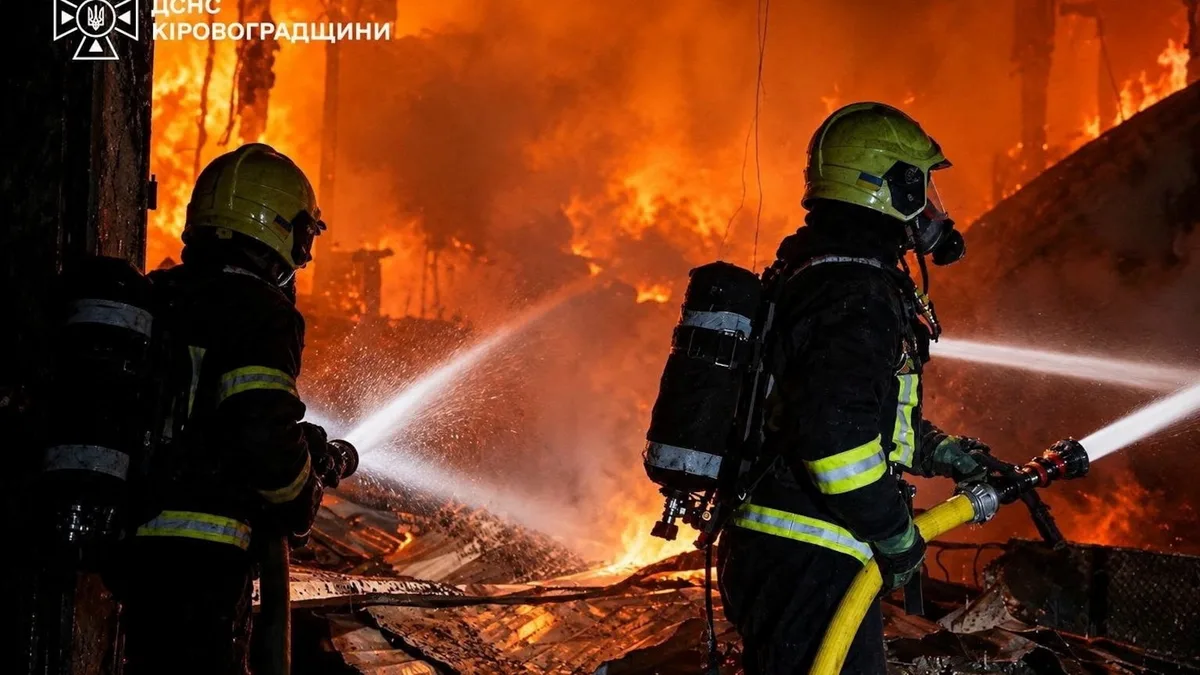
Fires broke out at both refineries. Five people were injured in Ilsky. “The extent of the damage to the facilities is still being determined,” the Ukrainian General Staff said in its statement.
Russia did not deny the attack, but described it with different numbers. The defense ministry in Moscow says its air defenses shot down 397 Ukrainian drones over more than a dozen regions, including the Sea of Azov and Crimea. Samara region governor Vyacheslav Fedorishchev confirmed the strike without naming the target. “Enemy drones attacked an industrial facility in Samara region overnight,” he wrote.
Why Have Refineries Become the Main Target?
Because fuel is the one Russian commodity Kyiv can hit without needing a front line. Syzran and Ilsky are not military bases but plants that turn crude oil into diesel and jet fuel, and that output feeds both the domestic market and the army. Kyiv is not trying to move the front line with these strikes, it is trying to create a shortage at the other end, in Russian storage tanks. The Syzran refinery, owned by Rosneft, has already been hit several times earlier this summer, so the August 8 attack is not an isolated move but part of an ongoing series.
For Ukrainian civilians, the same night looked completely different. Russia fired six ballistic missiles at Kyiv, and the first explosions were heard at around 12:45 a.m. local time. A second volley followed less than fifteen minutes later, and a third wave hit around 3 a.m., while rescue crews were still putting out fires east of the capital.
In the village of Pukhivka, in the Brovary district of Kyiv region, a drone strike killed three members of the same family: a grandfather, a grandmother and their three year old grandson. Four other people were hospitalized. “Russia continues to terrorize the civilian population,” said Tymur Tkachenko, head of the Kyiv City Military Administration.
In Kyiv itself, fire broke out at garages and a commercial building in the Holosiivskyi district, and at a business in the Obolonskyi district. Russia’s defense ministry claims it targeted a plant in the capital that produces components and warheads for cruise missiles, as well as a fuel and lubricant depot.
Third Mass Strike on Brovary in a Week
The Brovary district is an eastern suburb of Kyiv, and this was the third time it was hit in seven days. Three days earlier, overnight on August 5, a mass Russian attack on Kyiv and its surroundings killed 17 people, eight of them while they were waiting for a train at a railway station. We covered that attack separately, and the toll was different, but the pattern is the same: ballistic missiles fired at neighborhoods that have nothing to shoot them down with.
The number that illustrates this best came from Ukraine’s defense ministry on August 7. In July, Ukraine intercepted 29 of the 195 ballistic missiles Russia fired at it, fewer than one in six. There are not enough interceptor missiles for the Patriot systems, and new deliveries are running late.
Hence two wars fought on the same night. One is waged with drones a thousand kilometers from the border, against plants that can be rebuilt. The other lands on houses in Pukhivka. The next date that will show where the first one is heading is Rosneft’s August refining report, since only that will show how much of Syzran’s 8.5 million ton capacity was actually knocked offline.