Moscow Removes Klepach as VEB Chief Economist
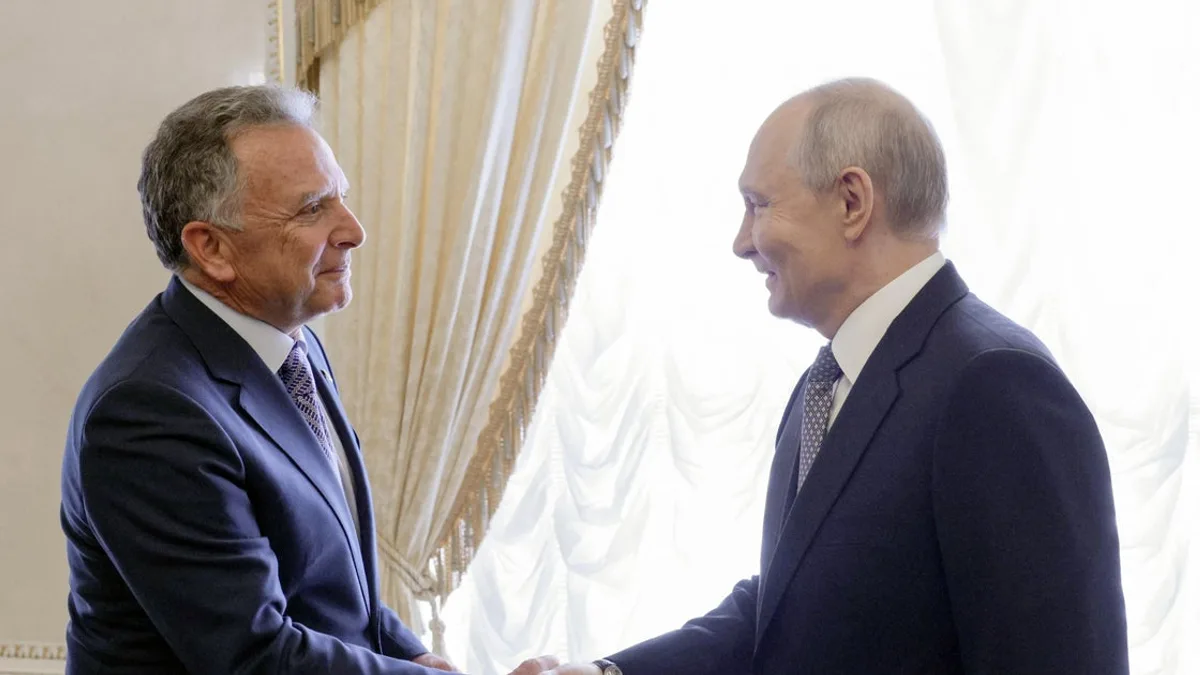
Andrei Klepach is no longer chief economist at Russia's state development bank VEB, two days after excerpts of his May speech on the cost of the war in Ukraine went public.

Andrei Klepach is no longer chief economist at Russia’s state development bank VEB, a post he had held for twelve years, and the removal was announced just two days after excerpts of his speech on the cost of the war in Ukraine reached the public. For Serbia, which relies on Russian gas and has not joined Europe’s restrictive measures against Moscow, this is not a routine personnel change at one bank. The health of Russia’s war economy determines how long the Kremlin can keep fighting, and how hard Brussels will tighten its sanctions regime this autumn.
State news agency TASS confirmed on Sunday, August 16, that Klepach “no longer holds the position of chief economist of VEB,” without offering any reason for his departure. The agency added that a replacement has already been chosen and will be named soon.
Reuters obtained confirmation from the bank itself over the same weekend, also without explanation, while two sources familiar with the matter told the agency the move was tied directly to Klepach’s remarks. According to Reuters, Klepach himself confirmed he had been dismissed. The two accounts do not contradict each other, but they differ in framing: TASS describes it as a routine notice of a leadership change, while Reuters treats it as a consequence of the speech.
Klepach took the chief economist post at VEB in 2014, after ten years at Russia’s Ministry of Economic Development. He is, in other words, a career insider, not a figure from opposition circles.
What did Klepach actually say?
The speech was delivered in May at a gathering of economists and academics known as the Nikitsky Club, and for months it drew no attention from Russian media. Excerpts were published last week by the independent outlet The Moscow Times, and only then did the remarks become news.
“We are falling behind. We are losing both the technological and economic race in the world.”
Klepach specified exactly who is winning that race, and went further than the usual comparison to China and the United States. He said Russia is now falling behind Ukraine in some respects too, crediting Ukraine’s resilience to Western financial backing. From that he drew a conclusion that was likely the tipping point:
“We will not win this war of attrition.”
He added that Moscow harbors an illusion that everything will collapse inside Ukraine, that this has not happened and will not happen, while Russia’s own costs keep climbing. The war, he noted, has already run longer than the Great Patriotic War, the Soviet term for the fight against Nazi Germany, and shows no sign of an end.
Klepach acknowledged that the Russian economy has proven resilient to Western sanctions, but pointed to three pressures compounding each other: Ukrainian strikes on energy and logistics infrastructure, the sanctions themselves, and high domestic interest rates. His conclusion was that the economy will not collapse, but that the gap with rivals will keep widening, and he predicted a social crisis at a moment when few are expecting one.
The figure behind that assessment comes from Russia’s own central bank, which said in July that economic growth this year could fall as low as zero. Ukrainian strikes on refineries have meanwhile been disrupting supply and pushing up inflation risk.
Brussels prepares its widest sanctions list since the war began
The removal comes as the European Union readies a fresh round of sanctions. EU foreign policy chief Kaja Kallas told the German newspaper Welt that the bloc is preparing its most far reaching round of sanctions listings since the war began, and said existing measures have already denied Russia’s war machine more than 1.16 trillion dollars.
Diplomatic sources in Brussels say the proposal is expected to cover roughly 1,600 new Russian individuals and entities, focused on the military industrial complex, along with asset freezes and bans on travel and transactions. The list goes to member state governments in early September, with adoption planned for October.
There is also a serious counterargument to Klepach’s forecast. A source in the European intelligence community told Fox News that Russia’s deep structural economic problems should not be confused with the current pressure on Vladimir Putin, since higher oil prices have helped Moscow cover much of its budget deficit.
“That doesn’t solve the underlying economic problems in Russia, but from a budget standpoint, Putin is actually fine. He’s not under pressure.”
By that reading, the Kremlin has time for another spring, or another season of war, before economic constraints force it into hard choices.
The cost of speaking out in Russia is visible outside the banking world too. Lev Shlosberg, deputy chairman of the Yabloko party, was sentenced on Monday to eleven years and one month in a penal colony on charges of discrediting the armed forces and spreading false information, the outlet Mediazona reported. He called the war a catastrophe for Russia in court and said the case against him was political. A week earlier, Russia’s Supreme Court had barred Yabloko from taking part in next month’s parliamentary election.
For the region, the calculation is straightforward. If Klepach is right, pressure on the Russian economy turns into a political problem inside Russia itself in the coming years. If the European intelligence source is right, Brussels’ new October list will be just one more layer of measures on an economy that is, for now, absorbing them. The first date on the calendar is early September, when the sanctions proposal reaches member state governments.