Russian Drone Hits Ukraine Security Service HQ in Kyiv
A drone struck the Security Service of Ukraine's headquarters in Kyiv in broad daylight, targeting the office of the acting director. At least 12 people were injured, and Zelensky vowed a response.

As Serbia, a candidate for European Union membership, continues to put off aligning its foreign policy with the sanctions regime against Moscow, Kyiv has produced another data point that makes that delay harder to justify. In broad daylight on September 4, a Russian drone struck the headquarters of Ukraine’s Security Service (SBU) in the very center of the Ukrainian capital, across from the St. Sophia complex. At least 12 people were injured, and President Volodymyr Zelensky ordered a response he says already has its geography settled, with only the timing left open.
An air raid alert was sounded in Kyiv at around 3 p.m. local time, and explosions were heard in the city center half an hour later. The SBU building on Volodymyrska Street, in the Shevchenkivskyi district, was hit, right next to the cathedral complex that has been one of the city’s symbols since the eleventh century. According to sources, the drone was aimed specifically at the office of Oleksandr Poklad, the SBU’s acting director, who was not injured. Euromaidan Press reports that the drone was a jet-powered Russian Geran, a derivative of Iran’s Shahed.
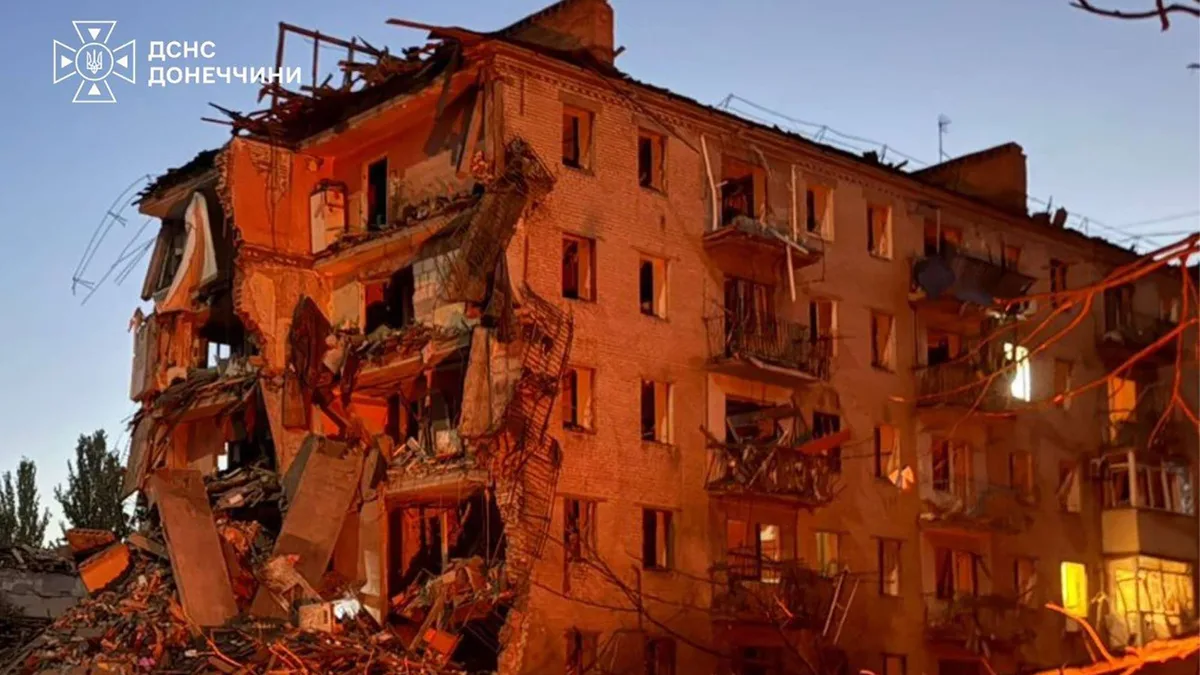
Part of the ceiling and an exterior wall of the SBU building were destroyed, and a fire broke out and was later extinguished. The strike also left marks on the neighboring complex: windows were shattered at St. Sophia of Kyiv, and the glass entrance of the Consistory building was destroyed, though the cathedral itself was not damaged. The strike site is about 100 meters from the complex. A nearby bakery, Zavertaylo, was also damaged.
How many people were injured
Sources differ on the final injury count. The Kyiv Independent reports at least 12 people injured, seven of whom had been hospitalized by 5 p.m. Euromaidan Press also cites 12 injured, but says nine were hospitalized, two of them in serious condition. Both outlets agree that the day’s early estimates were considerably lower, first seven, then nine injured, before the official count rose to 12.
After the attack, Zelensky said the task had already been set.
“I have given Poklad the task of responding to this Russian attack in a way that is proportionate, significant and, if possible, symmetrical,” the president said.
The SBU itself put it briefly and bluntly: “Russians will get a painful response to their strikes.” By 6 p.m. that day, Zelensky said Ukraine had identified the targets for its response and was choosing the timing based on when it could achieve an effective result.
Kyiv’s reaction and the question of peace talks
Ukraine’s top diplomat also responded. Foreign Minister Andrii Sybiha called the attack on the SBU headquarters a serious escalation, adding that it strips any weight from Moscow’s simultaneous calls for peace.
“Moscow carried out this strike in the middle of a renewed push for peace, laying bare its real rejection of diplomacy,” Sybiha said, at a moment when a possible breakthrough in the talks was being publicly discussed.
For those who work and live near the St. Sophia complex, the daytime attack was especially unsettling because it hit a part of the city that had until now been considered safer than the outlying districts exposed to nighttime strikes. “The whole time we walked through this neighborhood, we felt safe,” Alina Zamanova, a Kyiv-based artist whose studio is near the strike site, told reporters at the scene.
The wider picture of the day
The attack on the SBU fits into a broader pattern for the day, one in which Ukraine also carried out its own strikes deep inside Russia, while international air traffic adjusted to the risk around Moscow. Air Tanzania suspended flights to the Russian capital that same day, citing security reasons, after one of its flights had been forced to land in St. Petersburg instead of Vnukovo Airport the day before, due to the closure of the airspace around Moscow.
This follows a series of strikes we have been tracking in recent days, including a Coca-Cola plant near Brovary that was on fire for an eighth consecutive day. The difference this time is that the target was a security institution in the very center of the capital rather than an industrial site on the outskirts, something read in Kyiv as a message that no part of the city is beyond reach anymore.
What this means for Serbia and the region
For Belgrade, an escalation like this matters beyond the attack itself. Every new strike that Brussels and European capitals read as proof of Russia’s rejection of diplomacy adds pressure on candidate countries, Serbia included, to align their foreign policy with the sanctions regime before the next chapters of accession talks can open. That question remains open for now, just like the exact timing of Kyiv’s promised response.