Budapest-Belgrade Train: Vitezi Announces December
After a successful ETCS test on the section to Kelebia, Hungary's transport minister sets out the sequence for the first time: permits, domestic service, then Belgrade.
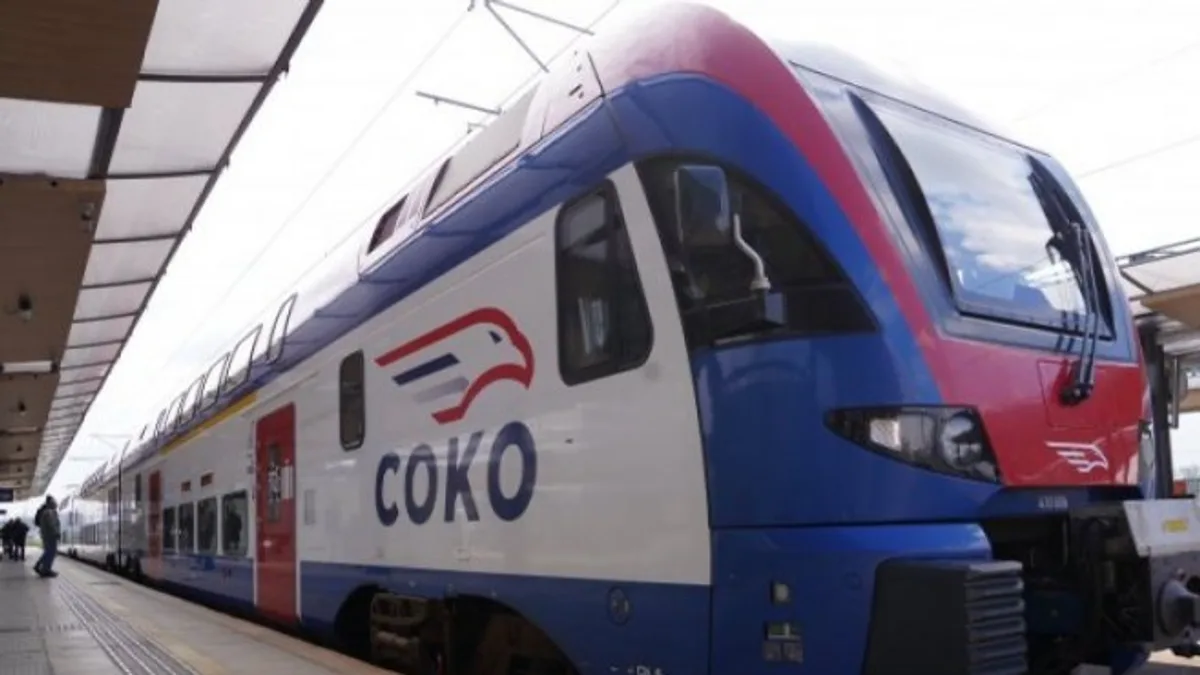
A passenger train from Budapest to Belgrade could start running in December, and before that, in the second half of October, the first passengers could ride only within Hungary, Hungarian transport minister David Vitezi said in a Facebook post on October 8. For Serbia it is the first announcement with specific months for a line whose opening officials in Belgrade had earlier tied to October, when Hungary was to finish testing its section.
In brief, the sequence Vitezi lays out:
- the official documentation for passenger service is expected by mid-October
- domestic passenger service in Hungary could start in the second half of October
- track adjustment takes almost two months and finishes on the suburban section by the end of October
- international service between Budapest and Belgrade, at 160 kilometers per hour, is possible in December
What has been completed on the Budapest-Kelebia line?
The minister announced that testing of the ETCS system, which controls and monitors trains, has been successfully completed on the new Budapest-Kelebia line. The test followed a full-load trial the previous weekend. Vitezi says the system is one without which passenger service cannot begin:
“This is important because the correct functioning of this system is the basic condition for launching passenger service.”
The post opens with a broader assessment: “The Hungarian section of the Budapest-Belgrade railway is technically nearing completion.” Based on the test results, the minister says, the official documentation needed for passenger service will arrive by mid-October.
Vitezi also devoted a separate post to the previous weekend’s trial, on October 5. Trains ran for hours on the planned timetable for peak-load periods, as if passenger service had already begun. The minister wrote that there was only one difference: the trains carried no passengers. Experts, the competent transport authorities and a quality control company are to evaluate the results, and he judged then that the test had gone without problems.
Why doesn’t the train start right away?
Before any passenger service, the contractor must carry out the last track geometry adjustment provided for in the contract, within the warranty period. It covers station tracks, switches and the open line. Vitezi explains that this is a usual, planned final phase before a new line is put into operation, and he describes how long it will take:
“This is work that will take almost two months: the station tracks and switches will be adjusted, as well as the tracks on the open line, so that the line is suitable for traffic at 160 kilometers per hour in the long term.”
The reason is technical. The ballast under the track is compacted further during construction and test loads, so the position of the rails and switches has to be set precisely again. The minister stresses that at 160 kilometers per hour the track geometry must stay within the design values in the long term. On the suburban section between Ferencvaros and Kunszentmiklos-Tass the work should be finished by the end of October, and once domestic service starts, the works would be carried out with far fewer restrictions.
When could the train reach Belgrade?
The first step, according to Vitezi, is domestic service in Hungary:
“If everything goes according to plan, domestic passenger service could start in the second half of October as a first step.”
The international line comes only after that. If the first weeks of domestic service go without problems, December brings full use of the 160 kilometers per hour speed and the start of service between Budapest and Belgrade. N1 recalls that in early August Vitezi spoke of an opening in early autumn, provided the signaling system tests went without problems, which means the deadline has now moved to the end of the year.
The minister stressed that safety conditions are not up for negotiation: “We will allow passengers to use this line only when all the necessary safety conditions are met. We will not back down from that.” He also said that many tests, repairs and checks have been done so far, but that there is still work to do.
The post gives no ticket price, travel time or number of departures, and it does not name an exact date for the first train. December is, then, still a conditional announcement: it depends on permits by mid-October, on the track adjustment, and on how the first weeks of domestic service go.