

Arnautovic Proposes Compulsory Voting in Bosnia
A week after general elections, a Central Election Commission member offers a personal package: mandatory voting, the vote at 16, the d'Hondt formula, thresholds of 4 to 7 percent.
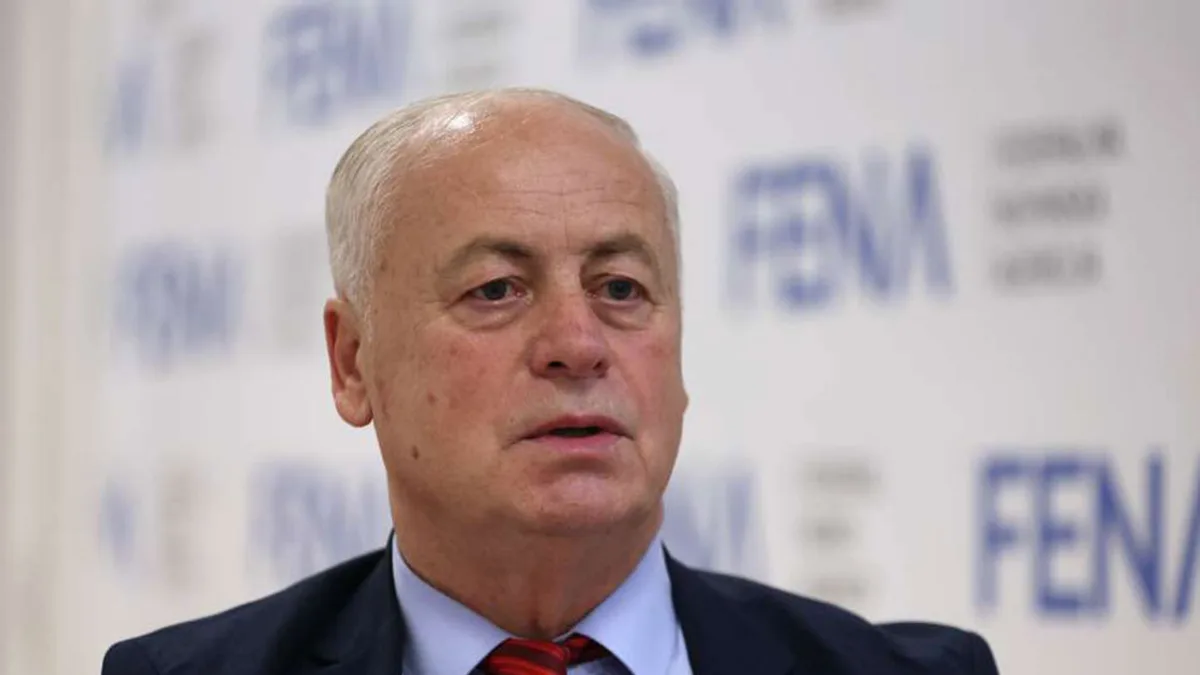
A week after the October 4 general elections in Bosnia and Herzegovina, one member of the Central Election Commission has raised the question of changing the rules by which the country votes. Suad Arnautovic laid out a package of proposals in an interview with the Federal News Agency (Fena) and used three election units in Republika Srpska as an example of unequal voting weight. He stressed that these are his personal views, not the position of the Central Election Commission (CIK BiH).
What does Arnautovic propose for voters and voter registers?
The central voter register, Arnautovic said, does not match the situation on the ground, mainly because of people who hold valid Bosnian identity documents but do not live in the country. He offers two remedies: compulsory voting, with a special identification card for every voter, or a return to active voter registration, at least for one election cycle.
He also proposes giving active and passive voting rights to young people from the age of 16. As examples of countries where people vote from that age in certain elections, he named Germany and Austria.
Under his proposal, polling station committees would consist solely of civil servants, employees and staff of public institutions whose pay comes from the budget. Members of municipal and city election commissions would be appointed by the CIK BiH, and their fees would be paid from that institution’s budget.
When would local and general elections be held?
Arnautovic believes local and general elections should be held in the same year, but at different times. He described his idea for the schedule this way:
“In my view, decision makers should hold a substantive discussion and assess how expedient it would be, and I think that, if they are merged and both local and general elections are held in one election year, local elections should be in April of the election year, and general elections, as before, in the first week of October,” Arnautovic said.
General elections would thus keep their current date, while local ones would move to spring of the same year.
Formula, thresholds and unequal election units
The most concrete part of the proposal concerns turning votes into seats. Arnautovic would replace the Sainte-Lague formula with d’Hondt and introduce three election thresholds: four or five percent for a single party, six percent for a coalition of two parties and seven percent for a coalition of three or more. In his assessment, those two moves could help consolidate the political spectrum in Bosnia. He justified the different thresholds in one sentence:
“It is not fair for one and the other political subject (an independent candidate and a coalition of 12 political parties) to have the same election threshold,” Arnautovic said.
Election units, in his words, should be simplified and merged, with protection against political manipulation when borders are drawn. He named the phenomena he wants to prevent as gerrymandering and malapportionment, meaning politically motivated redrawing of election units and a mismatch in the representation of voters.
As an example he took units 1b, 2b and 3b in Republika Srpska, which together elect nine direct members of the House of Representatives of the Parliamentary Assembly of Bosnia and Herzegovina, three from each. The number of registered voters differs sharply, however: on October 4, 2026, unit 1b, which covers the Banja Luka region, had 570,725 registered voters, while unit 3b, the Trebinje region, had 296,496. The difference is 274,229 voters, yet both units elect the same number of deputies. That is why Arnautovic offered this reminder:
“I remind you that equal voting rights are one of the five principles of free and fair elections, and if that principle is not achieved, it cannot be said that the elections, viewed as a whole, are fair and honest,” Arnautovic said.
Technology at polling stations
The specific election technologies used in this year’s general elections passed the test, the CIK member said. Still, he believes an upgrade should be considered, including the introduction of cameras at polling stations.
Arnautovic closed by repeating that he is presenting personal proposals for improving the election process, not official positions of the Central Election Commission of Bosnia and Herzegovina.


