

Rezai Tells Munir Enriched Uranium Will Stay in Iran
Iran's top security council secretary told Pakistan's field marshal that not a particle of the material will leave the country and that there are no talks with the US without trust.
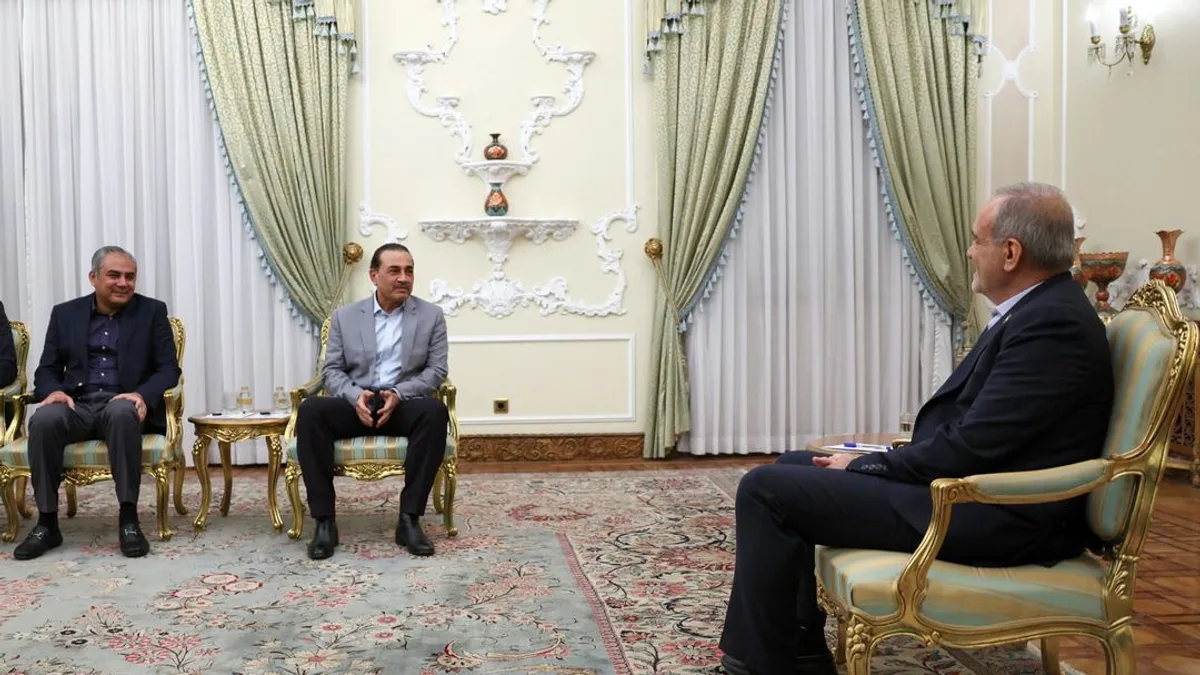
We reported earlier that Asim Munir had arrived in Tehran. Today, Tuesday, October 20, we also know what his hosts told him: Mohsen Rezai, secretary of Iran’s Supreme National Security Council, told the Pakistani field marshal that enriched nuclear material will not be taken out of the country and that there will be no negotiations with the United States until Washington takes steps to restore trust. The message comes as diplomacy over the Strait of Hormuz has stalled, an issue that reaches importers such as Serbia through energy markets.
Iranian state television carried the statements. Munir, chief of staff of the Pakistani army, is in Tehran to revive Pakistan’s mediation between Iran and the US, and according to Arab News it is his fifth visit since the June agreement.
What exactly did Rezai say?
Rezai first ruled out any possibility that the material would leave Iran. He is reported to have said:
All enriched nuclear material will remain in Iran, and not a single particle will leave the country.
He then added: “This material is a great asset and a national treasure of the Iranian people, which should be used inside the country.” There will be no talks, he said, until America takes steps to build trust.
His words are translated in different ways. Arab News and TRT World report that “not the slightest part of the enriched nuclear material will leave Iran,” while Press TV says all the material stays in the country and not a single particle will go out. The meaning is the same, but the wording is not identical.
What does Iran want, and where is Ghalibaf?
Munir also spoke with the speaker of Iran’s parliament and chief negotiator, Mohammad Bagher Ghalibaf. His message was short:
We have nothing new to say; America cannot gain Iran’s trust unless it meets seven conditions.
Ghalibaf added that threats and military maneuvers cannot influence Iran’s strategic decisions. Among the seven conditions, Tehran demands a ceasefire across the entire Middle East, the unfreezing of assets abroad and the lifting of sanctions on the oil sector. Munir was also received by President Masoud Pezeshkian; the news agency Nournews reported on the talks about mediation and regional developments, and a photo published by The Times of Israel also shows Pakistan’s interior minister, Mohsin Naqvi, at that meeting.
Why is uranium the key issue?
Iran holds material enriched to 60 percent, while the weapons threshold is 90 percent. Tehran has said before that it would not hand the material over to any country, but it hinted that it could dilute it on its own territory. Rezai’s statement goes a step further, leaving no room for export or for any transfer beyond the country’s borders.
Press TV says the latest American proposal calls for precisely that: moving the material out of Iran. Tehran rejected it, citing its right to peaceful nuclear technology under the Treaty on the Non-Proliferation of Nuclear Weapons. Washington and its allies have imposed waves of sanctions for years over accusations that Iran is building nuclear weapons, which Tehran denies.
How did we get here?
The war began on February 28, when the US and Israel attacked Iran while Washington and Tehran were holding talks on the Iranian nuclear program. Press TV calls it a 40-day war. In June, a memorandum of understanding, also known as the Islamabad Memorandum, was signed with Pakistan’s mediation, but it quickly collapsed amid renewed fighting.
Negotiations have been stalled since. Indirect US-Iran talks on the sidelines of the UN General Assembly produced no breakthrough, while Qatar says the talks are still under way and that both sides remain engaged.
What did Munir announce about the border?
In Tehran, Munir also announced one concrete piece of news. According to Press TV, he said:
We clearly declare that the problem on the border between Iran and Pakistan has been resolved, and the border was reopened as of this morning.
The crossings have thus been open since the morning of October 20. The Pakistani field marshal also praised the defense and resilience of Iran’s armed forces in the war and stressed the two countries’ regional cooperation without the presence of foreign forces.
The same day, according to The Times of Israel’s liveblog, US President Donald Trump said in the Oval Office: “We’re doing very well with Iran, we just have to make the final decision on how we want to win.”


