Lula beats Flavio Bolsonaro, who seeks to annul the vote
Brazil's president took 51.8 percent in the runoff and won a fourth term. His opponent refused to concede, and voting had been extended by two hours.
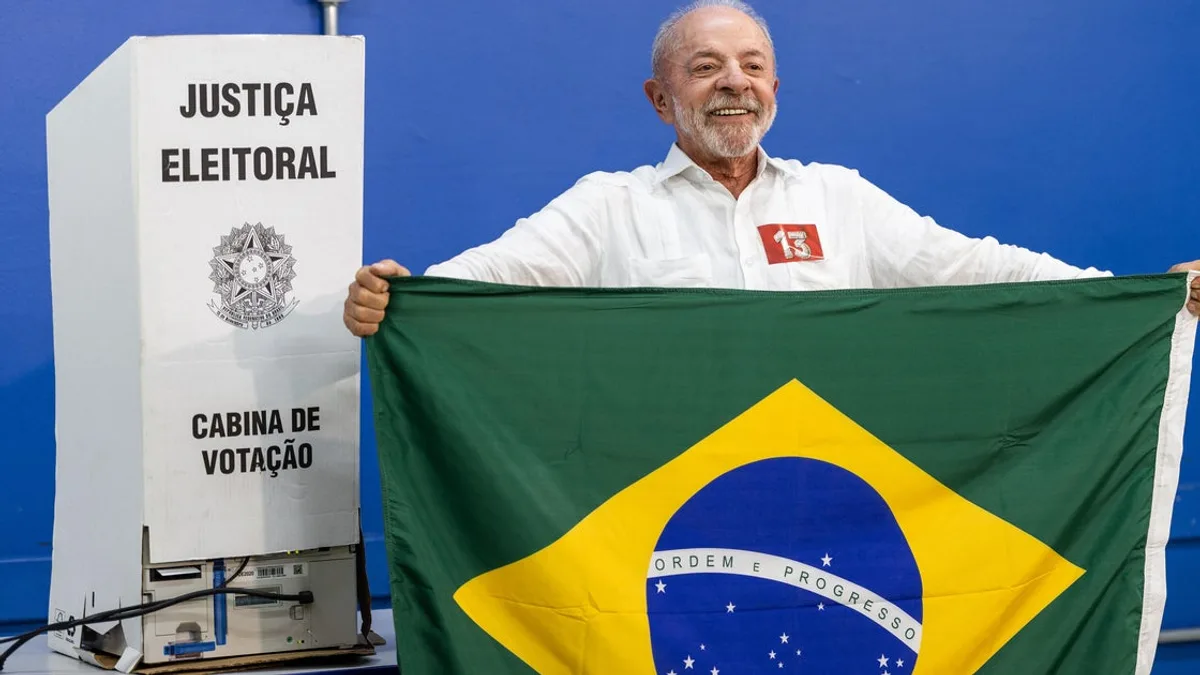
Luiz Inacio Lula da Silva won Brazil’s presidential runoff on Sunday, October 25, 2026, securing a fourth term, though not a consecutive one. With 100 percent of the votes counted, the electoral court credited him with 51.8 percent, against 48.2 percent for Flavio Bolsonaro. The margin is almost 4.4 million votes. Bolsonaro has not conceded, and according to the US broadcaster CBS News he has asked for the result to be annulled.
The new term begins on January 5, 2027. Lula, who turns 81 on Tuesday, watched the count at a hotel in Sao Paulo with his wife, Rosangela da Silva, while supporters celebrated inside and outside the building.
Why was voting extended by two hours?
Supreme Court Justice Cristiano Zanin made the decision three minutes before the polls were due to close, at the request of both campaigns. Lula’s team asked for more time because of problems with the buses that carry voters to polling stations in Sao Paulo and Salvador, cities that mostly lean toward the incumbent. Bolsonaro’s team pointed to heavy rain in the south of the country, where he is the favorite.
The result was confusion. In Brasilia, volunteers who were monitoring the count at one school mostly left 15 to 20 minutes after closing time, and at one polling station in Rio de Janeiro the voting machines had already been switched off and could not be turned back on. It is not known how many polling stations stayed open past the official deadline, and the count ran two hours late.
In the state of Bahia, at least 75 city buses never left their garages, an electoral judge said, and she ordered the arrest of Salvador’s mobility secretary, Pablo Souza. Mayor Bruno Reis, an ally of Bolsonaro, blamed union members, saying they had illegally plastered Workers’ Party material on the vehicles. Another Bolsonaro ally, Nikolas Ferreira, pointed out that Zanin used to be Lula’s lawyer.
What did Lula say?
During the day Lula told reporters: “We will not allow mayors, governors or businessmen to rob us.” He added that these people “must respect democracy.” In his victory speech he turned to his opponent and repeated a message about sovereignty several times (the quotes are in our translation).
“This was a defeat for denial and lies. I have to admit that I felt ashamed every time I attended a debate.”
The same evening he also said: “Either the homeland stays free, or we will die for Brazil. This country will not agree to be anyone’s backyard.” Near the end of the campaign, CBS explains, Lula argued that a Bolsonaro government would hand the United States control over Brazil.
What does Bolsonaro want?
Flavio Bolsonaro, a senator for the Liberal Party, is the son of former president Jair Bolsonaro, whom Lula defeated in 2022. The father is under house arrest over an attempted coup, and the son promised during the campaign to seek amnesty for him. The decision to extend voting could prompt a legal response from his camp.
His campaign was also weighed down by an investigation into corruption, money laundering and tax evasion. He admitted receiving about 12 million dollars from the banker Daniel Vorcaro for a film about his father’s life. At a polling station in Rio de Janeiro he said: “The time for real change has come. Brazil cannot go another four years down this path.”
Why is the outcome unusual?
In the first round Bolsonaro led 47 to 45 percent, a gap of 2.2 million votes. It is the first time since the fall of the military dictatorship in 1985 that a candidate who came second in the first round has gone on to become president. In that round, more than 33 million of almost 160 million registered voters stayed home.
After the first round Lula reorganized his campaign, reached out to young people and brought millions of people into the streets in defense of democratic values. Government measures also helped: a debt write-off program for small businesses, free public transport on weekends, and a Senate decision to abolish the six-day work week.
The win also carries foreign-policy weight. Latin America has increasingly elected center-right presidents close to US President Donald Trump in recent years. Brazil, the region’s largest economy with a GDP of 2.6 trillion dollars a year, and Mexico, the two most populous countries, remain under center-left leadership, despite the tariffs Washington imposed on Brazilian exports. Trump said on Sunday that he was following the election but did not endorse either candidate.
Lula began his political career in the 1970s as a union leader and first became president in 2002. He spent 580 days in prison, after which the Supreme Court annulled the conviction because of the judge’s bias. Media outlets assess that this is probably the last victory of his career.