False bomb threats disrupt 27 flights across Europe
A second wave in the same week hit flights from Ireland to Bulgaria, and fighter jets escorted passenger planes, including over Croatia.
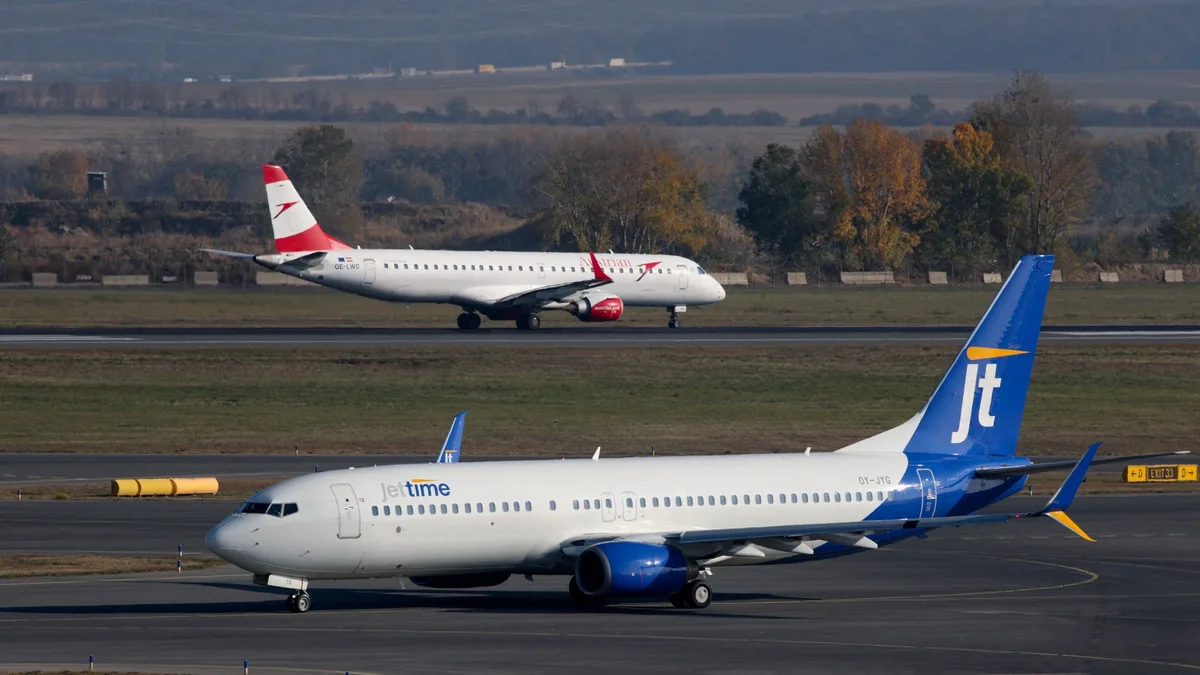
False bomb threats disrupted at least 27 passenger flights in Europe on Thursday, and part of the fallout came in countries that border Serbia: a Croatian Rafale intercepted a Finnair flight over Croatia, and the Bulgarian air force escorted three passenger planes to landing. Romania’s intelligence service confirmed that threats also reached two flights approaching Bucharest. No country has officially blamed anyone.
Which flights were targeted?
According to figures cited by Al Jazeera, the threats hit flights in France, Italy, Bulgaria, Spain, Denmark, Poland, Romania, Ireland, the United Kingdom and the Czech Republic, among other countries. The numbers differ between reports: Al Jazeera and Reuters speak of at least 27 flights, while N1, citing Reuters, reported at least 25 at an earlier point.
An Aer Lingus flight from Dublin to Rome was diverted to France. The office of French Prime Minister Sebastien Lecornu said fighter jets were sent to intercept it and escort it to the Evreux military base, west of Paris, because the pilot was not following the authorities’ instructions. A bomb disposal team was waiting at the base, and 151 passengers and six crew members were taken off safely.
In Bulgaria, flights from Copenhagen and Madrid landed in Sofia, while a Ryanair flight from London to Sofia was diverted to Plovdiv, the country’s second-largest city. Bulgaria’s transport ministry said nothing irregular was found after landing and that the airport resumed operations.
Spanish police said three email threats arrived within 20 minutes. They concerned two Air Europa flights from Madrid to Paris and four inbound Iberia flights from Rome and Milan. The planes were held or returned to the stands, and passengers were taken off while the aircraft were searched.
Threats also arrived for four aircraft on flights to Prague, and the bomb disposal checks were negative. The Czech National Centre against Terrorism, Extremism and Cybercrime (NCTEKK) took over the investigation. Czech police wrote on X: “No further information can be provided at this time.”
Poland’s LOT said its flight LO235 from Warsaw landed safely at Zaventem airport in Brussels, where nothing suspicious was found. Wizz Air diverted a flight from Milan to Warsaw to Vienna, and the company said: “The diversion was carried out in line with established safety rules and procedures.” Finnair reported that two of its flights from Helsinki received threats: one to Rome with 144 passengers and seven crew members, the other to Vienna with 177 passengers and six crew members. The Rome flight was followed by a fighter jet, and the Vienna flight landed safely. In a statement, the company said: “Threats are almost always unfounded.”
No explosive device was found on any of the searched aircraft, and the threats were declared false.
What happened over Croatia?
Croatia’s defense ministry said a Rafale intercepted the Finnair Airbus A320 on the Helsinki-Rome route at 8:41 a.m., between Jastrebarsko and Karlovac. The plane entered Croatian airspace at 8:34 a.m., between Cakovec and Varazdin, and left it at 8:54 a.m. The Rafale escorted it to the Italian border, where the Italian air force’s quick reaction unit took it over.
The order to act came from the NATO Combined Air Operations Centre in Torrejon. The ministry says this was the second successful interception this year, after a Maltese Boeing that was also flagged as a possible threat. Since January 1, 2026, the Croatian air force has protected Croatian airspace on its own with Rafale jets, within the NATO system NATINAMDS. The statement did not name the base the fighter took off from or the pilot, and it did not say whether anything was found on the plane. No named person was given as the source of the statement.
Did the Aer Lingus pilot break the law?
Prosecutor Remy Coutin opened proceedings to determine whether refusing the landing instructions at Evreux amounts to a criminal offense. The pilot reportedly refused to follow French authorities’ instructions until fighter jets forced him to land. Air France said none of its flights were affected.
Who is behind the threats?
This is the second wave in the same week. On Tuesday, November 3, threats were made against seven passenger planes, two of them departing from the United Kingdom, and an airport near Warsaw was briefly closed. British Transport Secretary Heidi Alexander described those events as “malicious hoax threats.”
Philip Baum, a visiting professor of aviation security at Coventry University, told Al Jazeera: “What happened this week appears, to some extent, coordinated.” European Transport Commissioner Apostolos Tzitzikostas wrote on X: “Any threat to civilians is unacceptable.” In the same post he added: “It is too early to draw conclusions on whether the reported cases are connected.” The European Commission activated a mechanism for sharing air safety data.
Several European officials accuse Russia of planning hybrid attacks, but the threats have not been linked by evidence to earlier cases: an intrusion into systems that raised the temperature in refrigerated display cases in European stores, drone overflights, and a failed drone attack on Leipzig airport in August, for which the German government blames Russia.
What happened on Friday?
The threats did not stop the next day. Danish police said they were back at Copenhagen airport because of threats against air traffic: “We are now investigating the case and are visibly present at the airport.” Czech police reported new threats at Prague airport on Friday.