Abu Dhabi Talks: US, Ukraine and Russia at One Table
US negotiators Kushner and Witkoff, Ukraine's Umerov and Russia's Medinsky met in Abu Dhabi, while Europe holds separate talks to secure a place in the new security architecture.
Talks on ending the war in Ukraine resumed on Tuesday, November 10, in Abu Dhabi, the first round since the February talks in Geneva. For Serbia, a candidate for European Union membership, this is not a distant matter: the table covers Europe’s new security architecture and the possible lifting of sanctions on Russia, which would affect the energy market and the whole region.
According to CNN, this is the fourth trilateral round, and none of the earlier ones produced a major breakthrough. A round scheduled for March was postponed because of the war waged by the United States and Israel against Iran, which for months kept American attention away from Ukraine.
Who sits at the negotiating table in Abu Dhabi?
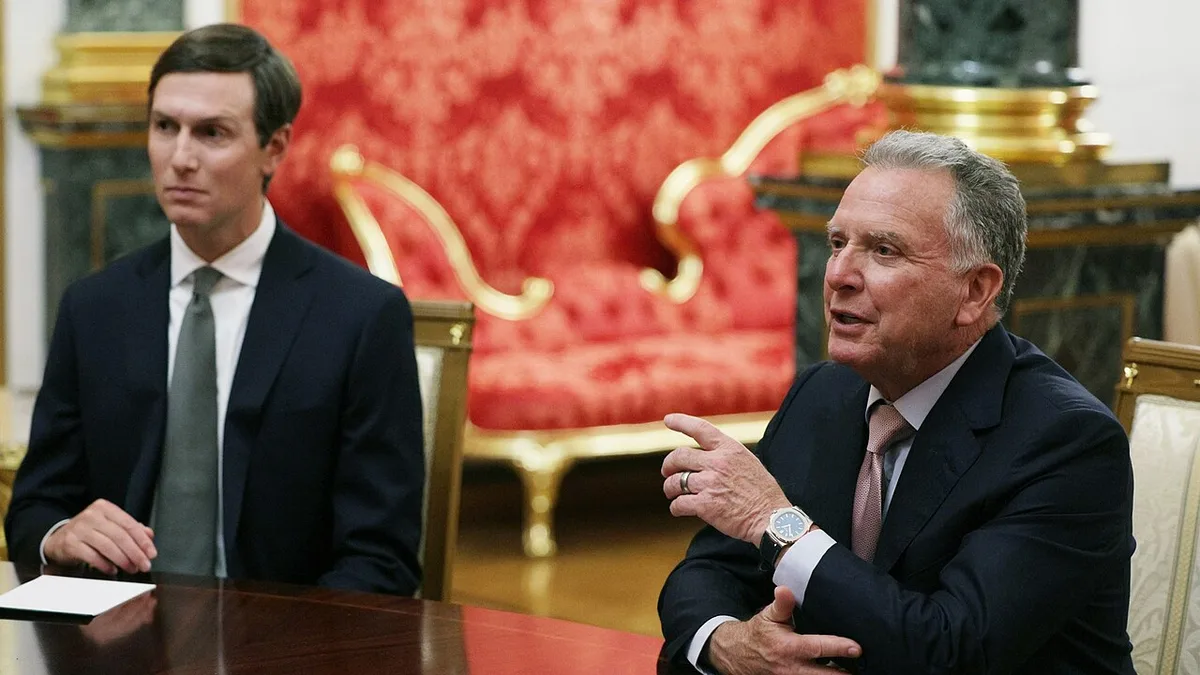
The American delegation is led by Jared Kushner, son-in-law of President Donald Trump, and Middle East envoy Steve Witkoff. Ukraine’s team is headed by Rustem Umerov, chief of the foreign intelligence service and Kyiv’s lead negotiator. According to the state agency TASS, the Russian delegation includes:
- Vladimir Medinsky, aide to the Russian president,
- Sergei Ryabkov and Mikhail Galuzin, deputy foreign ministers,
- Igor Kostyukov, head of military intelligence,
- Yuri Zhigarlovsky of the General Staff.
Alongside the main table, representatives of the United Kingdom, France, Germany and Italy, as well as NATO and the European Commission, are taking part in separate talks. They met the Ukrainian and American delegations before the session began. Witkoff said on X that participants confirmed their “commitment to a strong postwar European security architecture” and that a strong NATO remains central to Euro-Atlantic collective defense, with support for “robust security guarantees” in any deal.
Moscow makes no secret that it sees no place for Europeans at the main table. Kremlin spokesman Dmitry Peskov said on Monday that Europe has its own channels of communication with Kyiv and Washington, and repeated that these are:
“trilateral negotiations, in which Russia and Ukraine take part, and the United States acts as a mediator.”
Paris takes the opposite view. The Elysee Palace said before the talks began that the aim is “to confirm the basic principle: the pursuit of peace in Ukraine and the security of Europe are inseparably linked.”
What does Washington offer, and what does Moscow want?
Opening the session, Kushner said recent contacts with both sides had “really identified and narrowed the differences” and that Trump had asked for additional effort. According to Reuters, Ukrainian delegation head Umerov stressed that Kyiv is focused on security guarantees and lasting peace, while Medinsky said Moscow expects progress in the interest of the peoples of both countries.
US officials say they want a “final end” to the war and a new “long-term security architecture” between Russia and Europe. One of them said negotiators could revive the NATO-Russia Council, suspended after the 2022 invasion, and that sanctions on Russia could be lifted as part of a deal. The same official described an American security guarantee for Ukraine as “a really, really big deal” and said it is up to Trump to decide whether to offer it.
European officials fear that Russia will stick to its demand that NATO reduce its presence in Eastern Europe. Kaja Kallas, the European Union’s top diplomat, said on Monday at a meeting of G7 foreign ministers:
“We already have a European security architecture. It includes international agreements under which Russia took on obligations, including those on sovereignty and territorial integrity. The problem is that Russia does not respect those agreements.”
According to reports, Vladimir Putin still demands control of the entire Donbas region, a smaller Ukrainian army and Kyiv’s renunciation of NATO membership. There is no public sign that he is ready to drop the condition that Ukraine hand over all of Donbas. A US official told Reuters that American negotiators believe Zelensky and Putin could reach a compromise on territory, each giving up a little, with Ukraine getting an end to the war, security guarantees and a plan for EU accession. A senior Ukrainian official flatly rejected this: territory can be discussed only at the level of leaders and only with adequate security guarantees.
In an interview with “60 Minutes,” Trump said Ukraine will probably lose part of its territory:
“They’ll end up with a slightly different shape, Ukraine.”
What is happening on the ground in the meantime?
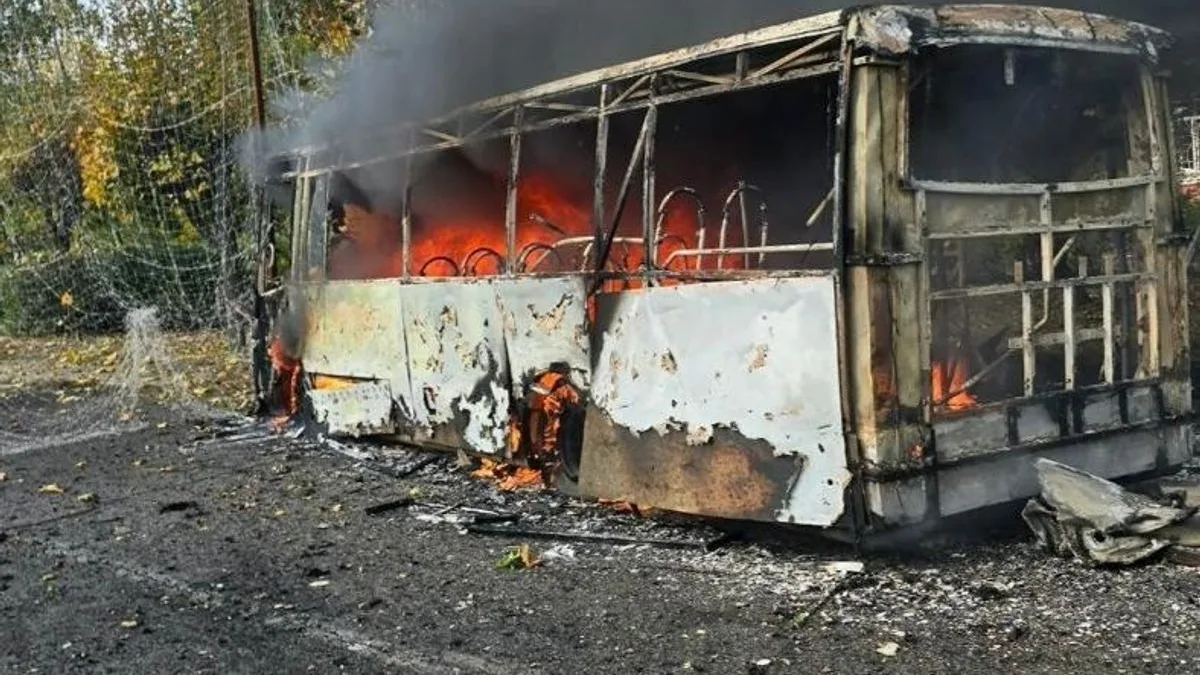
Russian forces occupy about a fifth of the country, but advances along the front line have nearly stalled this year. Moscow is therefore stepping up air strikes. According to CNN, at least 55 people were killed last Monday when Russian bombs hit a school building in Zaporizhzhia that was being used as a shelter and aid center, one of the deadliest single attacks of the war. The ACLED monitoring group has recorded more than 2,700 civilians killed in Russian strikes this year.
According to Zelensky, attacks on the power grid in the Dnipropetrovsk region left more than 600,000 people without electricity on the night leading into Sunday. Ukraine, for its part, is intensifying strikes on refineries and other infrastructure deep inside Russia.
In his evening video address on Monday, Volodymyr Zelensky said Ukraine’s negotiating position is strengthening at the front, partly because part of the territory in Donetsk has been regained:
“Ukrainian forces are really strengthening Ukraine’s negotiating position right now.”
He also said Russia is suffering “record losses,” which Moscow disputes, and urged Washington to persuade the Kremlin to end the war.
Why are expectations being kept low?
John Herbst, a former US ambassador to Ukraine and director of the Atlantic Council’s Eurasia Center, said last week that expectations for the Abu Dhabi talks should be “very modest,” because the talks are being held only so that Putin can give Trump a reason to keep distancing himself from Ukraine.
US Secretary of State Marco Rubio said on Monday that some progress has been made in shaping the future architecture, but that the conflict itself must be dealt with first. A European security official from one of the countries taking part in the talks said the American proposal is still unclear and that Europe is preparing for serious American concessions to Russia.
The talks begin after the Republicans’ defeat in last week’s congressional elections, which weakened Trump at home. Zelensky has publicly said he hopes the Democrats, who are taking control of Congress, will strengthen American support for Ukraine. According to CNN, it is not clear whether the elections will fundamentally change US policy toward Kyiv.