Abu Dhabi talks: Russia and Ukraine agree prisoner swap
Two days of talks in Abu Dhabi ended with an agreement in principle on a prisoner exchange, but no movement on territory or a ceasefire. Kushner and Witkoff head to Moscow.
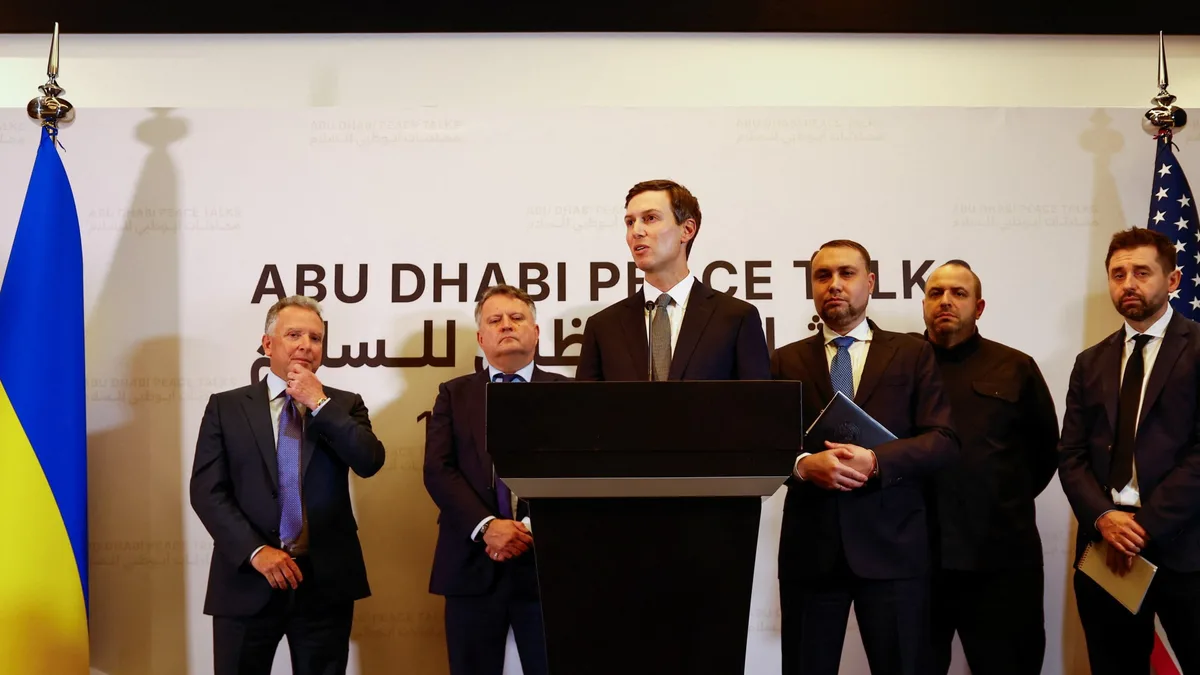
Two days of Russia-Ukraine talks in Abu Dhabi ended on Wednesday, November 11, 2026, with an agreement in principle on a large prisoner exchange, but with no solution to the issues that actually divide the two sides. Belgrade, caught between its European path and traditional ties with Moscow, is following closely, not least because the talks also touch on future security arrangements on the continent and on whether Europe will get a seat at the table.
The United States mediated the talks, and envoy Jared Kushner announced the outcome at a briefing in Abu Dhabi. According to him, the final number of people will be set on Thursday, November 12. These are the first direct talks between Kyiv and Moscow in nine months, and the previous round, held in Geneva in February this year, produced no breakthrough.
What exactly was agreed in Abu Dhabi?
Kushner described the deal this way:
“One of the positive things is that we agreed that we will have the largest humanitarian release of prisoners, and we will set the numbers tomorrow.”
Both delegations confirmed the agreement. The head of the Ukrainian delegation, Rustem Umerov, said after the second day of talks: “The main result is that we managed to reach an agreement on a large-scale prisoner exchange.” Russian presidential aide Vladimir Medinsky, who leads the Russian delegation, said: “We reached a basic agreement on another large-scale prisoner exchange. Details will be announced soon.”
Neither Kyiv nor Moscow has officially announced a number or a date. There is no official figure for now, but numbers are circulating. Russian general Aleksandr Zorin told the TASS agency it would be the largest exchange so far, with more than 1,000 people from each side, and according to the same agency it should take place within two to three weeks. Ukrainian President Volodymyr Zelensky said on Tuesday, November 10, that the talks had covered a format of 1,000 for 1,000 or 1,500 for 1,500.
How big would this exchange be?
Political analyst Dmitry Medvedenko told Al Jazeera that exchanges are nothing new and take place even without this kind of diplomatic engagement: “Every two or three months, 100 to 300 prisoners are exchanged on each side; it’s a channel that really works.” To be the largest, he says, the exchange would have to exceed the 1,000-for-1,000 swap of May last year.
That swap followed talks in Istanbul. Smaller ones have taken place since: 200 people each in March this year, after the Geneva talks, and 270 each on October 23, the eleventh exchange of 2026. If the figure cited by TASS is confirmed, the Abu Dhabi deal would surpass all of them.
Why do the main issues remain open?
Kushner called the talks hard but useful work:
“This was a very difficult meeting, but a productive one.”
Territory remains the biggest obstacle. Russia still demands that Ukraine withdraw from the part of Donbas that Kyiv controls, while Zelensky maintains that territory is a matter for leaders to decide. Moscow also rejects an immediate ceasefire, demanding broader security arrangements before it stops hostilities. Putin and Zelensky were not in Abu Dhabi: the Ukrainian president was on a state visit to Copenhagen, where he was briefed on the talks by video link.
Asked by Euronews when the time would come for the two presidents to meet, Kushner answered that “it needs a little more work to get there, and we are pushing a rock uphill.” He added that the Russians, as he put it, want more progress before such a meeting, because “obviously there is not a lot of trust or love between the leaders.” Still, as he said, only leaders can make the final decisions.
Ukrainian delegation member David Arakhamia said the talks were among the hardest and that the Russian representatives arrived with especially strict instructions from Moscow. He nonetheless declared: “We made truly significant progress.” He is pushing for a new round as soon as possible and expressed hope that a solution can be found before the new year. Speaking from Copenhagen, Zelensky said it is “necessary that the first step be ending this war and securing security guarantees for Ukraine,” adding that broader formats of talks with European representatives are also being considered.
Where does Europe fit in?
European representatives were in Abu Dhabi for separate consultations with the Ukrainians and Americans, but they did not sit at the three-way table. Umerov announced that the Ukrainian delegation would continue talks with European partners on Wednesday. Arakhamia believes the next talks should be multilateral rather than trilateral, with European participation.
Moscow’s position varies depending on the source. According to Al Jazeera’s report, Medinsky said Russia is not against the participation of the European Union, but that he does not know what they would discuss, since, as he claims, the European side has not put forward any proposals. Euronews carries a sharper version: “No, we haven’t communicated with them. We really don’t understand in what capacity they are here.” Kushner said he will discuss with both presidents whether the Europeans can be brought into the format so that it becomes multilateral.
What comes after Abu Dhabi?
Kushner and special envoy Steve Witkoff travel to Moscow on Thursday, November 12, where they will meet President Vladimir Putin. From there they go to Dublin for talks with Zelensky. Kushner said they are taking to Moscow what has been agreed, along with the intention to “make more progress on the issues that were discussed, because we see some openings and some opportunities.”
Our November 10 article covered only the start of the talks at the table in Abu Dhabi. The final number of prisoners, which Kushner expects on Thursday, will show whether the exchange really exceeds a thousand people per side, as the Russian agency says.