Ebola kills 5,387 in Congo, 11,042 infected
The Congolese Health Ministry reports 11,042 cases and 5,387 deaths, nearly half of those infected. No approved vaccine or treatment exists for the Bundibugyo virus.
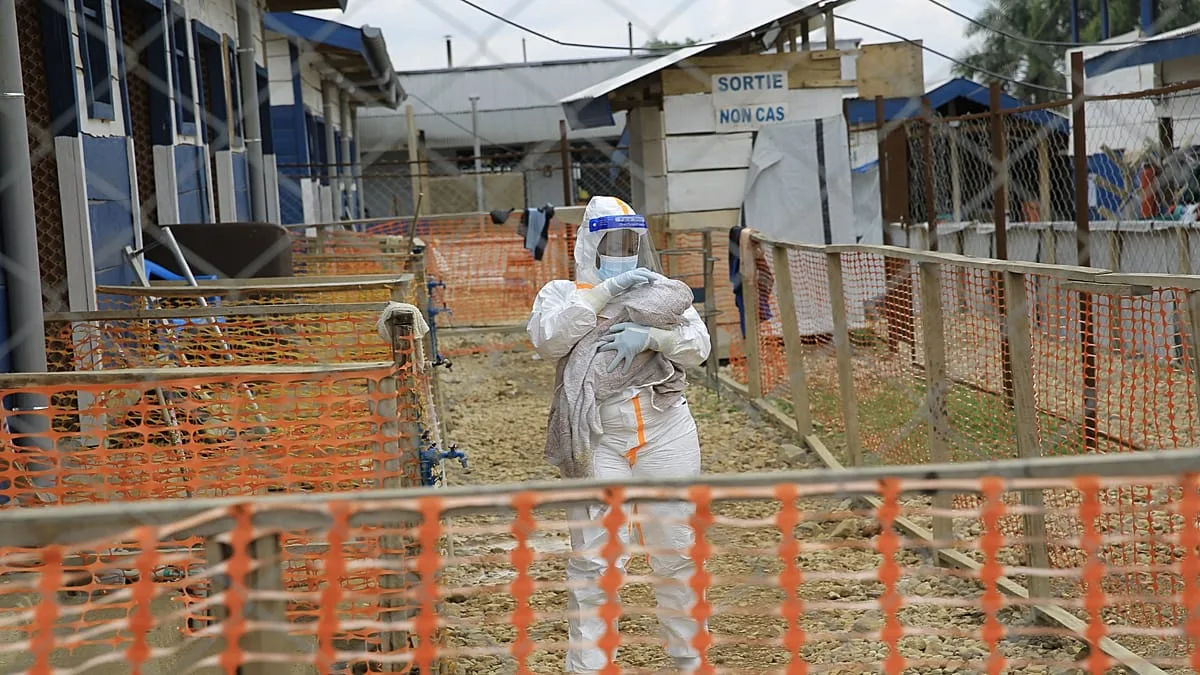
The Ebola epidemic in the Democratic Republic of the Congo has passed 11,000 cases, the country’s government announced on Wednesday, November 11, 2026. According to the latest figures from the Health Ministry, 11,042 people have fallen ill and 5,387 have died, close to half of all those infected. It is the deadliest Ebola outbreak in Congo’s history, and the second deadliest in the world by death toll, though it has received little coverage in Serbia.
How big is this Ebola epidemic?
The outbreak was officially declared in mid-May and is the 17th Ebola epidemic in Congo. It is caused by the Bundibugyo virus, for which there is no approved vaccine or treatment, so patients receive only supportive care.
The speed of spread sets this epidemic apart. Euronews reports that 1,000 confirmed cases were reached within 40 days of the response being activated, while the same threshold took about 235 days in the 2018 outbreak. Only the West African epidemic of 2014 to 2016 has caused more deaths, with about 28,000 infections and more than 11,000 fatalities. Daily Sabah estimates that since the current outbreak was declared, there have been at least three times as many cases and deaths as in West Africa over the same period.
The virus has spread to 8 of Congo’s 26 provinces. The hot spots are Ituri, the epicenter, and North Kivu. In an earlier Associated Press report, the Health Ministry cited 67 affected health zones out of 178, and the two eastern provinces alone accounted for 9,782 confirmed cases and 4,792 deaths. The same report said the 5,000-death mark had been crossed, with 5,026 deaths among 10,351 infected people, while 2,788 people had recovered.
What is hampering the response on the ground?
The Health Ministry lists several obstacles. Armed conflict in the east of the country has flared up again in both hot spots, and authorities are calling for a halt to the fighting so health workers can reach patients without interference. The rebel group M23 and the Allied Democratic Forces, an Islamist group active near the Ugandan border, both operate in the region.
The second problem is distrust. The ministry points to harmful rumors, a large number of refusals of health checks, resistance to safe burials and a steady decline in people coming to health facilities. The Associated Press reported that a nurse was killed last week while responding to a call about a suspected Ebola case, and that a politician from the ruling party was killed in September after advocating health measures on the radio.
The third obstacle is unpaid wages. The ministry says strikes are paralyzing key facilities in several regions and halting work at many checkpoints along transport routes, at river ports, on municipal borders and at airports. Moise Mugenyi, one of the workers who stopped work at a treatment center in Tchomia, in Ituri, told the AP:
“We are tired of asking for our wages. If they want to pay us, they will pay us. Today it has become a real problem to feed a family.”
According to the same report, workers in Tchomia were demanding four months of unpaid wages, and the center was then holding five confirmed patients and ten suspected cases.
Where do vaccines stand, and who is testing them?
On November 4, the World Health Organization backed trials of two candidate vaccines: one developed by the University of Oxford together with the Serum Institute of India, and another developed by Moderna. The trial is led by Congo’s National Institute for Biomedical Research, with the support of international partners, including the WHO.
WHO Director-General Tedros Adhanom Ghebreyesus warned at the press conference announcing the trials: “Vaccines are a powerful tool, but they are not a substitute for the proven measures that can save lives today.” He named early treatment, contact tracing, isolation, safe and dignified burials and community trust as those measures.
Contacts are the weakest link. According to the Africa Centres for Disease Control and Prevention, about 80 percent of new cases come from outside the chains of contacts being tracked, and a third of those who died did so outside treatment centers, before they could be tested. Patrick Otim, a senior WHO official, spoke about that third:
“These are people we never had a chance to try to save, and that is one of our greatest concerns in this epidemic. How do we reach people early and get them to come to health facilities so they have a chance to survive?”
Has the disease spread beyond Congo?
Yes. Cases have been recorded in Uganda, Kenya and Nigeria, making this the first epidemic recorded in three African regions and the most geographically widespread on the continent. Kenya confirmed at least eight cases and two deaths in October. According to Kenya’s health minister, the last patient has been discharged, and a 42-day countdown without a new case has begun, the period required before an outbreak can be declared over. The only confirmed case in Nigeria, a woman who arrived in the country from Uganda, was transferred to Switzerland for treatment.
Kenya’s situation is therefore an exception: in Congo the numbers keep climbing, and the Health Ministry warns that strikes, distrust and armed conflict continue to shut down checkpoints in Ituri and other parts of the country.