

BYD ahead of Tesla in Europe for a second month: 5 things behind the numbers
China's BYD outsold Tesla in Europe for a second consecutive month in February, and its exports jumped 70 percent in April.
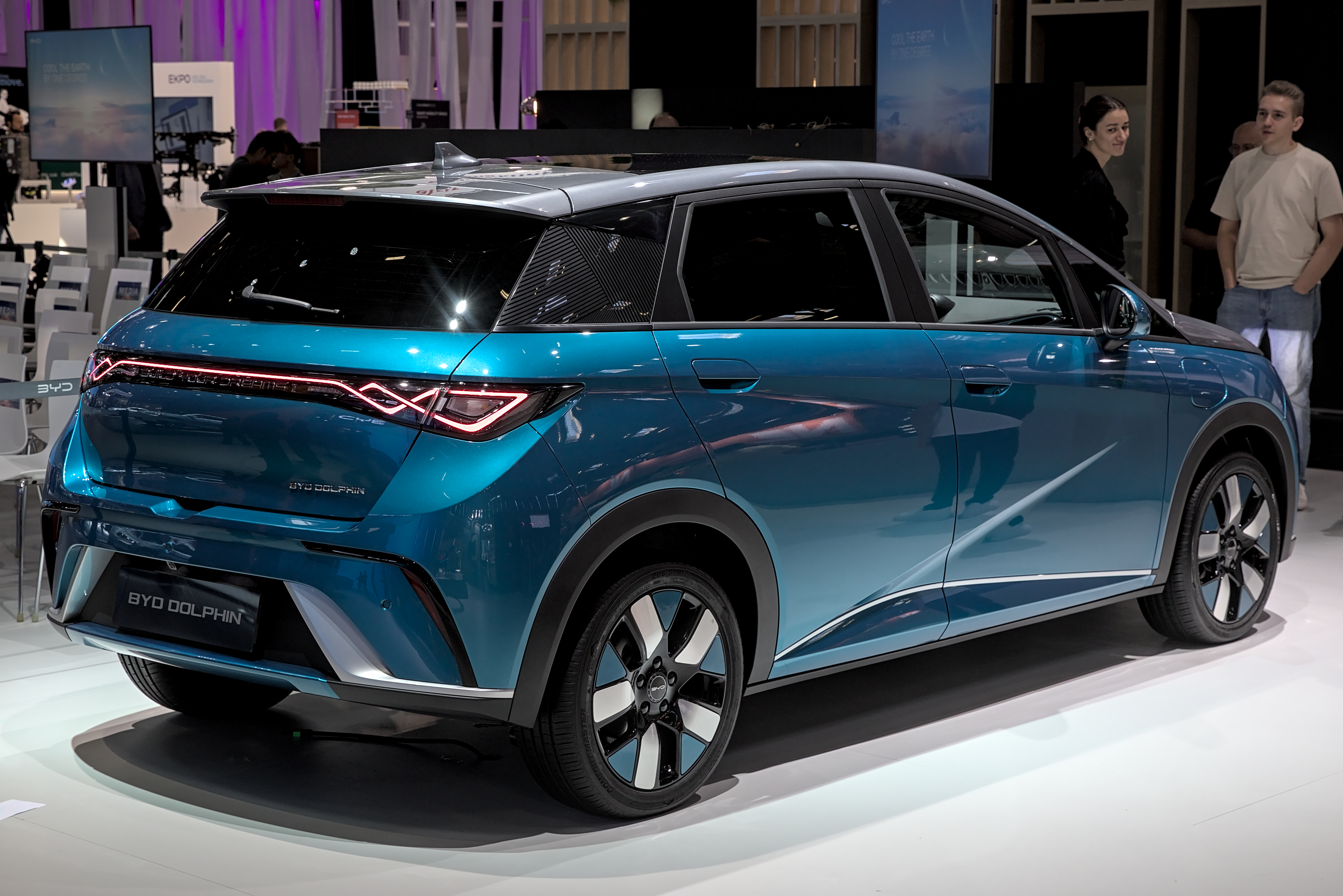
Does BYD outselling Tesla in Europe for a second straight month mean the EV market war is already over? No, but it means the trend is accelerating faster than forecasts predicted a year ago. The Chinese manufacturer registered 17,954 vehicles in Europe in February, against Tesla’s 17,664, a gap that is becoming routine rather than exceptional.
BYD has sold 456,263 vehicles outside China in the first four months of 2026, and in April alone exports jumped 70 percent year on year to 135,098 units. Tesla entered 2026 with European sales down 17 percent in January, while the BEV market as a whole grew 14 percent. That is a double problem for Elon Musk: the competition is stronger and the market is growing without him.
1. Numbers that show the size of the shift
Tesla finished 2025 with 1,636,129 global deliveries, nine percent less than 2024. BYD sold 2,254,714 pure electric vehicles in the same period, an annual growth of almost 28 percent. The gap in absolute volume is already 600,000 vehicles a year.
BYD’s target for 2026 is 1.3 million vehicles outside China, which would be 24 percent growth on last year. If the Q1 pace holds, that target will be cleared.
2. What BYD did in Europe that Tesla did not
Three things, to be concrete. First, local production: BYD is building a factory in Hungary with capacity for 150,000 vehicles a year, set to go live at the end of 2026. Tesla expanded its Berlin Gigafactory but not fast enough.
Second, a cheap model: the BYD Dolphin sells in several European markets for under 25,000 euros (around 2,930,000 dinars), including in Serbia where TDV Automotive offers it for about 15,000 euros if state subsidies are factored in. Tesla has no model below 40,000 euros.
Third, model variety: BYD has 12 different models on sale in Europe, from the small Dolphin Surf to the large Tang SUV. Tesla has four (Model 3, Y, S, X) plus Cybertruck, which is not homologated for the EU.
3. Politics is affecting sales, clearly and measurably
Tesla fell in Europe in 2026 not only because of competition but also because of the negative perception of Elon Musk as a person. Boycotts and the popularity decline are confirmed even by the company’s own analysts in quarterly reports. That is not a marginal factor; it is part of the official financial projection.
BYD does not carry a comparable political burden. A Chinese brand in Europe raises geopolitical questions at the EU Commission level, but it does not repel an individual buyer in the way Tesla today does.
4. EU tariffs were deferred, not lifted
The EU imposed tariffs on Chinese EVs of up to 35 percent in 2024, but most BYD models are on a lower band (around 17 percent). EU-China negotiations on lifting or reducing the tariffs are ongoing, but a result is not expected before the end of 2026.
In practice, that means BYD achieved this growth even with the tariffs in place. If they are reduced, the gap will widen further.
5. What this means for the Tesla Model Y you already own or are planning
The value of used Teslas in Europe fell 12 percent in Q1 2026 versus the same period a year earlier. That matters if you are planning to sell in a year or two. In practice, a new Model Y costing 47,000 euros (about 5,510,000 dinars) will be worth considerably less in a year than has historically been the case for Teslas.
On the other side, for a buyer of a used Tesla, this is good news: prices are becoming more accessible.
What a user in Serbia needs to know
In Serbia, BYD now has an official sales and service network through TDV Automotive, covering Belgrade, Novi Sad and Nis. Tesla has no official importer, which means every buyer has to arrange import from the EU themselves and handle servicing abroad or via unauthorised shops.
In practice, BYD is the more serious option for a Serbian buyer who does not want to wade into grey-market import. The one snag is state subsidies, currently limited and frequently changing, so before buying it pays to check the current state on the Ministry of Economy website.
The next quarterly reporting season for both companies is in July, when we will see whether the trend held through the summer.


