Serbia FDI hit €1.21 billion in Q1 2026
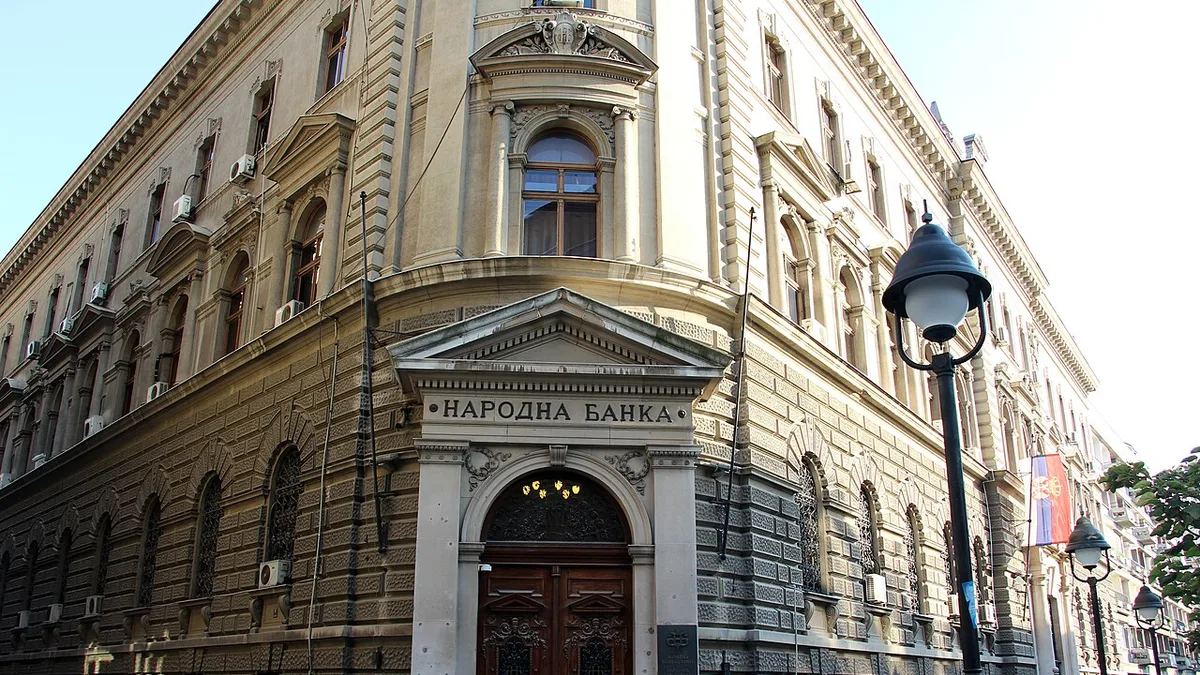
Net foreign direct investment inflow into Serbia in the first quarter of 2026 stood at €1.21 billion, up 9% on the same period of 2025, according to the National Bank of Serbia's regular balance of payments release on 28 May.

- Net FDI inflow into Serbia in Q1 2026 reached €1.21 billion, up 9% on the same period of 2025.
- China was the top investor with a 28% share, followed by Germany at 16% and Italy at 11%.
- Most of the inflow went into manufacturing (43%) and real estate (19%).
- The National Bank of Serbia's full-year 2026 projection is €4.4 billion of net inflow.
Net foreign direct investment inflow into Serbia in the first quarter of 2026 stood at €1.21 billion, according to the National Bank of Serbia balance of payments release on 28 May. That is a 9% rise on the €1.11 billion recorded in the first quarter of 2025.
The quarterly level represents 27.5% of the central bank’s full-year 2026 projection of €4.4 billion. The pace tracks the annual target.
Geographic breakdown
Chinese capital remained the largest single source, as in the previous five quarters. The National Bank of Serbia presents the breakdown by country of origin on a direct ownership basis, excluding holding structures.
Country of origin in Q1 2026:
- China: €339 million, 28.0% share
- Germany: €194 million, 16.0% share
- Italy: €133 million, 11.0% share
- Hungary: €109 million, 9.0% share
- United States: €85 million, 7.0% share
- Austria: €73 million, 6.0% share
- Other countries: €277 million, 23.0% share
The largest single inflow in the quarter came from China’s Shenzhen Mindray Bio-Medical, which invested €124 million in expanding its production capacity in Kragujevac.
Sector breakdown
Manufacturing kept the dominant position, up from a 38% share in 2025. Real estate and logistics also gained ground.
Sector allocation of the inflow:
- Manufacturing: €521 million, 43.0% share
- Real estate and construction: €230 million, 19.0% share
- Logistics and transport: €145 million, 12.0% share
- Wholesale and retail trade: €121 million, 10.0% share
- Information technology: €97 million, 8.0% share
- Energy: €60 million, 5.0% share
- Other: €37 million, 3.0% share
The drop in the energy share (from 9% in Q1 2025 to 5% in Q1 2026) reflects the slower phase dynamics of large investment cycles and the wait for the NIS negotiations to conclude.
How FDI feeds into GDP
The Director of the Centre for High Economic Studies, Goran Radosavljevic, quantified the GDP linkage in remarks to eKapija on 28 May.
The quarterly FDI inflow of 1.21 billion euros represents about 4.9 percent of Serbia’s quarterly gross domestic product, above the regional average of 3.2 percent.
Radosavljevic set out the wider implications.
The high rate of FDI entry remains the main instrument for financing the current account deficit of the balance of payments, which avoids the need for additional public sector external borrowing in the medium term.
Link to the current account
Serbia’s current account ran a deficit of €956 million in Q1 2026, or 3.9% of quarterly GDP. FDI inflow exceeded the deficit by 27%, fully financing it without drawing on foreign exchange reserves.
Balance of payments indicators in Q1 2026:
- Current account deficit: €956 million
- Net FDI inflow: €1.21 billion
- FDI coverage of the deficit: 127%
- Change in foreign exchange reserves: up €580 million
The gap between FDI inflow and the current account deficit, together with other capital transfers, explains the rise in National Bank of Serbia reserves in the first quarter.
Is a new inflow peak coming
It is an open question whether new projects landing in the second half of 2026, particularly the Stellantis Kragujevac expansion and the Chinese CATL battery plant, would push the annual level above the €4.4 billion projection.
Follow the National Bank of Serbia’s quarterly balance of payments and FDI structure releases for the next update.