Euribor Hits 2.82%: €100,000 Mortgage Payment Up €42
The six-month Euribor climbed to its highest level this year after the European Central Bank's latest rate hike, pushing the payment on a €100,000 home loan up by about €42 a month.

The six-month Euribor stood at 2.820% on September 11, its highest level since the year began, according to figures cited by Biznis.rs. Broker Nenad Gujanicic of Momentum Securities paints a slightly different picture for Nova ekonomija: by his calculation, the same rate climbed from about 2.1% in February to 2.88%, a jump of 70 basis points. The gap comes down to which starting month each source uses, January versus February, but the direction is the same either way: the Euribor is rising, and mortgage payments in Serbia are rising with it.
The Governing Council of the European Central Bank (ECB) raised all three of its key interest rates by 25 basis points last Thursday, September 10. The deposit rate rose to 2.5%, the rate on main refinancing operations to 2.65%, and the rate on the marginal lending facility to 2.90%. According to Biznis.rs, this is the second hike this year, and the market is already pricing in another one before the end of 2026.
“The market believes there’s a strong probability that the ECB will raise interest rates once more before the end of the year, by the usual 25 basis points,” Gujanicic says.
Vladimir Vasic, director of BBS Capital Investment Group, explains to Biznis.rs why the percentage by which the Euribor rises isn’t what a borrower actually feels in their payment.
“The interest rate on a loan consists of the Euribor plus the bank’s fixed margin, so a 0.7 percentage point rise in the Euribor means the interest rate rises by exactly that much on the entire remaining debt. The borrower doesn’t feel a 30 percent rise in the Euribor, they feel 0.7 points more interest,” Vasic explains.
The same logic applies to the three-month Euribor: it climbed from 2.029% in January to 2.647% by September 11, a rise of 0.618 percentage points, or about 30.5%.
How much more expensive does the payment get?
Using a €100,000 home loan over 25 years with a 3% bank margin as an example, Vasic calculates that the payment was about €591 with a Euribor of 2.105%, and about €633 with a Euribor of 2.820%. That’s a difference of €42 a month, or about €510 a year, from the Euribor’s movement since the start of the year alone.
“For every €100,000 of remaining long-term debt, a 0.25 percentage point rise in the Euribor means a monthly payment that’s about €15 higher,” Vasic tells Biznis.rs.
For Nova ekonomija, the same source gives a separate, narrower estimate, tied only to the ECB’s latest, September hike, without the rest of the year factored in.
“For a typical €100,000 home loan, this rate hike could push the monthly payment up by about €50,” Vasic says.
That €50 figure isn’t comparable to the €42 calculation for the whole period since January, since it measures a different interval, just the ECB’s latest decision rather than the full rise in the Euribor since the start of the year.
The effect is bigger for businesses. A company with a €500,000 working-capital loan tied to the three-month Euribor is paying about €3,100 more in interest this year because of the rise, according to Vasic’s example.
When exactly does the payment go up?
The variable portion of the interest rate is adjusted according to the loan contract: four times a year for loans tied to the three-month Euribor, twice a year for the six-month Euribor. Borrowers with loans tied to the three-month Euribor could feel the increase as early as October 2026, while those on the six-month Euribor won’t see a new payment until January 2027.
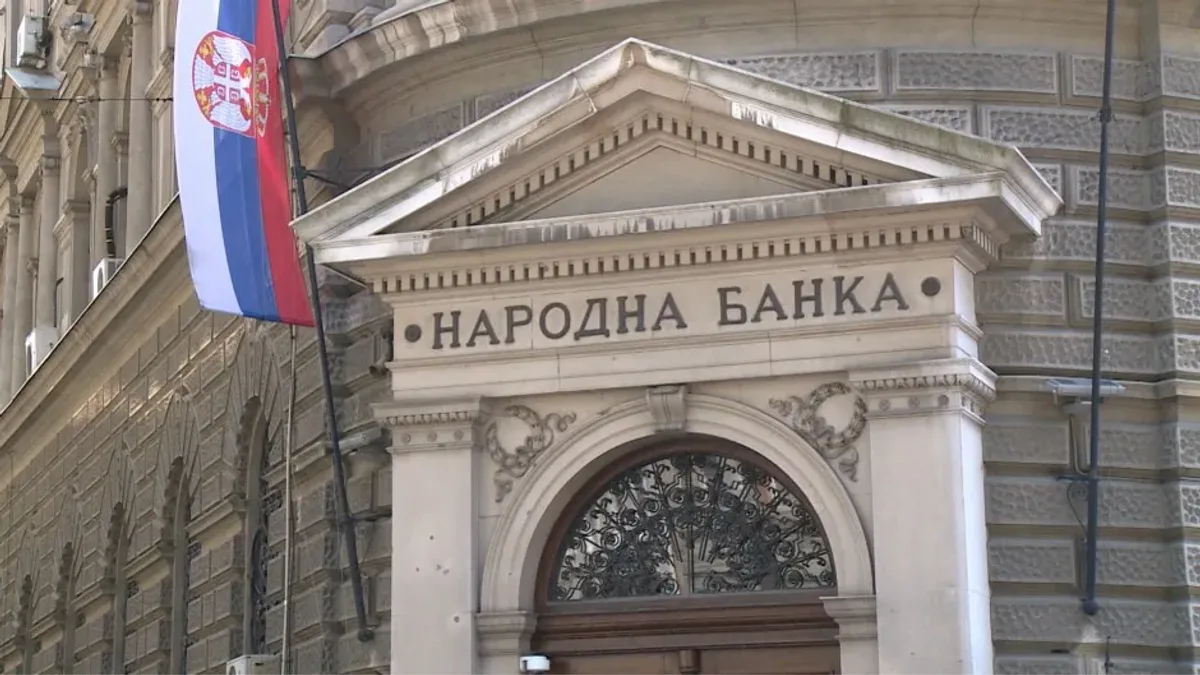
Serbia has between €9 and €10 billion in euro-indexed loans, according to figures Vasic gives to Nova ekonomija, most of them home loans. The National Bank of Serbia’s (NBS) key policy rate has been unchanged since September 12, 2024, at 5.75%, which helps only borrowers with dinar-denominated loans.
“Currently, the share of dinar-denominated home loans is negligible, only about one to two percent,” Vasic says.
Our newspaper has previously reported on the lower-rate measure for 100,000 dinars, which expires on Tuesday, another form of state support that also affects household housing costs.
Vasic advises borrowers to check their loan terms in advance: which Euribor rate is contracted, what the margin is, and when the next adjustment falls due.
“My advice is not to think of the payment as something that just happens to the borrower, but as a cost that should be planned for,” Vasic concludes for Biznis.rs.