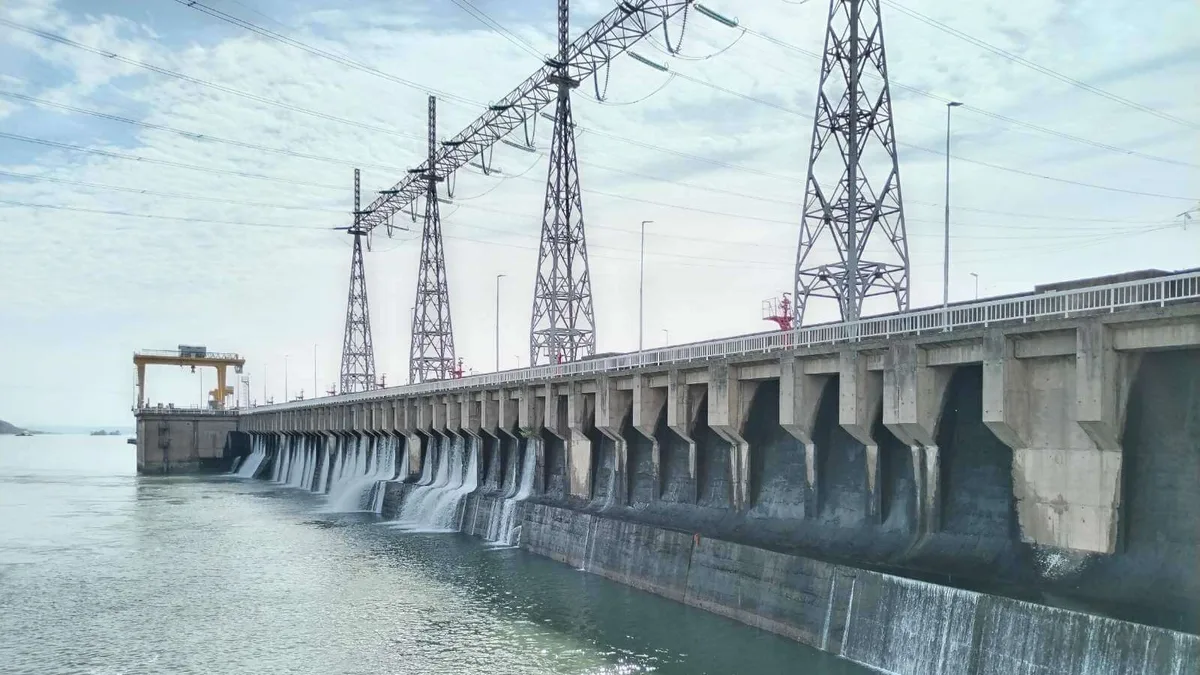
Djerdap 3: Contract Signed for Hydropower Plant Study
Serbia's Ministry of Mining and Energy and the Jaroslav Cerni Institute signed a contract for Djerdap 3 documentation, a pumped storage plant of up to 1,800 MW worth about 2.6 billion euros.

Serbia’s Ministry of Mining and Energy signed a contract on September 23 with a consortium led by the Jaroslav Cerni Institute for Water Resources Development, covering part of the design documentation for the pumped storage hydropower plant Djerdap 3 (RHE Djerdap 3). The ministry’s statement did not name the other members of the consortium.
What the contract covers
The work includes drafting a preliminary feasibility study with a general design, along with a spatial plan for the area of special purpose and a strategic environmental impact assessment. The value of the documentation contract itself was not disclosed.
Dubravka Djedovic Handanovic, the caretaker minister of mining and energy, said the project is now entering a new phase.
“By signing this contract between the Ministry of Mining and Energy and the Jaroslav Cerni Institute, RHE Djerdap 3 is moving from the phase of analysis and consideration into a concrete implementation phase,” Djedovic Handanovic said.
She added that this shows the state’s commitment to developing the project as one of Serbia’s most significant power generation undertakings of the coming decades.
The plant is planned at up to 1,800 megawatts of capacity, with an estimated investment of around 2.6 billion euros. The final technical concept, capacity and value will only be set once the documentation is further developed and reviewed. The plan places the powerhouse on the right bank of the Danube, about 64 kilometers upstream from the Djerdap 1 hydropower plant, with room for up to two upper reservoirs in the Severni Kucaj area. Construction is planned in phases, with the possibility of expanding capacity later.
The deadline for the complete project documentation is the end of 2029.
“The state’s goal is to complete the project documentation as soon as possible, and by the end of 2029 at the latest, so that this new energy facility can enter construction as soon as possible,” the minister said.
Romania and talks with Bechtel
Alongside the documentation work, Serbia is also coordinating with Romania under a memorandum of understanding signed with the Romanian government this summer. Talks are also underway with the American company Bechtel, the only bidder that met the requirements in the negotiated procedure launched by a public call in June to select a partner for building RHE Djerdap 3. That procedure rests on the strategic energy cooperation agreement between Serbia and the United States.
The minister also pointed to the project’s potential for storing energy generated from renewable sources.
“RHE Djerdap 3 has the potential to become Europe’s largest natural battery, that is, an energy storage facility,” Djedovic Handanovic said.