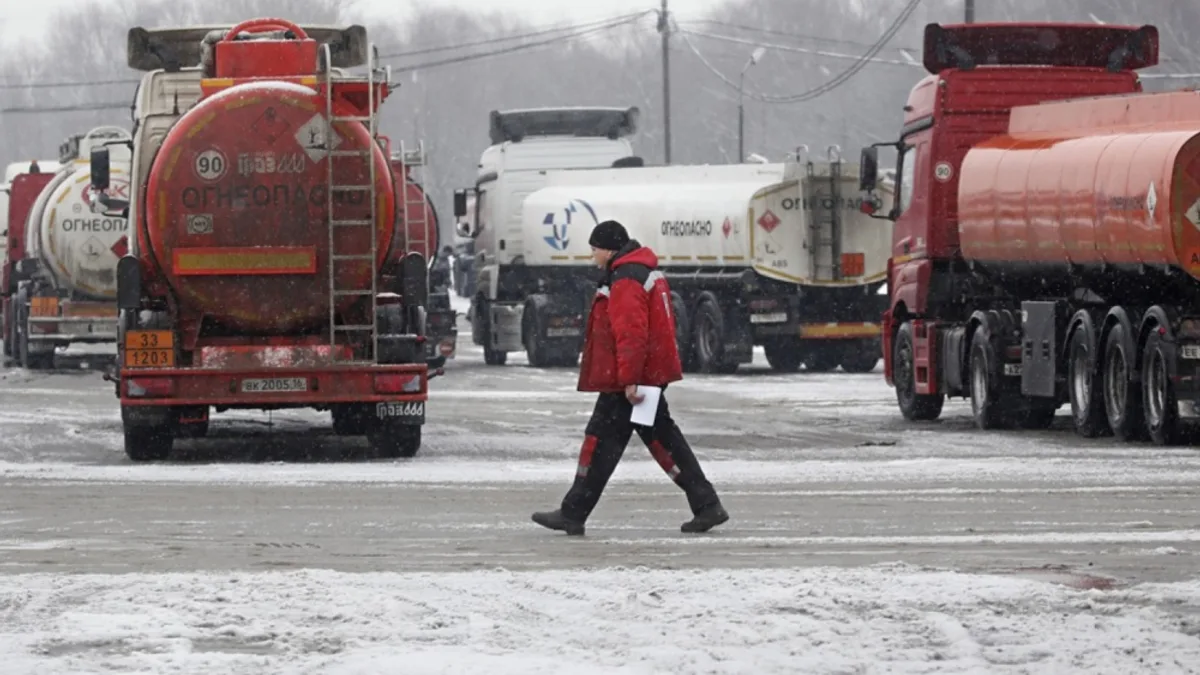
IEA: Diesel Stocks Won't Rebuild Until Late 2027
The IEA's October report shows global diesel exports fell by 700,000 barrels a day in September. Lost supply from Russia and the Middle East totals 1.3 million barrels.
The International Energy Agency (IEA) said in its October oil market report, published on October 14, that global diesel exports in September were 700,000 barrels a day lower than in the same month last year. Other suppliers made up only part of the 1.3 million barrels a day lost from Russia and the Middle East.
How far did exports fall, and who lost them?
Net exports of diesel and gasoil from Russia and the Middle East came to 820,000 barrels a day in September, more than 60% below a year earlier. Exports from the United States and China are up 610,000 barrels a day on September 2025, but they are 150,000 barrels a day below the August peak, so they did not close the gap. Total gasoil exports for the first nine months of 2026 average 4.7 million barrels a day, 10% less than in the same period last year.
The IEA points to reduced refining in the Middle East and Asia, lower Russian output and exports after refinery damage, and refiners switching to jet fuel because that market was tight. OECD gasoil stocks stood at 565 million barrels in July: 5% below pre-conflict levels and the lowest since November 2023.
How much did diesel get more expensive?
Wholesale diesel topped $200 a barrel in Singapore in mid-September, and in Europe and the United States it reached a record of about $220. European diesel (ICE gasoil) cost about $84 a barrel at the end of 2025, before the US and Israeli attack on Iran, so the September peak was roughly 2.6 times higher. Prices have eased since then, but the IEA says benchmark diesel prices remain close to double the price of crude.
Margins for European refiners on diesel fell from $100 to nearly $60 a barrel by early October, as record freight and crude costs ate into profits. The agency warns that delivered diesel prices in Europe, Africa and Latin America could rise again in the coming weeks, because strain in the tanker market has spread to other classes of vessels.
Crude is moving the same way. Brent futures are around $107 a barrel, up 13% from the start of September. Physical benchmarks are climbing faster: North Sea Dated rose by $26.17 in September to $116.89, and was trading around $134 when the report was written. We earlier reported Ian Moore’s forecast that Brent will stay above $100 for at least six months. That was one analyst’s estimate, while the IEA is now presenting data on actual flows.
Why can’t stocks be rebuilt quickly?
Refinery runs fall to a seasonal low of 81.3 million barrels a day in October, then rise to 84.6 million by the end of the year. Even with that recovery, gasoil supply in the fourth quarter of 2026 does not cover demand. According to the IEA, a rebuild of lost stocks beyond normal seasonal swings is unlikely before the second half of 2027. The gasoil market therefore stays tight well into 2027, depending on a recovery in product shipments from the Middle East.
The recently announced easing of Russian diesel export restrictions, the agency judges, does not change the balance much, because the problem is not regulation but a shortage of working refining capacity in Russia.
What does the report say about demand and supply?
Global oil demand in 2026 falls by an average of 2.6 million barrels a day, to 102.4 million, and diesel accounts for about a quarter of that drop. For the fourth quarter, the IEA says:
“World oil demand is forecast to fall by 2.5 mb/d y-o-y in 4Q26”
For 2027 the agency expects consumption to grow by 2 million barrels a day, which is still 620,000 barrels, or 0.6%, below the 2025 level. Oil supply in 2026 averages 100.7 million barrels a day, a fall of 5.8 million, and it should grow by 7.7 million in 2027.
Gulf producers drove the supply recovery in September. Crude exports from the Gulf rose to 13.9 million barrels a day, over 75% of the pre-war level, and 10.9 million barrels a day passed through the Strait of Hormuz, 3.7 million more than a month earlier. The agency warns, however, that the recovery is not secure:
“the recent escalation in attacks on regional energy infrastructure and tanker traffic is threatening to derail further gains”
Because of the security risks, the IEA left its projections for the rest of the year largely unchanged in October.