

Novak: Russian Diesel Could Reach US in 15 to 20 Days
Russia's deputy prime minister says diesel would reach the American market 15 to 20 days after contracts are signed. He claims the US Energy Department picked the buyers.
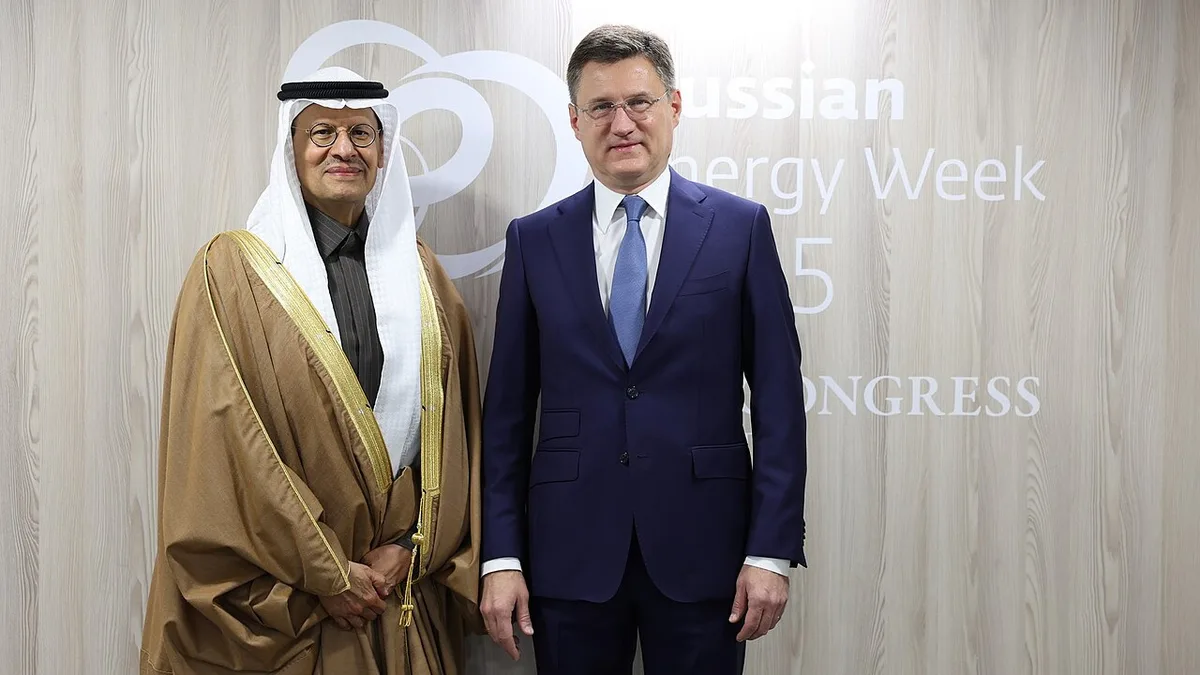
Russian diesel could reach the American market 15 to 20 days after a contract is signed, though no contracts have been signed yet. Russian Deputy Prime Minister Alexander Novak said so on October 18 in an interview with the Russian television channel Vesti, as reported by TASS and Tanjug. According to him, commercial terms are still being negotiated.
Who are the buyers and how would the fuel travel?
“The US Department of Energy has designated the companies that will be the counterparty and the buyers,” he said, according to the English original published by TASS. The names of those companies have not been made public. Novak added that the Russian and American energy ministries are cooperating actively, and that Russian exporters and buyers of Russian diesel are in full contact.
The 15 to 20 day window, as he presented it, applies to the American market. Fuel would reach closer countries faster.
Shipping would mostly use Aframax tankers carrying about 100,000 tons, he said, noting that this depends on commercial terms. Novak also explained why, in his reading, sanctions would not get in the way of transport:
“If sanctions have been lifted, and they have been lifted for six months, or the US Treasury has issued a license allowing deliveries to US markets, then that means neither freight, nor transportation, and therefore not insurance are under sanctions, and these operations can be carried out.”
That is how TASS rendered Novak’s statement in English. It says “or”, so it does not show which of the two regimes is in force.
The presidents’ deal and the volume plan
Russian President Vladimir Putin and US President Donald Trump agreed in a phone call on October 9 to deliver Russian diesel to the world market. According to TASS, the Russian government lifted its diesel export restrictions the next day. We previously reported that Trump suspended the Graham sanctions act against Russia, but this delivery agreement was not part of that story.
Novak also laid out a schedule: “That is 500,000 tons in October, one million tons in November and one million tons in December.” That volume is a plan for deliveries to world markets, not a quantity meant for the US alone; the American market is one part of it. The three months add up to 2.5 million tons.
Two versions of the 3.5 million tons
Sources disagree on the second figure. B92, citing Tanjug, reports that Russia consumes 3.5 to 4 million tons of diesel a month and that roughly the same amount is left for export. In that version, Novak’s words are:
“We are supplying an additional 3.5 million to the world market every month. That means we currently have a surplus on the domestic market. To keep our plants from cutting refining volumes because there is no room to store the surplus, we have to deliver to the world market.”
TASS records the same statement differently: if refineries run at full capacity as before, Russia could deliver 3.5 million tons to world markets by the end of the year, which is almost 10% of the entire world market. In one version this is a monthly amount, in the other a total through year-end. The available texts do not show which one is correct.
What Novak says about Europe
In the same interview he also spoke about gas. According to him, Russia’s share of liquefied natural gas imports into the European Union is between 17 and 20%, as reported by RIA Novosti. The Council of the European Union adopted a regulation in January on phasing out imports of Russian liquefied gas and pipeline gas. The ban on short-term contracts has been in force since April 25, 2026, and for long-term contracts it takes effect on January 1, 2027. Novak confirmed that liquefied gas will be delivered to European markets until January 1.
He assessed the ban this way:
“We are convinced that at present there is no way to cover the deficit, given the closure of the Strait of Hormuz, and the facility in Qatar is also shut down due to the March attacks. So, in my opinion, European politicians are shooting themselves in the foot if they ban deliveries, including those from Russia.”
Novak claims European Union consumers will pay the price of such a decision. “Accordingly, there will be a shortage,” Novak said.


