First-home subsidy: 100 mothers receive decisions
Serbia's Ministry for Family Care and Demography handed out new decisions on subsidies of up to 20,000 euros. Since 2022, more than 1,950 families have received support.
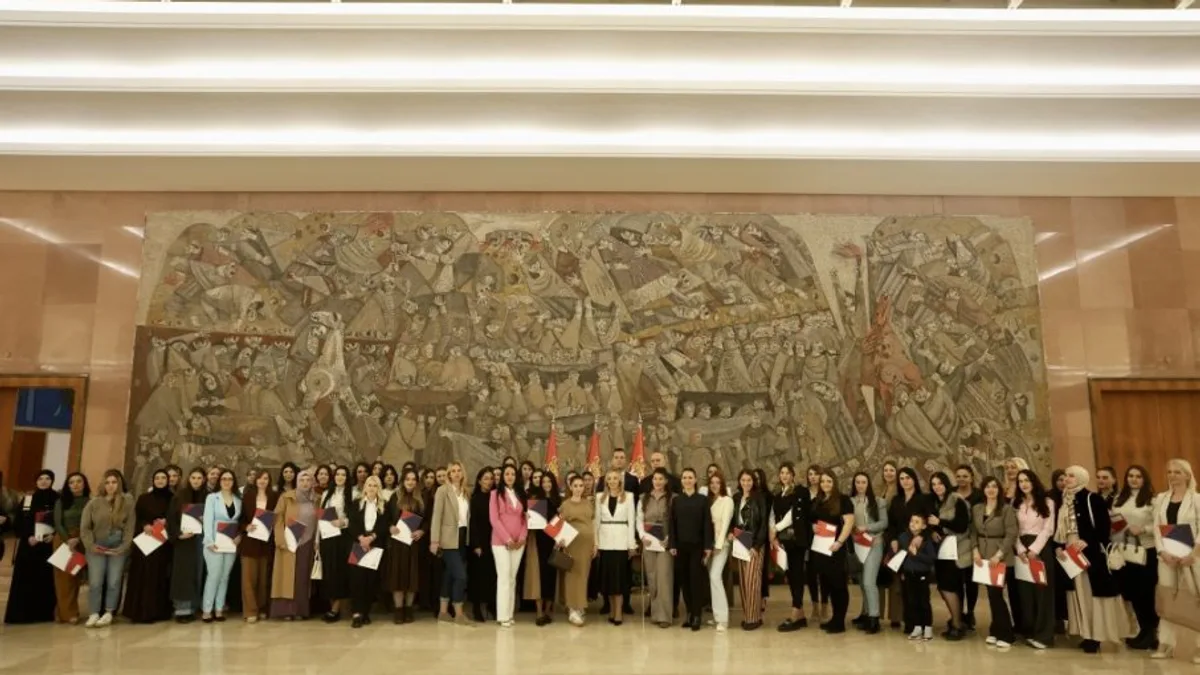
The Ministry for Family Care and Demography handed out 100 decisions on October 19 at Palata Srbija, granting subsidies for buying or building a first home. The state pays the subsidy to mothers: it covers up to 20 percent of the property’s value, with a cap of 20,000 euros per mother.
The decisions were presented by Jelena Zaric Kovacevic, the minister for family care and demography in a caretaker mandate. The new round comes with updated totals: since the measure took effect in 2022, more than 1,950 families have received support.
How much does the state contribute, and what can be bought?
The subsidy applies to buying or building a first home, whether a house or an apartment. The amount is tied to the property’s value: the state covers up to 20 percent, capped at 20,000 euros. According to what was said at the ceremony, the subsidy can be combined with other forms of financing, including housing loans and subsidized housing loans for young people.
Three recipients said at the ceremony how much they received and what they did with the money:
- Ivana Besevic Milic of Ivanjica received 13,600 euros, which is 20 percent of the value of their house
- Milica Djerovic of Cacak, a mother of three, qualified for 19,000 euros
- Jelena Kuvekalovic received 20,000 euros and bought an apartment in Obrenovac
Ivana Besevic Milic explained the amount this way:
“We received a state subsidy of 13,600 euros, which is 20 percent of the value of our house”
Milica Djerovic said the house was bought with the family’s own funds, and that the subsidy was a right they secured on top of that:
“We secured the right to the mothers’ subsidy of 19,000 euros. We bought the house with our own funds. We lived as tenants, and this opportunity means a great deal to us”
Jelena Kuvekalovic described buying the apartment in Obrenovac in these words:
“Thanks to the state, we secured the right to a 20,000 euro subsidy and bought an apartment in Obrenovac. We lived with my parents, and it means a lot to us that we will finally have our own home where our child will grow up”
How many decisions have been issued, and how much money has been spent?
Addressing the mothers, the minister presented the overall figures. In a little over a year, 1,024 subsidies worth more than 17 million euros have been approved, an average of more than 16,600 euros per decision. Since the measure began in 2022, more than 1,950 families have been supported. For that period the minister cited state spending of about 32 million euros, while the report from the ceremony mentions more than 30 million euros.
The 1,024 decisions issued over the past year are slightly more than half of all decisions since 2022. The minister assessed it this way:
“Every second family in Serbia that has received a state subsidy since this measure began secured that right during this very mandate. That is a result that best reflects and shows that we have recognized the needs and expanded our support to families”
Zaric Kovacevic also laid out the direction ahead: “But our ambition is not to stop at this and at these numbers. We want every coming year to bring more opportunities, more accessible support and a simpler path to exercising this right, because it is not enough to say that the family is the foundation of every society. We must confirm that commitment with decisions, clear action, funding and results.”
How did the minister justify the measure?
At the ceremony, Zaric Kovacevic said that “a strong family does not rest on sacrifice, but on security, on dignity and on opportunities for every member of that family”. She presented the measure as part of government policy, and put particular emphasis on the position of mothers:
“Motherhood must not mean giving up one’s own ambitions, career, professional development or economic independence. On the contrary, a woman who has become a mother should have even more reasons and chances to believe in her future”
The minister added that the measure has a double value, since it helps families acquire a first home and at the same time strengthens the mother’s property position:
“When we give a mother the chance to acquire a home, we are not only solving a housing question, we are creating conditions for her to make decisions about her own future with more confidence, and for her family to have more grounds for growth and development. This is a state investment whose value is measured not only in money, but in the security we leave to the next generations”