North Macedonia gas pipeline: first pipes, 153 million euros
The energy minister says the first pipes for the initial 20 kilometers have arrived, calls for faster expropriation, and completion is planned during 2028.
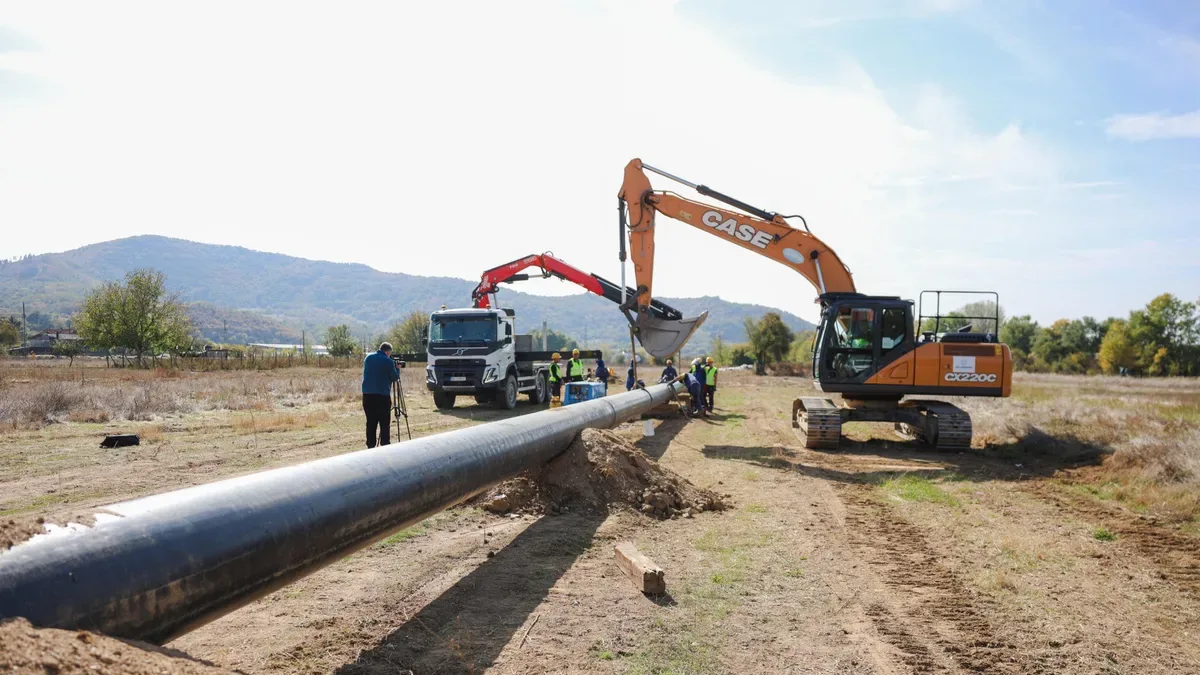
The first pipes for the initial 20 kilometers of the gas pipeline to North Macedonia have arrived, and welding has started in Vranjska Banja. According to a statement from the Ministry of Mining and Energy, that happened on October 21, when caretaker minister Dubravka Djedovic Handanovic toured the route.
How long is the pipeline, what does it cost, and what capacity will it have?
The section through Serbia will be 147 kilometers long, the minister said. The route runs from Orljane through Leskovac and Vranje to the border with North Macedonia. The total investment in the pipeline, including all auxiliary facilities, will be 153 million euros, and its capacity will be 1.5 billion cubic meters of gas a year.
Completion is planned for 2028, in both Serbia and North Macedonia. The published reports on the tour do not name a source of financing, and the contractors are not identified.
Why does the minister say Serbia is ahead of North Macedonia?
Djedovic Handanovic pointed to pipe delivery times, the longest part of construction preparation:
“We are ahead of North Macedonia in readiness for construction, because pipe deliveries take the longest, up to nine months, and it can be even longer. Part of the pipes for the first 20 kilometers of the pipeline has arrived, and expropriation along the route the pipeline will cross needs to be speeded up.”
So the delivery covers part of the pipes needed for the first 20 of 147 kilometers. Expropriation was also the subject of a meeting the minister held the same day with the mayor of Vranje, the head of the Bujanovac municipality, representatives of the Presevo municipality and the contractors. They also discussed deadlines and the further course of the work.
Where will the gas come from, and what about Russian supply?
The new pipeline will be linked to the North Macedonia-Greece interconnector, which is under construction and due to be finished in 2027. That will give it access to the gas sources that reach Greece. The minister presented the project as part of a broader positioning of Serbia:
“This pipeline connects us with new routes that matter for the region’s energy future, where we want to position ourselves as an important gas hub and an indispensable transit country. Through it, gas can reach Serbia via North Macedonia, and then potentially onward, toward the markets of central Europe.”
The value of the pipeline, she stressed, lies not only in the added capacity but also in the fact that Serbia will no longer depend on a single supply route, so it can react faster to market disruptions, technical problems or changes in supply conditions. The interconnector is also important, she added, for the further development of the distribution gas network in southern and southeastern Serbia. On the relationship with Russian gas, she said:
“That does not mean we are giving up Russian gas, quite the contrary, it is the most affordable for us, but it is important that we are safer in case of geopolitical disruptions, that we have the option of supply from several directions.”
The same day, the minister also visited the “Nase dete” kindergarten in Vranje, where an energy renovation has been completed. The Ministry of Mining and Energy and the City of Vranje paid for it together, at a cost of 30.8 million dinars.