Minic: Over 10 Foreign Firms Closed or Announced Exit
Fiscal Council member Slobodan Minic says the growth model built on foreign investment and subsidies is spent, and points to the gap between profit outflows and foreign direct investment inflows.
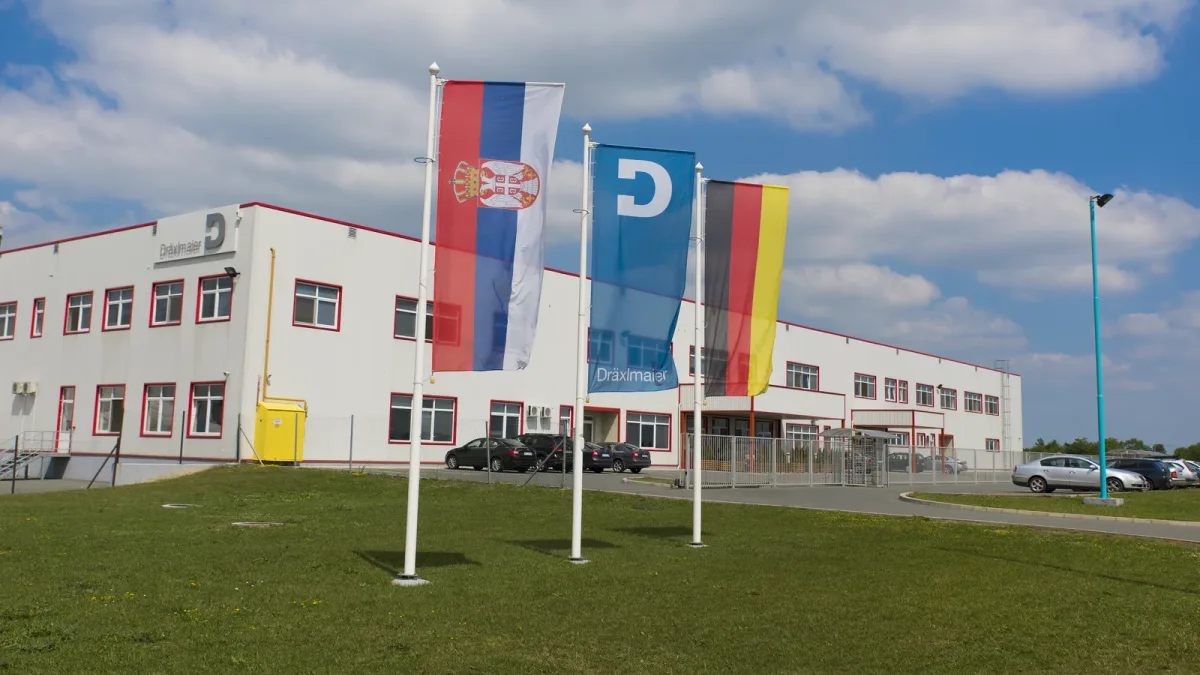
More than ten foreign companies that received state incentives have closed plants or announced a shutdown since the start of 2023, and at least as many have cut production, according to a report by RTS on an assessment from Fiscal Council member Slobodan Minic, given on Sunday, November 8. Among the firms leaving is Draxlmaier in Zrenjanin, whose departure from Serbia has been announced for the end of next year. We reported earlier that the factory is due to close by March 2027.
Minic told RTS that the current model for attracting foreign investment has run its course and that conditions need to be created for stronger development of the domestic economy.
Why are foreign investors leaving Serbia?
In Minic’s assessment, the reason is mainly economic. Serbia is no longer a destination with plentiful, cheap labor, as it was a decade ago. International circumstances also played a part in some departures, above all the crisis in the European car industry, which has hit domestic plants in that sector.
“The model that existed over the past ten years or so, based on attracting investors interested mainly in cheaper labor and state subsidies, has practically been used up. When there is no more cheap labor, companies do not have such a strong reason to stay, especially once the subsidies expire”
That is how Minic explained why subsidies alone do not hold investors. He says investors mostly stayed for as long as the subsidies lasted. Over the past ten years or so, Serbia has signed subsidy contracts with more than 250 foreign investors but, Minic says, that model was not accompanied by a shift toward companies with higher added value, which can pay higher wages.
Minic listed the individual causes this way:
- growth in average wages
- growth in minimum wages
- a real strengthening of the euro
- the crisis in the European car industry
The cost of labor, he said, is the deciding factor:
“First, Serbia no longer has such plentiful or cheap labor. Labor costs in traditional labor-intensive industries have almost converged with Central and Eastern Europe.”
How many jobs are at stake?
RTS cites an estimate that job losses run from a few thousand to around ten thousand, and possibly somewhat more. Minic judges that the departure of individual investors is not dramatic at the national level, but that the consequences can be significant locally. When a large employer leaves a smaller, less developed area, local shopkeepers, carriers and other businesses tied to the factory lose work too, and the local government loses part of its revenue.
Total investment in Serbia amounts to about 23% of GDP. Of that, foreign direct investment contributes about 4%, domestic private investment about the same, and the rest comes from the state and households. From this, Minic concludes that both the foreign and the domestic private sector are investing too little. Foreign investment, he adds, is not a problem in itself. The question is its quality and structure.
What does the profit outflow mean for the dinar?
Minic also pointed to the balance of payments. He compared outflows of profits, dividends and interest with the new foreign currency that came into the country through foreign direct investment (FDI). Last year outflows exceeded that inflow by more than two billion, and in the first eight months of 2026 the gap stands at 1.6 billion. The statement does not name the currency.
“Last year, outflows from profits, dividends and interest were more than two billion above what came into the country as new foreign currency through FDI. And, say, in the first 8 months of this year, it is already 1.6 billion. This is not an immediate problem, but in the medium term it could become a problem for Serbia, because we have a high structural balance of payments deficit”
Such an imbalance, Minic explained, could in the medium term put pressure on the dinar, and with it on the National Bank of Serbia (NBS) to sell foreign currency to keep the exchange rate stable, instead of buying up surpluses.
What does the Fiscal Council member propose?
Minic argues that redirecting subsidies is not enough. For the domestic private sector, better business conditions are what matter:
“It is not only subsidies that need to be redirected. For the private sector what matters is that the rules of the game improve, that the rule of law is established, along with efficient institutions and enforcement of regulations”
He recalls that domestic businesses did not enjoy the same level of security as foreign investors, who were protected by international agreements on top of state guarantees. At the start of the subsidy program, ten to fifteen years ago, the share of domestic private companies among recipients was very small, and even after it grew it remains low.
On the tax proposals put forward by the Student List, Minic sees room for a more progressive income tax, since the current law dates from the early 2000s. In his view, a reform would have to be fiscally neutral, without overly sharp progression. Raising the tax-free portion of earnings could be partly offset by more progressive rates, but also by taxing more heavily the sectors that are taxed more lightly in Serbia than elsewhere. He named VAT on financial services, which would include the banking sector, and higher fees and levies for the mining sector as options.
For support to domestic technology firms and startups, Minic calls for a reliable, long-term source of funding. The idea of paying for part of those programs from funds filled with confiscated illegally acquired assets can be considered, he said, but it should not be the basis of the system, because court proceedings to seize assets can last for years.