NIS asks for state oil reserves, JANAF gives no deadline
The Pancevo refinery is already processing less, and sources differ on when oil resumes flowing: from two to three days to early December.
Petroleum Industry of Serbia (NIS) asked the caretaker Government of Serbia and the Ministry of Mining and Energy on Thursday, November 12, to approve the use of crude oil from state reserves, as well as diesel from operational reserves. The trigger is the halt in oil deliveries through the JANAF pipeline, which has lasted since November 6. The request was filed, the company said in a statement, “in order to continue the regular supply of the market.”
What did NIS ask for, and what is still unknown?
The statement gives no quantities. Reports published on November 12 do not say how much crude oil and diesel sit in the state and operational reserves, and there is no response from the Government or the Ministry to the request.
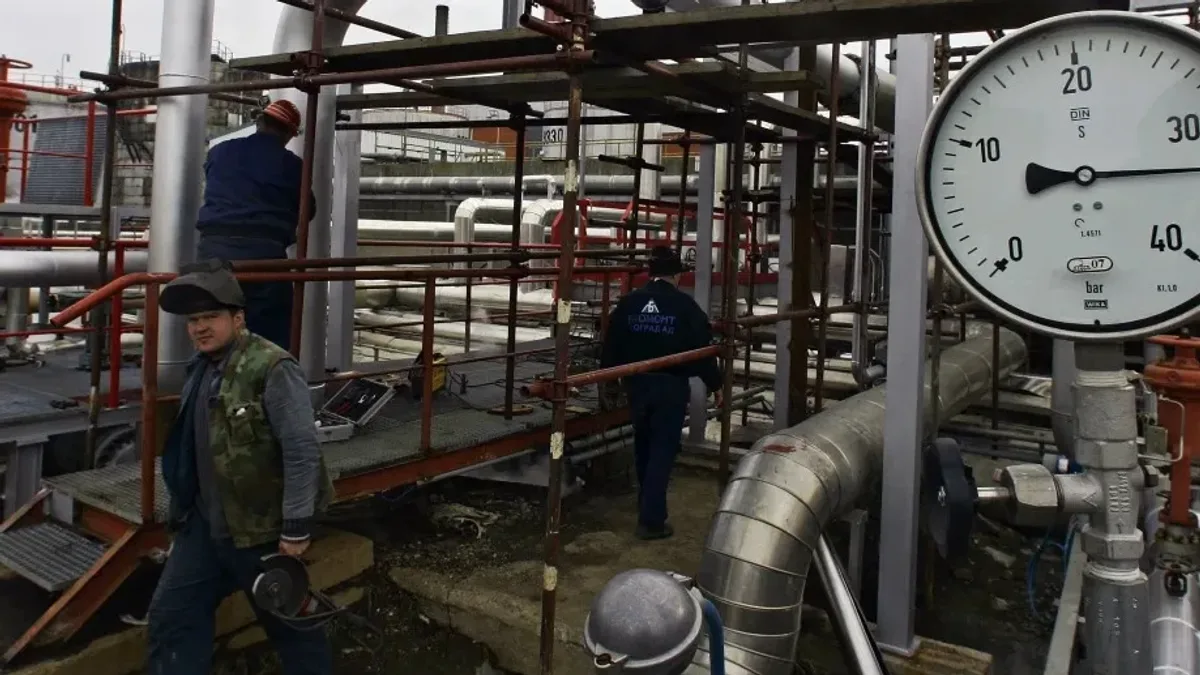
NIS says all of its filling stations are supplied with all types of fuel and that the Pancevo Oil Refinery is adjusting its work to the information it receives from JANAF about the repair. According to Vreme, the refinery has already reduced its throughput because of the halt. As recently as November 9, NIS said it had sufficient stocks and that the halt had not affected processing in Pancevo, which was running on the planned schedule. Yesterday we reported on the refinery’s fifth day without oil from JANAF.
How much the state reserves could help depends on how long the repair takes. Nebojsa Atanackovic, honorary president of the Serbian Association of Employers, told Insajder that NIS uses about 10,000 tons of crude oil a day on average, so what leaked out is only a fraction of that consumption. He added:
“Still, if the repair drags on, we would run into trouble, because we would have to use not only NIS’s reserves but also draw on state reserves.”
The refinery gets close to 80 percent of its crude oil from imports, and most of it arrives through JANAF.
When will oil flow again?
The answer depends on which source one reads. On November 10, Vojvodjanski reporter relayed that Croatian oil industry expert Davor Stern, a former Croatian economy minister, expects the pipeline to be fully operational again in two to three days. Stern told Euronews Serbia:
“I believe they have enough stock for these few days, so I hope there will be no halt in production.”
Of JANAF itself he added that it is a company that “has been doing this responsible work for almost 50 years and until now has had almost no breakdowns.”
The other estimate is far more pessimistic. N1, as relayed by the daily Danas, learned unofficially from the refinery that a complete halt in production is unavoidable and that crude oil will not arrive before early December, when the repair is supposed to be finished. JANAF’s statement of November 12 gives no deadline, and the company did not answer the same question on November 9 either.
What is being done on the pipeline near Nova Gradiska?
On November 12, JANAF announced that a new phase of the repair had begun. Oil left in the pipeline is being moved in a closed system into tanker trucks and driven to the company’s terminals. Repair of the damaged section starts only once that is done, while soil cleanup runs in parallel. The work is supervised by Croatia’s State Inspectorate and the Environmental Protection Inspection Service, which determined the extent of the contamination and ordered measures.
The pipeline was damaged on November 6 on the Sisak-Slavonski Brod trunk line, near the village of Prvca close to Nova Gradiska, during a revitalization carried out by an outside contractor. According to JANAF, as relayed by Vojvodjanski reporter, the pipe was struck by the bucket of a work machine. The company estimates that about 500,000 liters of oil leaked and that several thousand square meters of soil were contaminated. On November 9, JANAF reported that it had collected the spilled oil and shipped it to its terminals.