NIS gets 66,000 tons of reserve crude, JANAF has no date
Serbia's caretaker government decided on November 13 that NIS can take up to 66,000 tons of crude from state reserves, while the JANAF pipeline has been down since November 6.
Serbia’s caretaker government decided on the evening of November 13 that NIS can use up to 66,000 tons of crude oil from state reserves. The decision was published in a statement at around 6 p.m. and was prompted by the halt in oil transport through the JANAF pipeline, which has not worked since November 6.
What does the government statement say?
According to the statement, representatives of NIS a.d. told the caretaker Ministry of Mining and Energy that regular crude supplies have stopped because of damage to the JANAF pipeline. They asked to draw on state reserves so the Pancevo Refinery can keep running and the market stays supplied.
We reported on November 12 that NIS was asking for oil from state reserves, but the amount was not known then: NIS did not give it in its statement. The upper limit is now known, and the government explains it this way:
“Having assessed the situation, and in order to protect the most vital interests of the state, the Government of the Republic of Serbia in a caretaker mandate has decided to allow NIS to be supplied with up to 66,000 tons of crude oil from state reserves.”
The government adds that the decision was made so the Pancevo Refinery can keep operating and citizens do not feel the effects of the damage, since there is, as the statement puts it, no alternative to supply through JANAF and the refinery could not run without it. The statement ends with a message: “Citizens have no reason to worry, nor is there any need to stockpile petroleum products.”
N1 reports that NIS asked the government for both crude oil and diesel from reserves. The decision the government published covers crude oil.
What is known about the JANAF failure?
Oil transport has been halted since November 6, when a failure occurred on the Sisak-Slavonski Brod section, about 150 kilometers from the Serbian-Croatian border. Around 500,000 liters of oil, or 500 cubic meters, leaked out. N1 says the failure happened during revitalization work and that human error was decisive.
In a reply to N1 on November 9, JANAF said that all the spilled oil at the site had been collected, taken by tanker to terminals and returned to the pipeline system. The company added: “Work is under way to repair the damage to the pipeline and the pollution of the area.” Asked how long the repair would take and when oil transport would resume, it did not answer at the time. As of November 15, JANAF has still not given a deadline.
When could oil flow again?
Estimates differ. N1 reports unofficially that the refinery was told crude will not flow before early December, when the repair is supposed to be finished.
Energy experts N1 spoke to expect a faster fix. Croatian energy expert Ivan Brodic said that at JANAF “there is an alert on right now and everyone is actually out in the field,” adding that the quick response and the quickly collected oil lead him to conclude the fault will not last long. Aleksandar Kovacevic, also an energy expert, assessed:
“This is not a very demanding section. It is not a mountain stretch, so it should be possible to do this relatively quickly and efficiently.”
What about the refinery and the filling stations?
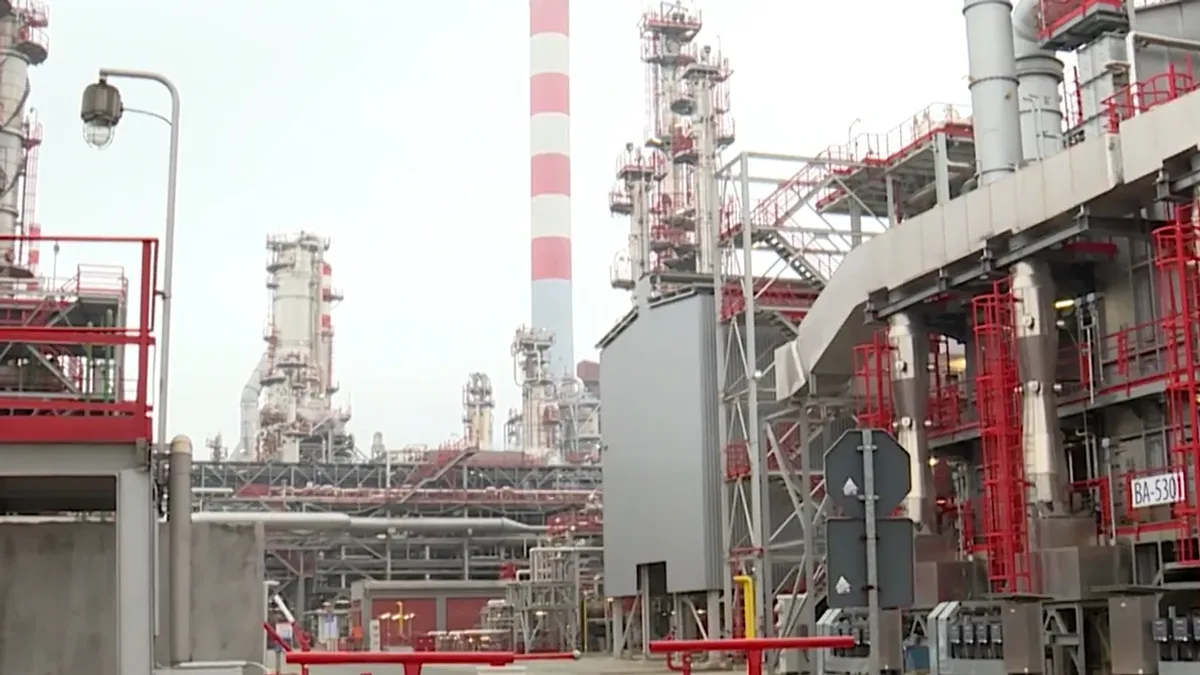
According to unofficial N1 information from November 12, the Pancevo Refinery has cut production and is preparing for a complete shutdown. NIS responded that there is no reason for a shutdown and that it adjusts refinery operations to information it gets from partners:
“NIS continuously adjusts operations at the Pancevo Oil Refinery in line with information it receives from its partners. NIS filling stations are properly supplied with all types of fuel and the company has sufficient stocks of petroleum products. Together with partners, activities are under way to keep supply stable in the period ahead.”
Nenad Zivkovic, a reporter for the portal Pancevo City, spoke with refinery employees, who told him they are working at reduced capacity. According to him, the people he spoke to do not expect any market disruption, which could happen only if citizens started buying larger quantities of fuel than they need.
Milos Banjac of the Faculty of Mechanical Engineering estimated that stocks could cover two to three months: “We already import 30 percent of petroleum products anyway, and together with these domestic reserves we could bridge that period of roughly two, three months, no problem.” Kovacevic added that winter fuel consumption is somewhat lower than summer consumption, so even a refinery stoppage should not cause a bigger problem for market supply.
The government decision thus lets NIS take up to 66,000 tons of crude from reserves until the pipeline is back in operation. JANAF has not said how long that will take, and none of the estimates in circulation has its confirmation.