Opovo solar plant plan: ornithologists want it scrapped
The Bird Protection and Study Society of Serbia filed objections to the draft detailed regulation plan in Opovo and Baranda and wants the plan rejected in full.
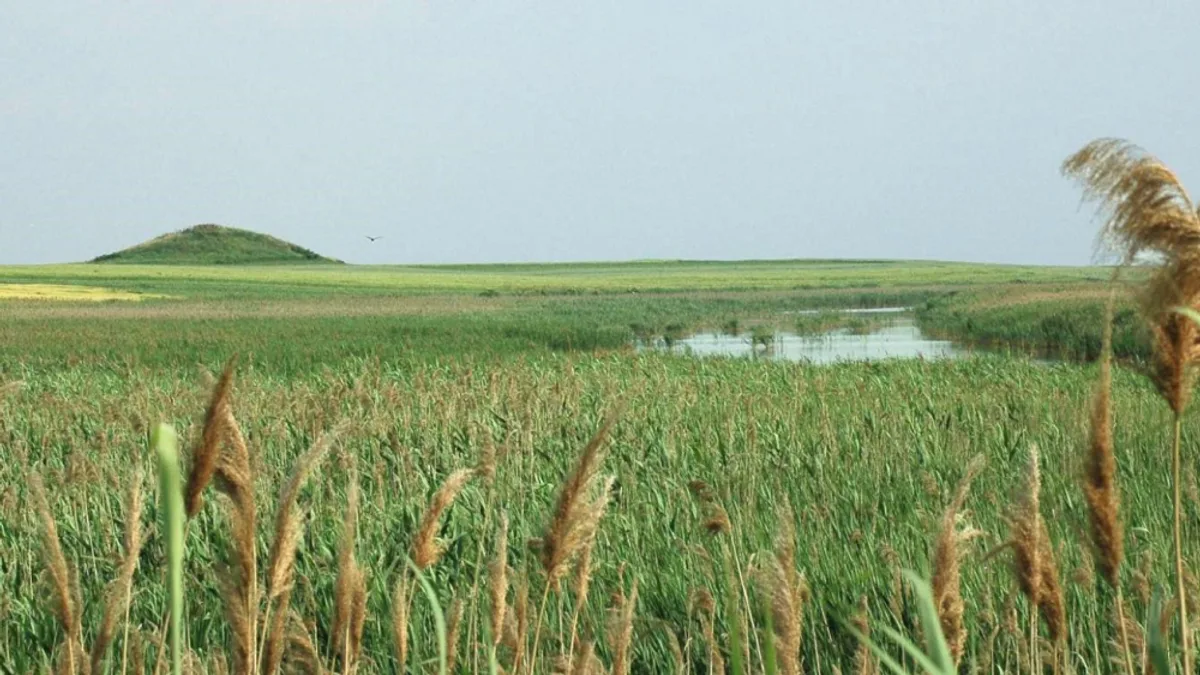
The draft detailed regulation plan for solar plants in the cadastral municipalities of Opovo and Baranda covers about 493 hectares, and experts have now filed objections to it. The Bird Protection and Study Society of Serbia (DZPPS) said on November 20 that it submitted its objections and wants the plan rejected in full. According to the society, the entire area lies on the site of former salt lakes and fishponds in the municipality of Opovo, in Banat.
What has been recorded on the land planned for the plant?
The society says 185 bird species, more than 102 species of algae and 14 species of amphibians and reptiles have been recorded in the wider area of the planned plant. It also cites data from the Biodiversity Information Center at the University of Belgrade’s Faculty of Biology, according to which the area is home to 127 species of conservation importance. Of those, 18 are classed as relict, endemic or rare.
The society’s ornithologist Marko Sciban says the group does not oppose renewable energy, only the choice of site:
“The Bird Protection and Study Society of Serbia supports the development of renewable energy sources, but we believe it must be based on the selection of environmentally acceptable locations, which is radically not the case in this project. The project envisages filling in and converting continental salt ponds, marshes and salt flats, which are highly rare, ecologically specific, endangered habitats, extremely important for preserving biodiversity.”
How did a fishpond become building land?
The society disputes the decision, taken under the Opovo municipal spatial plan and the plan for the special-purpose area of the “Potamisje” Landscape of Outstanding Features, to reclassify the fishpond land as building land. The new owner of the land is the company Ribarstvo DOO Baranda. The lease was originally for 10 years and was then extended to 30, and the buyer had an obligation to engage in fish farming at the time of purchase. In the society’s assessment, this violated the public interest, as councillors also pointed out at sessions of the Opovo Municipal Assembly.
The society’s statement says of the decision:
“Instead of residents engaging in fish production, sport fishing and ecotourism, for which ideal conditions exist, the councillors voted for a change of land use that can benefit only the new owner, Ribarstvo DOO Baranda. On the other hand, solar panels can be installed on houses and other buildings in Baranda and Opovo, which would achieve the same or even greater electricity production, and installing them would be considerably cheaper.”
Why were four salt marshes left out of the protected area?
The Serbian government declared the “Potamisje” Landscape of Outstanding Features a protected area in late October 2023, but the water bodies of Velika Slatina, Slatina, Rakitas and Pecena Slatina were left outside its boundaries. The society links this to the investor and calls for the project to be stopped immediately:
“There is reason to suspect that this was the influence of the current investor, that is, of political support from various local and regional institutions. Precisely for that reason, in the changed political circumstances, it is necessary to stop this unlawful project, which undermines the public interest of the municipality of Opovo, immediately.”
The claim about the investor’s influence comes from the society, and the available information includes no response from either the municipality of Opovo or the project’s backer.
What does the society propose instead of the plant?
The proposal has three parts. Solar panels would go on the roofs of houses and existing buildings in Opovo and Baranda, which, by the society’s estimate, would deliver similar or greater output at a much lower installation cost. The salt marsh water bodies would be set aside for nature protection or fish production. The four omitted water bodies would be added to the protected “Potamisje” area, and DZPPS says it will submit data supporting this in the coming period.
Several figures that determine the project’s economics remain unknown: the plant’s capacity in megawatts, the name of the project’s backer and the deadline for public review have not been given.