Palic opens with 100 films, nine in the main race
From July 18 to 22, Palic and Subotica screen around 100 films across 15 selections, with only nine European titles in the main competition, chosen by Nikolaj Nikitin. A German film opens it.

- The 33rd European Film Festival Palic runs from July 18 to 22, in Palic and Subotica.
- The programme holds around 100 films across 15 selections.
- The main competition has nine European titles, selected by Nikolaj Nikitin.
- Simon Verhoeven's German film "Ah, That Emptiness, That Terrible Emptiness" opens the festival on July 18 at 9 p.m. on the Summer Stage.
The Summer Stage at Palic has a trick no multiplex can copy: when the lights go down just before nine in the evening, the pine crowns above the screen stay visible for another minute or two, then dissolve into the same darkness the film comes out of. On July 18 the trick will be performed for the thirty third time, and the first frame will be German, from Simon Verhoeven’s “Ah, That Emptiness, That Terrible Emptiness”. From there the festival runs to July 22, across Palic and Subotica, with around 100 films arranged into 15 selections.
A hundred is a number that reads like an inventory, and it is easily mistaken for boasting. What sits underneath it is far more interesting: the main competition, the only strand that delivers a verdict, has been cut down to nine films. Nikolaj Nikitin signs the selection, and the list is deliberately narrow. Alongside the Verhoeven opener, the race holds Serbia’s “The Guardian of the Icon of Saint George”, Spain’s “Good Daughter”, Greece’s “Elena’s Change”, Hungary’s “Like at Home”, Lithuania’s “Chinese Sea”, Estonia’s “Mo Papa”, Germany’s “Unhappy Mother” and Belgium’s “Nino in Paradise”.
Not one of the big co-production centres that usually eat the available space appears on that map. Lithuania, Estonia, Greece and Belgium stand level with Germany, and Serbia is inside with a single title, not as a host country quota but as one of the nine.
Why nine films rather than nineteen?
Because the number is itself a statement. When a selector admits nine titles to the main competition, he is telling the audience he is prepared to answer for each of them individually, a luxury the large festivals stopped allowing themselves long ago. Nine films means a committed viewer can watch the entire competition and hold an opinion about it, instead of choosing by timetable and luck. It is a curatorial decision with consequences: a narrow list leaves no room for padding, so every misfire becomes visible.
The other fourteen selections are arranged around that small race, and this is where the programme’s real ambition shows. “Parallels and Collisions” brings eight films, “New European Documentary Film” five, “New Hungarian Cinema” another five, and “Eco Docs” nine titles. That last figure is worth pausing on: the environmental documentary strand is numerically level with the main competition. What was once a thematic supplement now carries the same weight as the competitive programme, and that is not an administrative accident but a shift in what counts as the centre of a festival.
Tributes that are not ceremonial
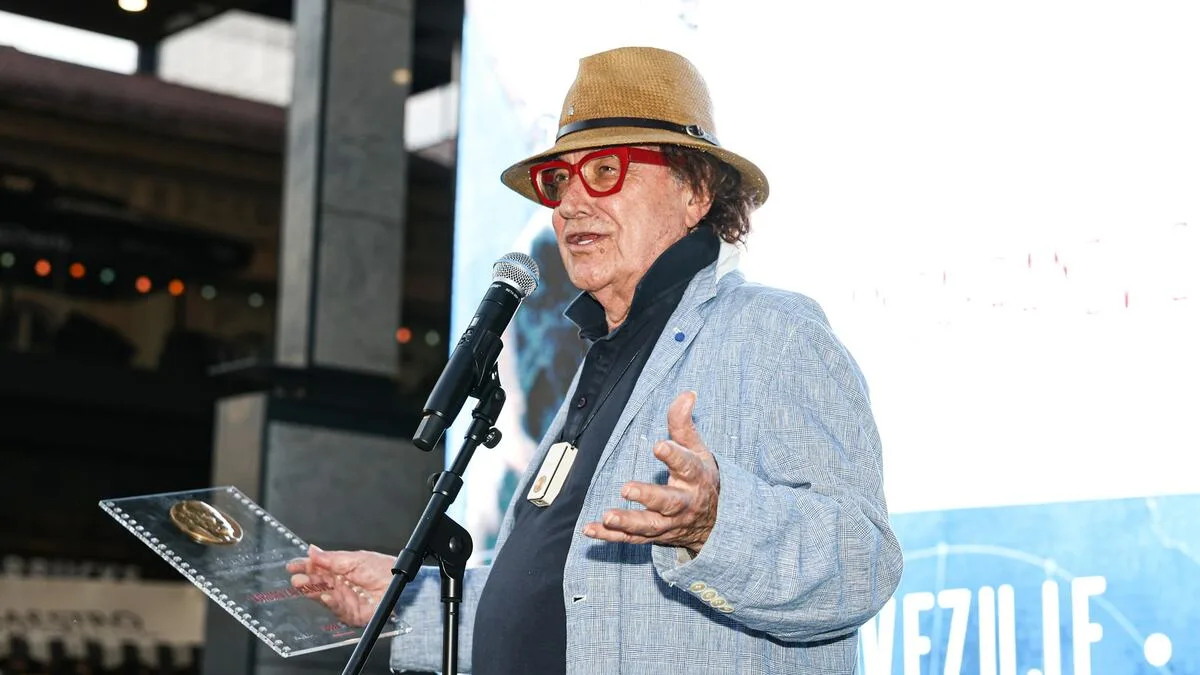
The programme also includes tributes to the recipients of the Aleksandar Lifka award, Rados Bajic and Kornel Mundruczo. Putting the two of them in the same edition is a move that deserves noticing. Bajic is an author whose audience is counted in millions and whose work belongs to the everyday texture of Serbian television and cinema, while Mundruczo comes from an entirely different directorial poetics, one built over decades in European festival halls. Palic places them side by side without apology, and in doing so says something about its own taste more clearly than any programme announcement could.
Retrospectives at festivals usually work as a pause between competition screenings, a chance to watch something familiar. Here they function differently, as a counterweight to the main race: nine new European films on one side, two completed bodies of work on the other, and an audience that can spend a single week comparing what European cinema is doing right now with what two very different authorial paths left behind.
What Palic still has, and what no number of titles can measure, is the place itself. Cinema under open sky, in a pine forest, with the lake close by, changes both the way you watch and what you remember afterwards. Fifteen selections is a programming fact, but the festival will be remembered for four evenings on a stage built in the 1950s, back when people still believed acoustics deserved to be given the best spot in the park.
Does a tighter main competition appeal to you more than a festival with fifty titles in the race, or are nine films too few to show what European cinema looks like this year?